
VANCOUVER, May 15, 2026, 13:02 PDT
- Weichai-affiliated holders now hold 34,999,826 Ballard shares, or 11.61%, after open-market sales disclosed in a May 15 filing.
- Michael Chen and Huajie Wang, Weichai’s nominees, resigned from Ballard’s board, effective May 13.
- Ballard’s Nasdaq-listed shares recently rose 8.5% to $4.48, with intraday volume of about 29.6 million shares.
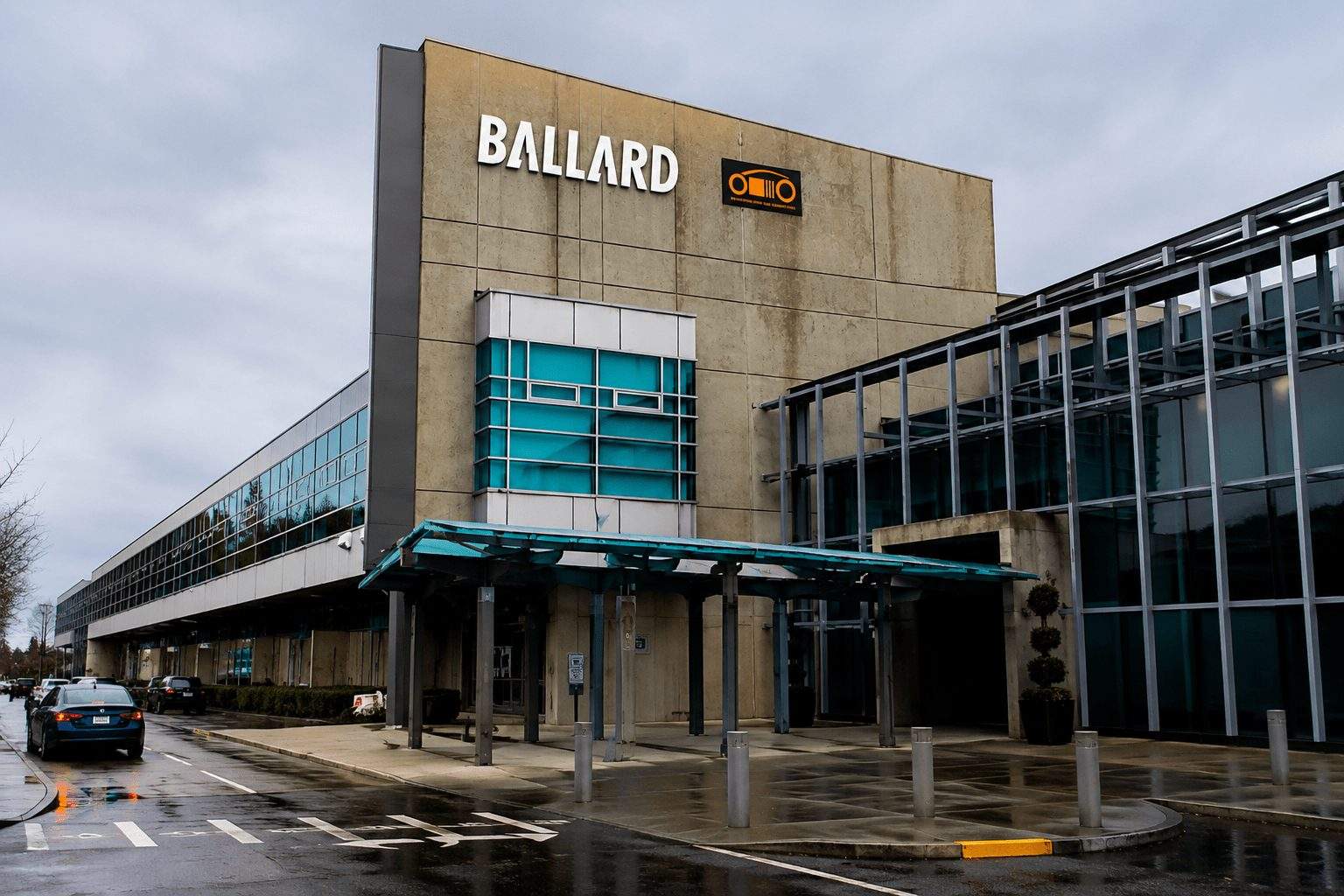
Ballard Power Systems Inc. shares rose on Friday after filings showed China’s Weichai group cut its stake in the Canadian fuel-cell maker and no longer had the right to appoint directors to Ballard’s board.
The move matters because Weichai was more than a passive holder. A 2018 agreement gave it the right to nominate directors as long as it held at least 15% of Ballard’s outstanding shares, and the latest filing says that threshold is no longer met.
That also turns fresh focus to stock supply. Weichai Hong Kong filed a Form 144 for a proposed sale of up to 15,028,886 shares and said it had sold, and planned to continue selling, Ballard shares in open-market transactions under Rule 144, a U.S. rule that allows public resale of restricted or control securities if conditions are met.
Weichai said on May 13 it sold 6,878,886 Ballard shares from May 8 through May 12 at an average C$5.78 apiece, for roughly C$39.7 million. A later SEC filing showed more sales on May 13 and May 14, taking the total sold in the past 60 days to 11,131,886 shares.
Ballard said Weichai nominees Michael Chen and Huajie Wang resigned, effective May 13. “Ballard appreciates Weichai’s support,” Jim Roche, chair of Ballard’s board, said in the company’s release, as he thanked the two directors for their work on fuel-cell commercialization in China and globally.
The market reaction was stronger than the governance news might have suggested. Ballard’s Nasdaq shares traded as high as $4.72 on Friday, from an open of $3.93, according to market data.
Ballard started the week with improved operating numbers, though it still has a long way to go to reach sustained profit. The company reported first-quarter revenue of $19.4 million, up 26% from a year earlier, a 14% gross margin, and $516.8 million in cash and cash equivalents.
Chief Executive Marty Neese said the quarter showed progress toward positive cash flow, and said cost control helped lift margins. He said Ballard was “on the right path,” but the company did not give 2026 revenue or net income guidance because the hydrogen fuel-cell market remains early-stage. Ballard
Investors are focused on recent bus wins on the commercial side. Solaris picked Ballard’s FCmove-SC engine for its next-generation hydrogen bus, and Wrightbus named Ballard for its StreetDeck Hydroliner Gen 3.0 platform; fuel-cell engines use hydrogen to make electricity, with water as the main exhaust.
The sector picture is mixed. Plug Power, another hydrogen name, reported first-quarter revenue of $163.5 million and said it was aiming for positive EBITDAS in the fourth quarter. Bloom Energy reported first-quarter revenue of $751.1 million and raised its 2026 revenue guidance to $3.4 billion to $3.8 billion.
The risk is that Weichai continues to sell into strength, leaving an overhang as Ballard asks investors to look at orders, margin gains and lower cash use. Ballard has also said 2026 revenue will be weighted to the back half of the year, which leaves execution risk if customer deployments slip.
Weichai still has clout as a large shareholder, but not as much. The filing says its anti-dilution rights stay in place only as long as it holds at least 10% of Ballard’s common shares, so the next few disclosed trades may matter nearly as much as the board resignations themselves.