
Madison, May 15, 2026, 18:07 (CDT)
- Accuray and the University of Wisconsin School of Medicine and Public Health set up a 10-year partnership deal for cancer-treatment research.
- Accuray’s Stellar adaptive radiotherapy platform is the focus of the deal. The system is built to adjust radiation treatment as a patient’s anatomy shifts.
- ARAY shares finished the day 5.2% lower at $0.27 before the news hit after regular trading.
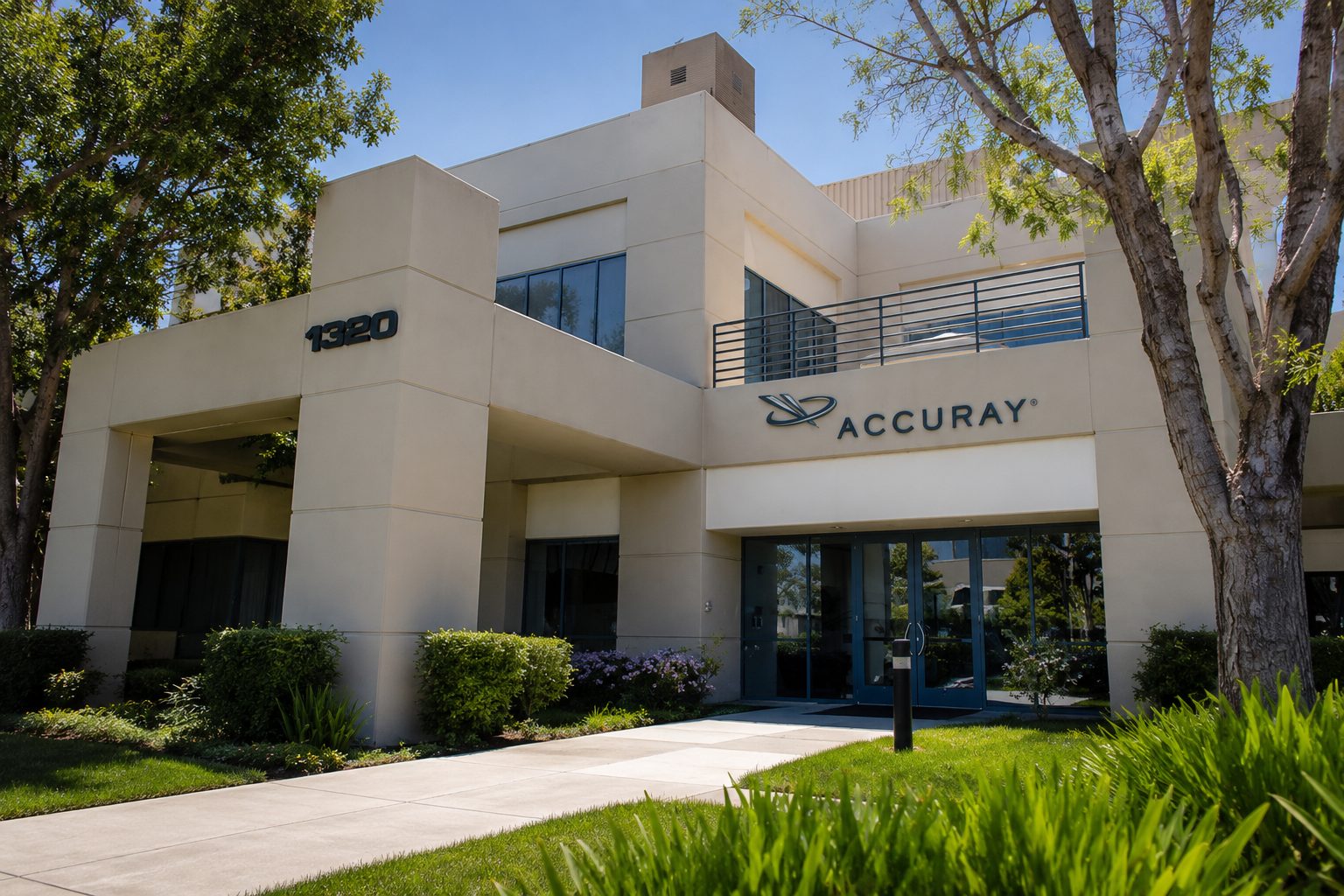
Accuray Incorporated announced late Friday it’s entering a 10-year tie-up with the University of Wisconsin School of Medicine and Public Health. The two plan to work on customized cancer treatments with Accuray’s Stellar adaptive radiation therapy platform. Accuray put out the news after the Nasdaq close, a detail that mattered for the already struggling stock.
Accuray’s deal comes at a time when the company is trying to show it can still draw clinical demand for its technology, even as investors turn their attention to its more troubled financial outlook. The Madison radiation-therapy systems maker pulled its fiscal 2026 guidance last week, blaming Middle East shipment delays, weaker service revenue, and ongoing uncertainty in China.
Accuray gets a local research presence as it works to validate Stellar, the company’s adaptive radiotherapy system. Adaptive radiotherapy lets doctors change a radiation plan during treatment, tracking shifts in tumor shape, organs, or patient anatomy, instead of sticking to a single pre-set plan.
Accuray announced a deal to back clinical research, training, and new adaptive therapies. CEO Steve La Neve said the agreement “formalizes and expands” the company’s work with UW-Madison and connects Accuray more closely to “real-world clinical practice.” Accuray Incorporated
Zachary Morris, chair of human oncology at UW, said the deal should move “translating research innovation” into patient care faster. Nita Ahuja, dean of the UW medical school, said the setup might get new discoveries from “bench to bedside.” School of Medicine and Public Health
There’s some history. UW-Madison professor Thomas “Rock” Mackie and his group developed technology in the late 1980s that later became Accuray’s first helical radiation delivery platform, TomoTherapy, the university says. That makes this deal more significant than a typical academic agreement. School of Medicine and Public Health
Rivals aren’t stopping. Varian, now under Siemens Healthineers, sells Ethos as an adaptive radiotherapy platform with AI for planning and segmentation. Elekta, out of Sweden, says its adaptive system uses CT and MR imaging and adds workflow and decision support features. Accuray pitches Stellar as able to bring together image-guided radiation therapy with ClearRT helical kVCT imaging and an adaptive suite on its Radixact system.
Accuray’s numbers are under pressure. The company posted fiscal third-quarter net revenue of $104.8 million, a 7% drop from last year. Product revenue slipped 13%, while service revenue was down 1%. Net loss expanded to $11.8 million, or 9 cents per share. Gross product orders also dropped, coming in at $48.5 million versus $71.2 million last year.
Jefferies’ Young Li downgraded Accuray to Hold from Buy, dropping the price target to 35 cents. Li pointed to the Q3 miss and the company pulling guidance, calling the problems more structural. BTIG also moved the stock to Neutral from Buy, citing continued pressure on product revenue from geopolitical risk and another adjusted EBITDA miss.
Accuray’s research deal doesn’t resolve short-term risks. The company reported $38.1 million in cash and cash equivalents as of March 31 in its latest quarterly filing. Supply-chain and logistics costs are still set to drag on cash flow from operations into at least fiscal 2026. Macro pressures could also affect its covenant compliance, the company said. Accuray has until August 3, 2026, to get back above Nasdaq’s $1 minimum bid rule.
Accuray’s new UW agreement offers the company a cleaner growth pitch in an area where hospitals want better, more adaptable cancer treatment. But execution is the bigger challenge—commercializing research, clearing backlogged shipments, recovering margins and trying to lift a stock that closed just above its 52-week low ahead of Friday’s news.
Related articles: Stock Market