New York, May 19, 2026, 11:01 EDT
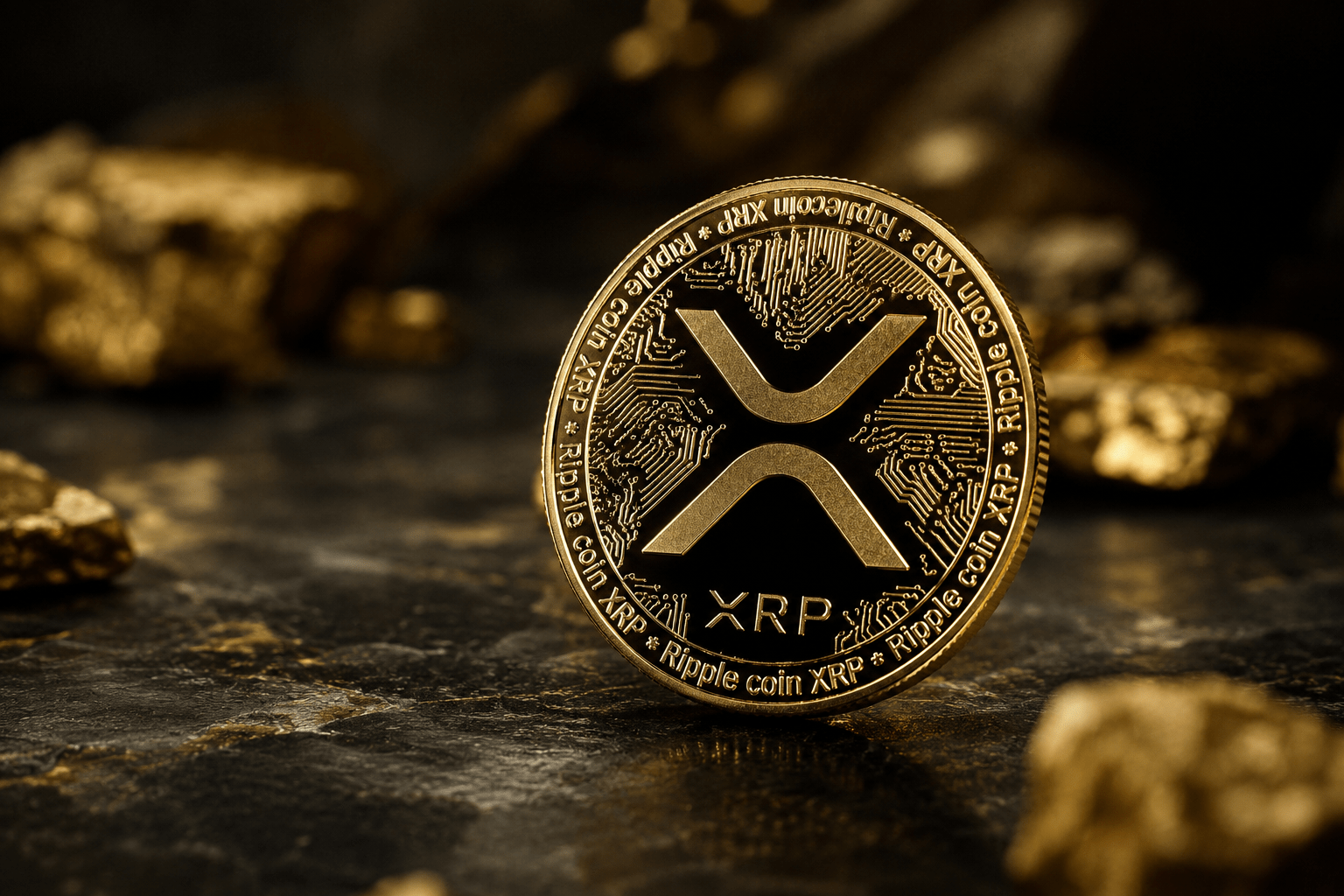
XRP traded near $1.37 on Tuesday as new forecasts sharpened a split over the token: one camp still sees a staged path toward $4 and beyond, while skeptics say Ripple’s own payments strategy could weaken XRP’s role. Recent articles from 24/7 Wall St., The Motley Fool and TipRanks put that divide back in front of investors within a softening crypto market.
That matters now because XRP is not rallying into the debate. CoinMarketCap data showed XRP down about 1.1% over 24 hours, with a market value near $84.5 billion and daily trading volume around $1.8 billion; CoinGecko put the token about 62.6% below its peak.
The regulatory backdrop has also moved. The U.S. Senate Banking Committee advanced the Clarity Act last week, a crypto market-structure bill meant to define when tokens are treated as securities, commodities or something else, but Reuters reported that some Democratic support may not hold on the Senate floor.
Standard Chartered’s forecast remains the bullish anchor. 24/7 Wall St. said the bank’s roadmap puts XRP at $2.80 in 2026, $7 in 2027 and $12.60 in 2028, with the $4 area framed as a first major repricing zone before any credible run toward $10.
Geoff Kendrick, Standard Chartered’s global head of digital assets research, had earlier argued that “XRP price gains can keep pace with Bitcoin in real terms,” citing cross-border payments as the use case. That is the clean version of the bull case: banks and payment firms move money faster, and XRP benefits if it remains part of that plumbing. Decrypt
The Motley Fool took a colder view. Writer Johnny Rice modeled a $1,000 XRP investment as worth $3,500 in a bull case at $5 a token, $1,050 in a base case at $1.50, and $175 in a bear case at $0.25, then wrote that his own 2031 forecast was for XRP to trade below $1.
TipRanks carried a sharper warning from investor Anthony Di Pizio, who said XRP faces “structural issues that will be difficult to overcome.” His core point was that Ripple Payments can work without XRP because banks may settle in fiat currencies, undercutting the argument that wider Ripple adoption must translate into token demand. TipRanks
That risk is tied to RLUSD, Ripple’s dollar stablecoin. A stablecoin is a digital token designed to hold a steady value, usually against a currency such as the U.S. dollar; Ripple says RLUSD is “designed to maintain a constant value” of $1 and is issued on both the XRP Ledger and Ethereum. Ripple
XRP’s legal overhang is no longer the same as it was during the SEC case, but it has not vanished from investor memory. Reuters reported in August 2025 that the SEC ended its lawsuit against Ripple with a $125 million fine left intact and an injunction covering sales of XRP to institutional investors.
Peers are not giving much cover. CoinDesk reported Tuesday that bitcoin was little changed around $76,800 and ether barely moved, while most major altcoins weakened after Monday’s selloff; it also said XRP futures indicators pointed to sellers in control.
The risk paragraph is simple. The Clarity Act could stall, ETF demand could cool, and a risk-off macro market could keep money in bitcoin or cash-like instruments rather than rotating into XRP. More damaging for the long run, Ripple could keep growing while XRP remains useful but not essential.
For now, XRP is being priced less like a $10 story and more like an asset that still has to prove the next step. The $4 target is not the issue; getting out of the low-$1 range, with buyers other than loyal retail holders, is.