London, June 1, 2026, 14:19 BST
- FTSE 100 falls as Middle East tension lifts oil and revives inflation worries.
- EasyJet jumps after Castlelake says it is weighing a possible offer.
- UK factory data improves, but price pressure points to a harder Bank of England call.
LONDON — UK shares slipped on Monday, with takeover talk around easyJet not enough to offset a fresh rise in oil prices and signs that the Middle East conflict is still feeding into costs across the British economy.
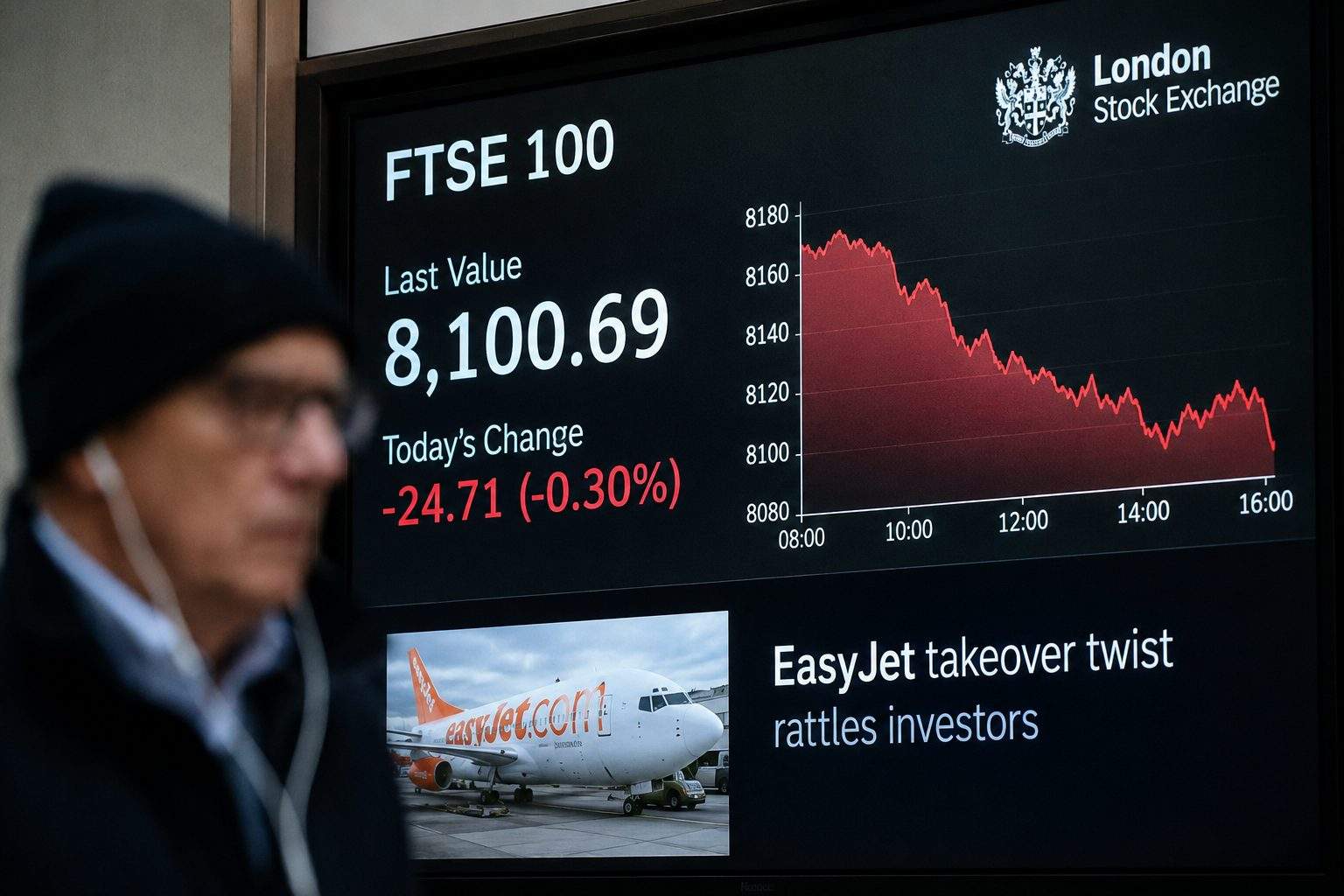
The FTSE 100, the index of the largest London-listed companies, was down 0.20% at 10,388.72 on delayed Hargreaves Lansdown data, after touching a day low of 10,372.76. The domestically focused FTSE 250 was also lower around midday, Sharecast data showed.
The move matters because London has come into June after a strong run. Reuters said both the FTSE 100 and FTSE 250 had posted a second straight month of gains on Friday, but that Monday’s session opened weaker as investors looked again at the damage from the conflict in the Middle East.
Oil was the first pressure point. Reuters reported Brent crude up more than 3% at $93.80 a barrel as the United States and Iran traded strikes and Israel moved further into Lebanon, helping energy stocks but raising the cost-risk for airlines, retailers and manufacturers.
EasyJet was the standout. Its shares rose after Castlelake said it was in the early stages of considering a possible offer, though the US investment firm said no approach had been made and there was no certainty of a bid. Castlelake has until 5 p.m. on June 26 to make a firm offer or walk away.
EasyJet pushed back hard. The company said the timing was “highly opportunistic” because its share price had been hit by Middle East tensions, weaker customer confidence and higher jet fuel prices. The board said it had held no talks with Castlelake and would weigh any proposal against valuation and the chance of actually completing it. Investegate
Barclays analyst Andrew Lobbenberg told Reuters any deal would “need to have regard” for ownership and control rules. That is a live issue in airlines, where cross-border takeovers can run into traffic-rights and licensing limits. EasyJet also remains a strategic asset in a European market where Ryanair is the main low-cost rival, while British Airways-owner IAG and Air France-KLM have long been seen as possible strategic reference points rather than easy buyers. Reuters
Deal news also lifted Bluefield Solar Income Fund after Drax agreed to buy the renewable energy investor in a transaction valuing it at about £561 million including a permitted dividend. Bluefield shareholders are due 92.574 pence a share in cash plus a 2.25 pence interim dividend, with the terms representing a 31% premium to the pre-offer closing price cited in the announcement.
The corporate news was not all supportive. ME Group International tumbled after the vending and self-service equipment group said April revenue softened, especially in French photobooth and laundry operations, and cut its 2026 pretax profit view to £69 million-£74 million.
Wise also fell sharply after Sharecast reported the London-listed payments group was facing a Belgian probe into possible anti-money laundering failures linked to transactions reported at about €500 million. Wise said the Brussels prosecutor’s enquiries were incomplete and that no specific findings had been shared with the company.
Macro data gave investors a mixed message. The S&P Global UK manufacturing purchasing managers’ index — a survey where readings above 50 signal growth — rose to 53.9 in May, its highest since May 2022, but Reuters said manufacturers also raised prices at the fastest pace since June 2022.
Rob Dobson, director at S&P Global Market Intelligence, said the factory bounce would fade once customers had built enough safety stocks. That was the plain warning inside an otherwise upbeat number: some orders look less like durable demand and more like companies buying early before costs rise again.
The risk is that markets are leaning too heavily on a quick diplomatic fix. Kathleen Brooks, research director at XTB, said investors were still holding onto the idea that a US-Iran deal and reopening of the Strait of Hormuz would be found, but delays could hit sentiment; a longer disruption would keep pressure on oil, company margins and Bank of England rate expectations.