
NEW YORK, July 21, 2026, 18:07 EDT
- The S&P 500 rose 0.89% on Tuesday. Semiconductors jumped 5.2%.
- CAPE’s inverse yield was 2.44%, against a 2.37% real Treasury yield.
- Technology earnings on Wednesday and Thursday will test whether profits justify rich prices.
A rough valuation spread between U.S. stocks and inflation-protected Treasuries stood at seven basis points after Tuesday’s close. U.S. cash markets were closed when this report was filed.
The Shiller CAPE ratio finished at 40.98. Its inverse was 2.44%, a rough cyclically adjusted earnings yield. The official 10-year real Treasury yield was 2.37%.
That gap offers little cushion against weaker profits or higher discount rates. It is not a return forecast.
| Measure | Tuesday reading | Reference point |
|---|---|---|
| Shiller CAPE | 40.98 | Mean: 17.40; record: 44.19 Multpl |
| Inverse CAPE yield | 2.44% | Calculation: 100 ÷ 40.98 |
| 10-year real Treasury yield | 2.37% | Official daily curve U.S. Department of the Treasury |
| Calculated spread | 0.07 percentage point | About 7 basis points |
The spread is a valuation gauge, not an expected-return forecast.
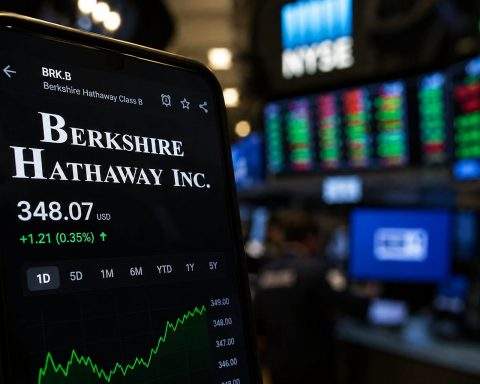
Warren Buffett, chairman of Berkshire Hathaway NYSE:BRK.B, framed the problem last week. “It’s tough to find values when everybody is preferring gambling,” he told CNBC. Business Insider
Berkshire’s accounts show caution, not retreat. Cash reached a record $380.2 billion at March 31. The group was a net stock seller for a 14th straight quarter.
Tuesday’s tape still rewarded risk. The S&P 500 closed at 7,509.20, while the Nasdaq gained 1.29%. Semiconductors posted their second consecutive advance.
Lindsey Bell of 248 Ventures said chip stocks were “priced for perfection.” That phrase captures the market’s central tension. Reuters
The previous week ended with losses across all three major indexes. The semiconductor index suffered its worst week in more than a year. It had fallen 20.2% from its June peak, entering a bear market.
Yet corporate results have defended the broader market. Of the first 49 S&P 500 members reporting, 90% beat expectations. Consensus estimates projected second-quarter earnings growth of 26%.
That creates an unusual setup. Prices allow little room for error. Reported profits remain strong.
Buffett has also backed selected assets. Estimated Berkshire exposure to Alphabet NASDAQ:GOOGL reached nearly $31 billion last week, assuming no portfolio changes. That equaled roughly 8% of Berkshire’s March cash pile.
The position weakens any simple “sell everything” reading. Berkshire can reject broad market prices while backing individual franchises.
The week ahead tests that distinction. Alphabet and Texas Instruments NASDAQ:TXN report on Wednesday, July 22. Intel NASDAQ:INTC follows on Thursday, July 23.
Alphabet’s spending will carry the most weight. It raised its 2026 capital plan to between $180 billion and $190 billion. Investors now need evidence those outlays can sustain returns.
Risks: CAPE is a weak short-term timing tool. Fast earnings growth can support high multiples for longer than expected. CAPE yields and Treasury real yields are also not directly interchangeable.
Buffett’s warning is therefore narrower than a crash call. It asks investors to demand durable cash flows and a wider margin of safety.
Related articles: NYSE:BRK.B