
PITTSBURGH, September 3, 2026, 06:49 EDT —
- Eos traded at $3.58 at 06:42 EDT, retaining a 17.8% gain from Tuesday’s close.
- The planned 100 MWh Eos system equals 2.9% of June backlog capacity.
- Q2 gross margin remained negative 71%, while one related party supplied 80% of revenue.
Eos Energy Enterprises (NASDAQ:EOSE) traded at $3.58 before Thursday’s open. That was 0.83% below Wednesday’s close. Yet the shares remained 17.8% above Tuesday’s $3.04 finish Nasdaq.
The repricing followed Eos’ first project serving Google. The planned 100 MWh zinc system equals just 2.9% of Eos’ 3.4 GWh backlog. Investors are therefore pricing customer validation more than near-term shipment volume.
Wednesday’s $3.61 close marked an 18.75% jump. Turnover reached 74.4 million shares, about 5.5 times Tuesday’s volume. Premarket trading then settled below an early $3.67 high Yahoo Finance.
EOSE premarket price
U.S. dollars per share; dashed line is Wednesday’s $3.61 close.
Wednesday+18.75%
Wednesday close74.4m
Wednesday volume
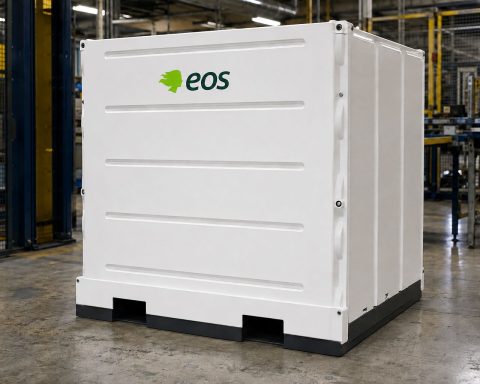
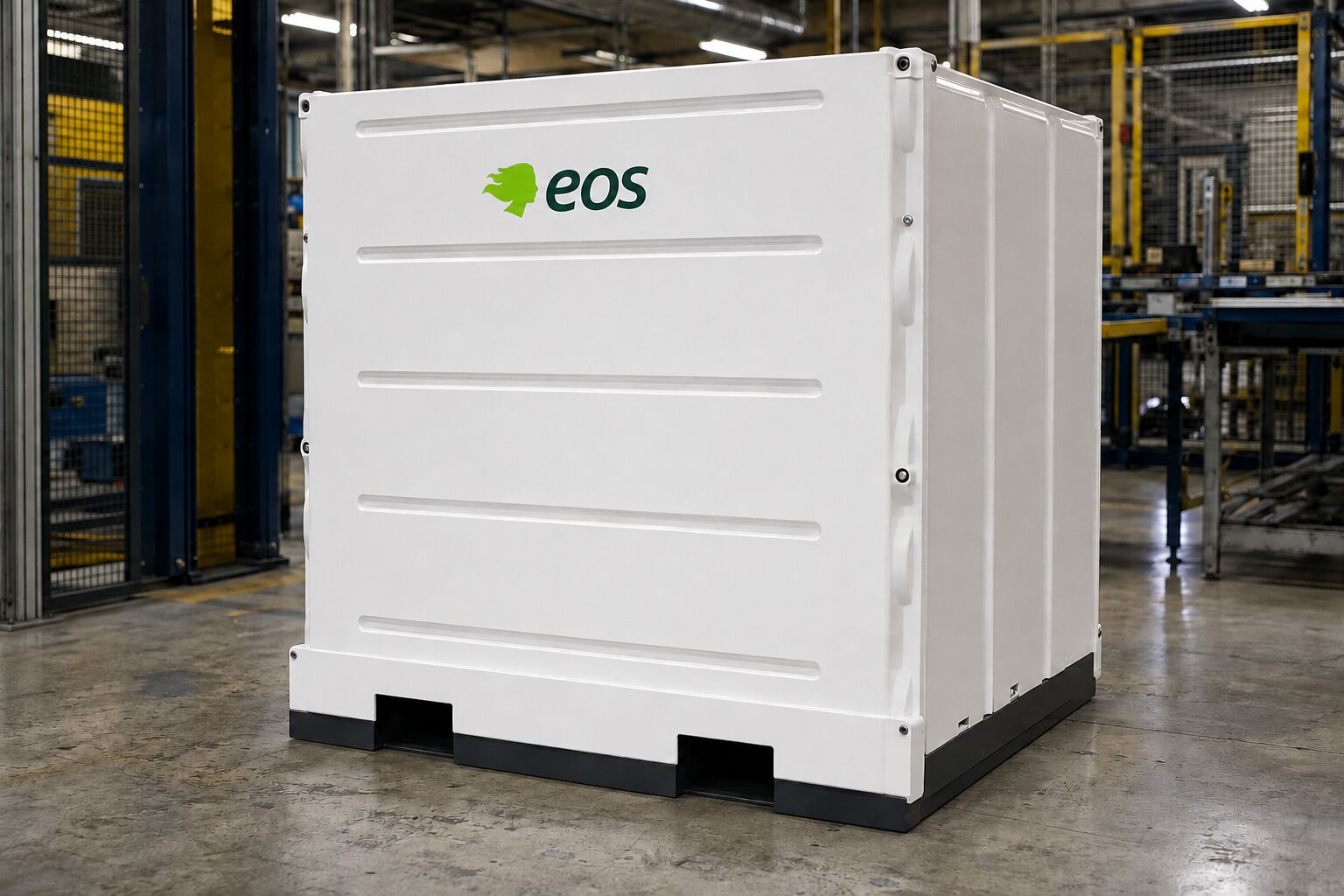
The announced West Virginia project combines 86 MW of solar with two storage systems. A 70 MW lithium-ion unit will hold 280 MWh. Eos will supply a 10 MW unit holding 100 MWh for ten-hour discharge.
MN8 Energy will own and operate the site. Google will buy its energy, capacity and clean-energy attributes. The parties disclosed no Eos contract value. Solar operation is targeted for 2028, lithium storage for 2029 and Eos storage for 2030.
West Virginia project: three technologies, three start dates
Power is MW; stored energy is MWh. Bars compare storage capacity with the 280 MWh lithium system.
The system will be Eos’ first serving Google. It is also the first order under Eos’ MN8 master supply pact. Google director Lucia Tian said the collaboration aims to support digital infrastructure and provide West Virginia economic benefits.
Scale still brings concentration. June backlog stood at $807 million, covering 3.4 GWh. Frontier Power USA represented 49% of backlog volume. A related-party project supplied $55.0 million, or 80%, of second-quarter revenue SEC filing.
Eos generated $125.7 million during the first half. Its $300 million to $350 million annual guide therefore requires $174.3 million to $224.3 million during the second half. That means quarterly revenue averaging $87.1 million to $112.1 million.
Demand is visible; profitable conversion is not
Financial position at June 30, 2026; U.S. dollars.
Profitability remains the harder test. Eos lost $48.8 million at gross level in Q2. Gross margin improved sharply but stayed negative 71%. Operating cash use reached $191.8 million for the first half.
The company is moving battery manufacturing to its 432,000-square-foot Thorn Hill plant. Eos expects the consolidation to cut conversion costs 10% to 15% from 2027. Two lines would provide about 4 GWh of nameplate capacity company release.
Nathan Kroeker, Eos’ chief commercial officer, said Z3 “extends the value of clean generation across more hours.” The project pairs that duration with faster lithium storage. Its economics depend on both systems working together.
Risks: The Eos system is not scheduled to operate until 2030. Permitting, interconnection, financing and manufacturing delays could shift that date. The undisclosed contract value limits near-term earnings estimates.
The stock move gives Eos a stronger valuation signal today. Sustaining it requires backlog conversion, broader customer mix and positive product margins. The Google link is evidence, not completion.