New York, June 10, 2026, 15:40 EDT
- Investor demand for SpaceX’s $75 billion IPO has jumped above $250 billion, Reuters said, rising from roughly $150 billion earlier in its marketing push.
- The company plans to sell 555,555,555 Class A shares at $135 apiece. Shares are expected to trade under the symbol SPCX.
- Whether SpaceX’s Starship rocket will actually turn orbital AI computing into a commercial business is the big question now, more than if Starlink’s growth can keep up.
SpaceX’s IPO is drawing more attention than most. Orders have hit over $250 billion for a $75 billion offering, leaving supply well short of demand. Investors now have to value SpaceX as more than just rockets and satellites—Elon Musk is selling the potential for AI computing in space.
SpaceX is offering 555,555,555 Class A shares at $135 apiece, a large float for a new issue. Underwriters also hold a 30-day option for as many as 83,333,333 extra shares. SpaceX has filed to list on the Nasdaq Global Select Market and Nasdaq Texas with the ticker SPCX.
The order book shifted in the last few days. Reuters said last week demand was near $150 billion, about double the planned offering. Now, with numbers above $250 billion, investors are facing a tougher scramble for allocations going into pricing. But these are just indications, not actual share assignments yet. An oversubscribed deal only shows buyers want more than what’s on offer. It can make shares scarce when trading starts, but there’s no promise the stock will hold above the issue price.
Large asset managers are getting involved too, not just speculators. Franklin Templeton will join the offering, Reuters said. “We actually already have exposure and we will participate in the IPO,” CEO Jenny Johnson told CNBC, per Reuters. The firm holds SpaceX in its growth equity funds, showing big institutions want in on one of the year’s key listings. Reuters
Valuation questions have heated up around SpaceX because of its AI plans. SpaceX execs have told investors they want to start space-based AI computing demos by late 2027, Reuters said, moving up from the “as early as 2028” target in IPO documents. The company wants to put data-center gear in orbit to run AI tasks, instead of just using ground data centers. Reuters
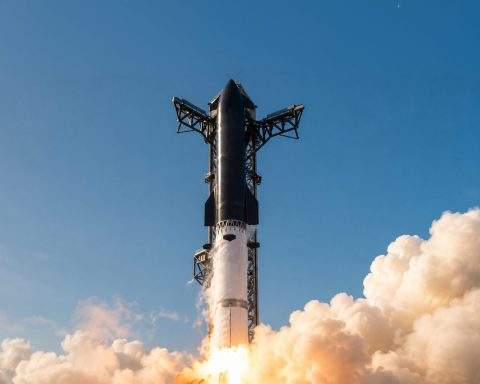
SpaceX is leaning hard on Starship, its big reusable rocket, for this plan. The company says Starship could make it cheaper to launch lots of gear into orbit. Reuters said SpaceX wants the green light to put as many as one million satellites in space for data centers, showing that most of the hoped-for valuation is tied to scaling up, not just a small pilot.
Investors have actual numbers to work with from SpaceX’s current business. The company’s connectivity segment, made up of satellite internet, posted $2.087 billion adjusted EBITDA in the first quarter of 2026 and $7.168 billion for 2025. Adjusted EBITDA, which isn’t a GAAP metric, leaves out some expenses and helps compare operating results, but it’s not the same thing as net income.
Losses weighed too. SpaceX logged a net loss of $4.276 billion in the first quarter of 2026, much wider than the $528 million loss in the same quarter last year. The AI unit ended the quarter with negative adjusted EBITDA of $609 million. For 2025, that segment lost $1.237 billion on an adjusted EBITDA basis, showing the scale of cash burn before the business starts to deliver returns.
SpaceX is a key near-term AI customer that has caught investor focus. A SpaceX prospectus shows the company signed cloud services deals with Anthropic in May, covering compute on COLOSSUS and COLOSSUS II and involving around 325,000 Nvidia GPUs. The deal sets payments at $1.25 billion per month through May 2029 after a lower ramp period. The filing states either side can cancel after the first three months if they give 90 days’ notice.
SpaceX’s IPO is already making waves outside equities. Reuters said SpaceX-related dollar buying for the IPO, around $1.5 billion, has pressured the South Korean won lately. The won rebounded after traders said those big dollar orders were mostly wrapped up. That kind of pre-IPO move is unusual—a private listing big enough that foreign exchange desks noticed before a share even trades.
Political pressure is hitting just ahead of pricing. Senator Elizabeth Warren called on the Securities and Exchange Commission to hold off on the IPO. She said “the massive size of the SpaceX IPO alone” should prompt more scrutiny, pointing to issues with disclosure, index-fund exposure, governance, and arbitration clauses. It’s another layer of regulatory noise as the deal leans on speed and scarcity. Banking Committee
Valuation is the most straightforward risk. Morningstar put SpaceX’s value at $63 per share, which is 53% below what the IPO is expected to price at, and gave low odds to its most bullish case, where Starship and orbital data centers catch on fast. SpaceX’s S-1 points out the big hurdles: orbital AI compute and other projects depend on tech that hasn’t been proved, are very complex, and may never have a market; SpaceX also said in-orbit refueling hasn’t been done yet.
SpaceX sets pricing for its offering Thursday, with shares set to begin trading Friday under SPCX. That leaves investors guessing whether early trades will reflect the deal’s scarcity or if the market starts to discount the uncertain economics of launching AI infrastructure into space.