
New York, June 13, 2026, 17:03 (ET)
- Constellation Energy rose 2.86% Friday to $253.76, outperforming the S&P 500’s 0.50% gain.
- The stock remains far below its 52-week high, keeping valuation and execution risk in focus.
- The next near-term catalyst is the June 30 release of part of the Calpine-related share lock-up.
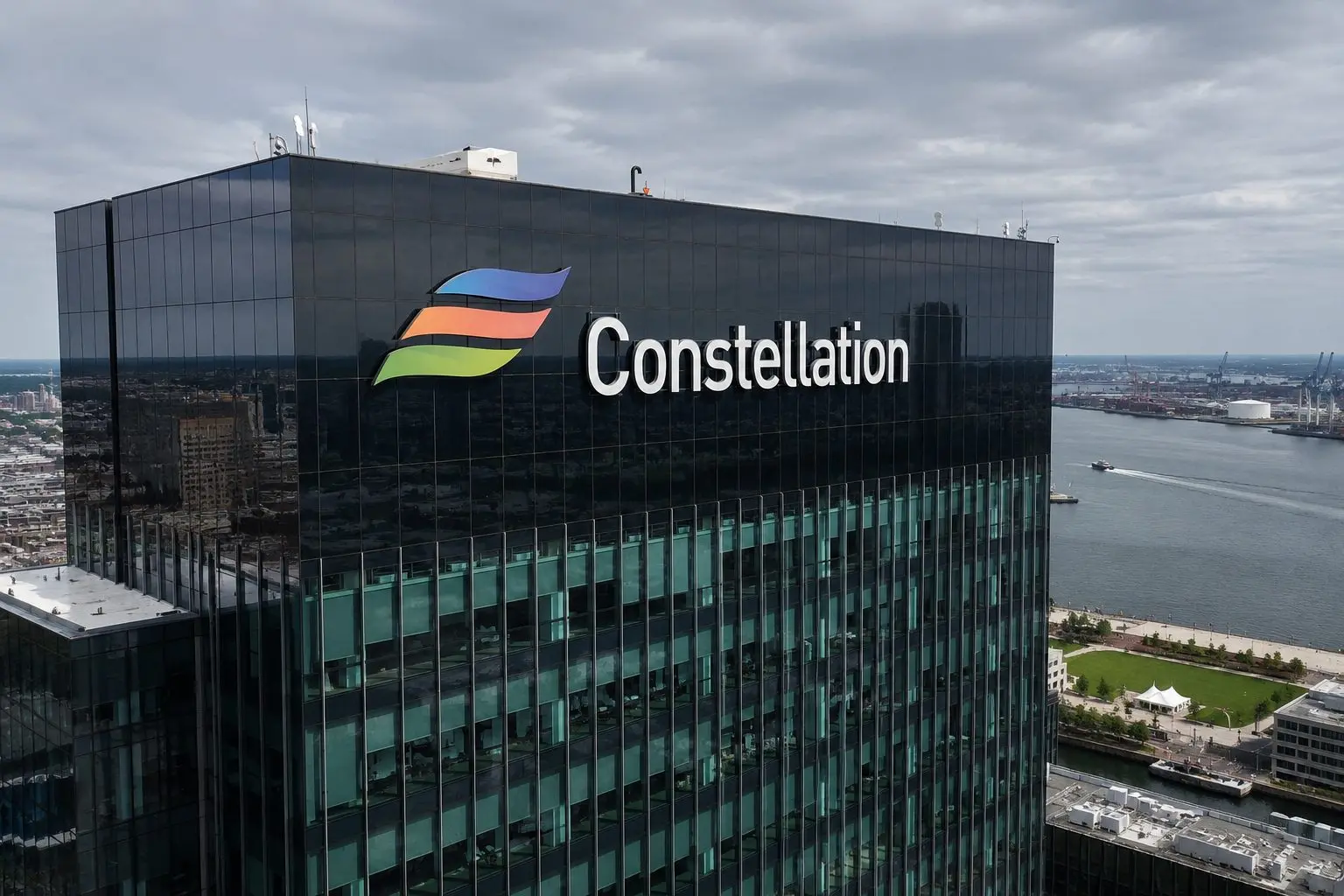
Constellation Energy Corporation’s stock ended Friday at $253.76, up 2.86%, giving the Nasdaq-listed power producer a second straight daily gain and a stronger move than the broader market. The rally matters because CEG has been trying to stabilize after a sharp pullback: even after Friday’s advance, the stock was still 38.51% below its 52-week high of $412.70, according to MarketWatch. The S&P 500 rose 0.50% and the Dow Jones Industrial Average gained 0.70% in the same session.
The latest company news supports the bull case that Constellation is still investing behind reliable, around-the-clock power supply. On June 9, the company said its Limerick Clean Energy Center completed a refueling and maintenance outage that included $90 million of investment, cooling-tower performance upgrades and generator component replacements designed to position the unit for the next 24 months. Limerick site vice president Marty Bonifanti said the outage work would allow Unit 1 to “continue to deliver dependable, emissions-free electricity for decades to come.” Constellation
Constellation also said Calpine, now a business unit of the company, completed a 25-megawatt expansion at The Geysers geothermal complex in California, enough to power more than 25,000 homes annually. For investors, these projects are not large enough on their own to reset valuation, but they reinforce the strategic story: CEG’s premium depends on turning nuclear, geothermal and gas assets into dependable supply for a grid facing rising demand from data centers and electrification.
Valuation is where the stock becomes more complicated. Google Finance lists Constellation with a market capitalization of about $91.1 billion and a price-to-earnings ratio, or P/E ratio, of 22.05; P/E is the share price divided by earnings per share and is commonly used to judge how expensive a stock is relative to profits. Analyst sentiment remains constructive, with MarketScreener showing a Buy consensus from 21 analysts and an average target price of $368.43, but that optimism is already tied to expectations that the company can keep delivering growth from clean power demand.
The fundamental support is real. In May, Constellation reported first-quarter GAAP net income of $4.49 per share and adjusted operating earnings of $2.74 per share; adjusted operating earnings are a non-GAAP measure that strips out certain items to show underlying operating performance. The company also affirmed full-year 2026 adjusted operating earnings guidance of $11.00 to $12.00 per share. CEO Joe Dominguez said, “America needs reliable, clean power,” and CFO Shane Smith said the company was affirming guidance and expected “strong, visible cash flow.” Constellation
The bear case is centered on share supply, regulatory timing and high expectations. On June 1, Constellation announced an 11 million-share secondary offering by selling shareholders at $281 per share; the company said it was not selling shares and would receive no proceeds, though it agreed to repurchase 2 million shares from the underwriters. A secondary offering is a sale of existing or new shares after a company is already public, and it can pressure a stock when it increases available supply.
The next major catalyst investors should watch is June 30, when one-half of the Constellation shares received by certain Calpine shareholders are scheduled to be released from a lock-up, a restriction that limits when deal-related holders can sell stock. SEC filings show Calpine shareholders received 13.78% of Constellation common stock in the merger, with half of those locked-up shares released on June 30, 2026, and the remainder on June 30, 2027. That does not mean holders will sell immediately, but it creates a clear supply overhang at a time when the stock is trying to rebuild momentum.
A second catalyst is progress on the Crane Clean Energy Center, the former Three Mile Island Unit 1, because its restart is tied to the AI-power narrative investors have assigned to CEG. Reuters reported that U.S. energy regulators granted a waiver to speed reconnection of the Pennsylvania plant, which Constellation plans to use to supply Microsoft-operated data centers. If regulatory and grid milestones continue to clear, the bull case strengthens; if delays reappear, the stock could remain volatile. Based on the verified facts, CEG looks selectively attractive for investors comfortable with nuclear, data-center and power-market risk, but fairly valued to risky for conservative buyers until the June share-supply event and restart timeline become clearer.
Related articles: NASDAQ:CEG