
NEW YORK, June 22, 2026, 05:03 EDT
- Intel finished the last session at $133.99, up $12.89 or 10.64%. Early premarket pegged the stock at $139.64, up another 4.2% from that close.
- President Donald Trump said Apple plans to team up with Intel on chip design and manufacturing in the U.S., helping fuel the rally. Intel also made a new move in its Foundry leadership.
- The numbers: Thursday’s rally put about $64.8 billion more on the company’s market cap in a day. Mizuho’s new price target, at $135, is just 0.8% over where shares finished last session.
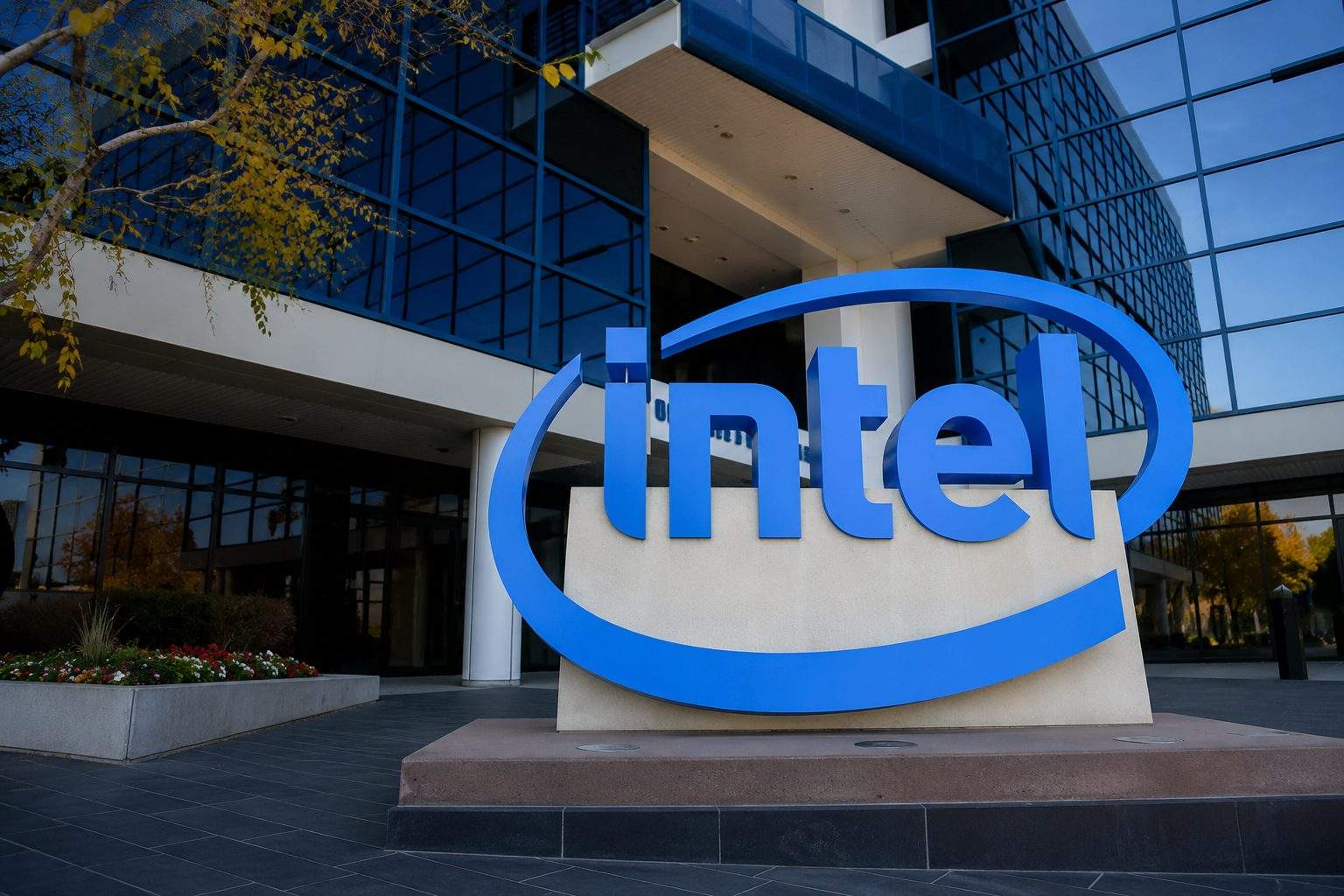
Intel Corporation NASDAQ:INTC is in focus Monday after jumping 10.64% to $133.99 last session. Early premarket quotes put the stock at $139.64, up 4.2% from that close. The gain comes after President Donald Trump said Apple would partner with Intel to design and make chips in the U.S. Reuters said Apple and Intel haven’t commented yet. For now, shares are trading up, with the deal details not out.
The tough spot for NASDAQ: INTC bulls is how fast the stock’s valuation moved. Intel jumped $12.89 in a day, which, times 5.03 billion shares, put about $64.8 billion in market cap on in just one session. That’s nearly 4.8 times what Intel made in all of Q1 2026, at $13.6 billion in revenue. That’s the headline: the market wasn’t just reacting to a shot at Apple business. It shifted how it prices Intel Foundry’s credibility.
Reuters said the rumored Apple deal could help Intel’s turnaround, with a contract from a top electronics maker guaranteeing demand and giving Intel a leg up against TSMC. But Reuters also pointed to a major gap: Trump didn’t say which chips Intel would build. Apple has used TSMC for its M-series chips since it dropped Intel Mac processors in 2020.
That’s a key point. Testing lower-volume parts doesn’t mean Apple is moving its main iPhone or Mac chips. Bernstein’s Stacy Rasgon told MarketWatch that any early Apple-Intel work could focus on small-batch, non-core components. That’s a reminder that first foundry wins aren’t equal to lasting margin strength.
Intel followed up on the Apple headlines with another tape-friendly move, announcing that Seok-Hee Lee will be executive vice president at Intel Foundry. He’ll lead advanced packaging, system integration, back-end technology development, and manufacturing. CEO Lip-Bu Tan said, “advanced packaging and system integration are becoming defining capabilities.” Lee said demand for system-level integration is picking up in AI and high-performance computing. Intel
This is where the trade gets more interesting than a Trump headline. Demand for packaging is pulling in Apple, Nvidia, AMD, hyperscalers and custom-AI chipmakers—all need it, not just top-end wafers. Intel’s EMIB and Foveros are getting attention as the market looks for a possible back door to bring Intel into foundry deals. Customers are starting with packaging work, holding off on the most sensitive front-end silicon.
Intel helped shape that story on June 16, when it said Intel 18A-P is now in risk production and can offer either 9% higher performance at iso-power or 18% lower power at iso-performance compared with Intel 18A. Naga Chandrasekaran, executive vice president and general manager at Intel Foundry, said the update shows the company is “fully committed to leading edge process innovation.” Newsroom
The Intel bear case isn’t holding up like it used to. The company’s Q1 revenue hit $13.6 billion, a 7% increase from last year. Data Center and AI sales climbed 22%; Foundry revenue rose 16%. Non-GAAP EPS came in at $0.29. On a GAAP basis, EPS stayed in the red at $(0.73) as restructuring and other charges continued to drag on results.
Tan’s earnings call zeroed in on AI infrastructure, with a line about the next AI wave “moving from foundational models to inference to agentic.” That’s driving action in the stock. It puts a reason behind why traders stick Intel in with AI names, despite it not being Nvidia. As AI demand grows past just training clusters, CPUs, packaging and foundry capacity start to look more important. Intel
Wall Street isn’t giving Intel a pass here. Mizuho’s Vijay Rakesh bumped his price target on the stock up to $135 from $128 and held a Neutral rating, mentioning EMIB-T and Foveros as possible tailwinds and saying Intel could take a 10%–15% long-term share in advanced packaging. But with Intel closing at $133.99 on Thursday, that target means only around 0.8% upside. And at Monday’s quoted premarket price of $139.64, shares were already above the new target.
There’s a political balance-sheet angle that often gets overlooked. Intel’s 2025 deal with the Trump administration had the U.S. government putting up $8.9 billion for 433.3 million primary shares at $20.47 a share. That worked out to a 9.9% stake back then. At $133.99, the value on paper would be about $58.1 billion—an implied gain of $49.2 billion before accounting for the warrant structure.
The bear case boils down to some big gaps: Intel and Apple haven’t confirmed the arrangement, there’s no detail on what chips are involved, and Intel’s GAAP profit is still shaky even though non-GAAP looks better. On the charts, traders are watching key levels: if Intel can’t stay above the old intraday breakout at $135.48, the momentum setup loses steam. If shares drop back below $127.90, which was Thursday’s low, it would show investors aren’t buying the Apple premium.
For smart retail traders, the question now isn’t if Intel is “back” but if the market will demand proof. If premarket gains Monday hold once the bell rings, shares move past headline trading and dare analysts to hike models. If the rally fades, the reason’s clear: customer excitement got ahead of what Intel reported. The next set event is Intel’s slated July 23, 2026 earnings, where investors want numbers on foundry orders, packaging, and any words turning the Apple buzz from politics into confirmed business. Investing.com
This article is intended for information only. It is not investment advice, financial advice, or a recommendation to buy or sell any security. Stocks go up and down, sometimes sharply, and what happened before doesn’t mean it’ll happen again. Do your own research, and think about talking to a licensed financial adviser before putting money in the market.
Related articles: NASDAQ:INTC
![US Stock Market Today 08/25/2026 [UPDATE: 02:14 EDT] [Sandisk Jumps as QQQ Clears $710 Overnight]](https://ts2.tech/wp-content/uploads/2026/08/US-market-dashboard-2026-08-25-0208-480x384.jpg "US Stock Market Today 08/25/2026 [UPDATE: 02:14 EDT] [Sandisk Jumps as QQQ Clears $710 Overnight]")