
NEW YORK, June 22, 2026, 11:01 EDT
- Dow Jones Industrial Average (.DJI) gained 214.78 points, or 0.42%, to 51,779.48 on delayed LSEG data; the S&P 500 rose less and the Nasdaq fell.
- The move was not broad-based alone: Caterpillar and Visa supplied a large mechanical lift because the Dow is price-weighted.
- Traders were balancing progress in U.S.-Iran talks against this week’s inflation test and a still-hawkish Federal Reserve backdrop.
The Dow Jones Industrial Average (.DJI) rose on Monday morning, beating the broader S&P 500 (.SPX) and the technology-heavy Nasdaq Composite (.IXIC), as industrial and financial shares did more of the work than the headline index move suggested. LSEG data on Reuters showed the Dow up 214.78 points, or 0.42%, at 51,779.48, while the S&P 500 was up 0.11% and the Nasdaq was down 0.40%; the figures were delayed by at least 15 minutes.
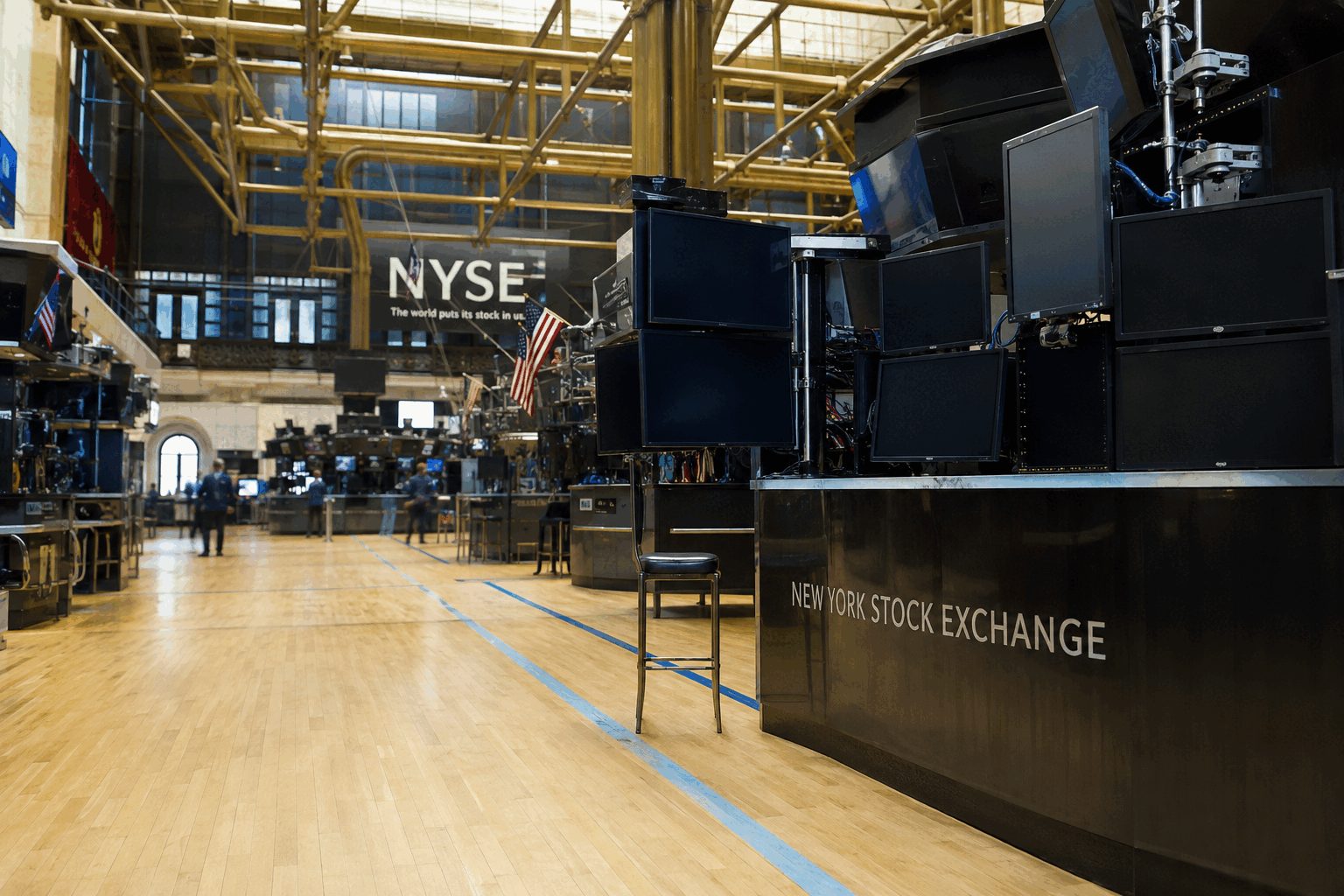
The session mattered because U.S. shares reopened into regular trading after Friday’s Juneteenth closure, with investors trying to decide whether easing Middle East risk can hold down oil prices and inflation pressure. The NYSE lists Juneteenth National Independence Day as a Friday, June 19 market holiday in 2026, and its core cash-equity session runs from 9:30 a.m. to 4:00 p.m. ET.
The macro lead was diplomacy. Reuters reported that U.S. and Iranian officials made progress in Switzerland toward a possible framework, helping calm some concern around the Strait of Hormuz, the key oil-shipping route at the mouth of the Gulf. AJ Bell’s Dan Coatsworth said investors still were not in “full-blown risk-on mood,” a useful read on a market that was green in parts, not everywhere. Reuters
That split showed up in the index tape. Financials led S&P 500 sector gains, while communication services lagged; Alphabet and SpaceX declines weighed on the Nasdaq even as semiconductor shares held firm. The Philadelphia SE Semiconductor index rose to a fresh record, with Micron Technology and Sandisk higher ahead of Micron’s results later this week.
The overlooked catalyst was the Dow’s construction. S&P Dow Jones Indices says the Dow is a 30-stock, price-weighted index, which means a higher dollar stock price carries more index force than a lower-priced stock, regardless of the company’s market value. In plain English: a big move in one expensive Dow share can make the whole index look stronger than the average stock feels.
That mattered on Monday. MarketWatch data showed Caterpillar NYSE:CAT up $20.56 and Visa NYSE:V up $5.18 earlier in the session, together adding roughly 158 Dow points; it also noted that a $1 move in any Dow component translates into a 6.16-point swing in the average. That is the hidden mechanism behind the Dow’s outperformance: machinery and payments stocks were doing point-heavy lifting while parts of growth tech sagged.
Oil gave bulls some cover. Brent crude fell 1.8% to $79.07 a barrel after officials from Qatar and Pakistan said talks had produced a roadmap toward a final deal within 60 days, far below Brent’s May peak of $126.41. Wealth Club’s Susannah Streeter warned there was still “a long way to go,” which is why energy relief did not turn into a clean all-market rally. Reuters
The next test is inflation. Thursday’s personal consumption expenditures report, or PCE, is watched by the Federal Reserve as a preferred inflation gauge; a hot reading would make the rate backdrop harder for stocks. Two-year Treasury yields, the return investors demand to hold short-dated U.S. government debt, touched 4.230% earlier, their highest since early 2025, while JPMorgan’s Fabio Bassi said the policy “margin for error” was limited. Reuters
The risk is simple: if talks stumble, oil can rebound, and if PCE runs hot, the Fed-rate trade can again push yields higher. That would hit the Dow’s industrial and financial bid from two sides — weaker growth confidence and tighter money — while leaving the Nasdaq exposed to further pressure in richly valued technology shares.
For now, the Dow’s gain is real but narrow in its machinery. The market is buying blue-chip cyclicals, banks and selected chip names, not making a blank-cheque bet on risk. A stronger close would say investors trust the oil-and-inflation relief trade; a fade back toward the open would say Monday’s move was more index arithmetic than conviction.
Related articles: NYSE:CAT