
NEW YORK, July 11, 2026, 14:08 (EDT)
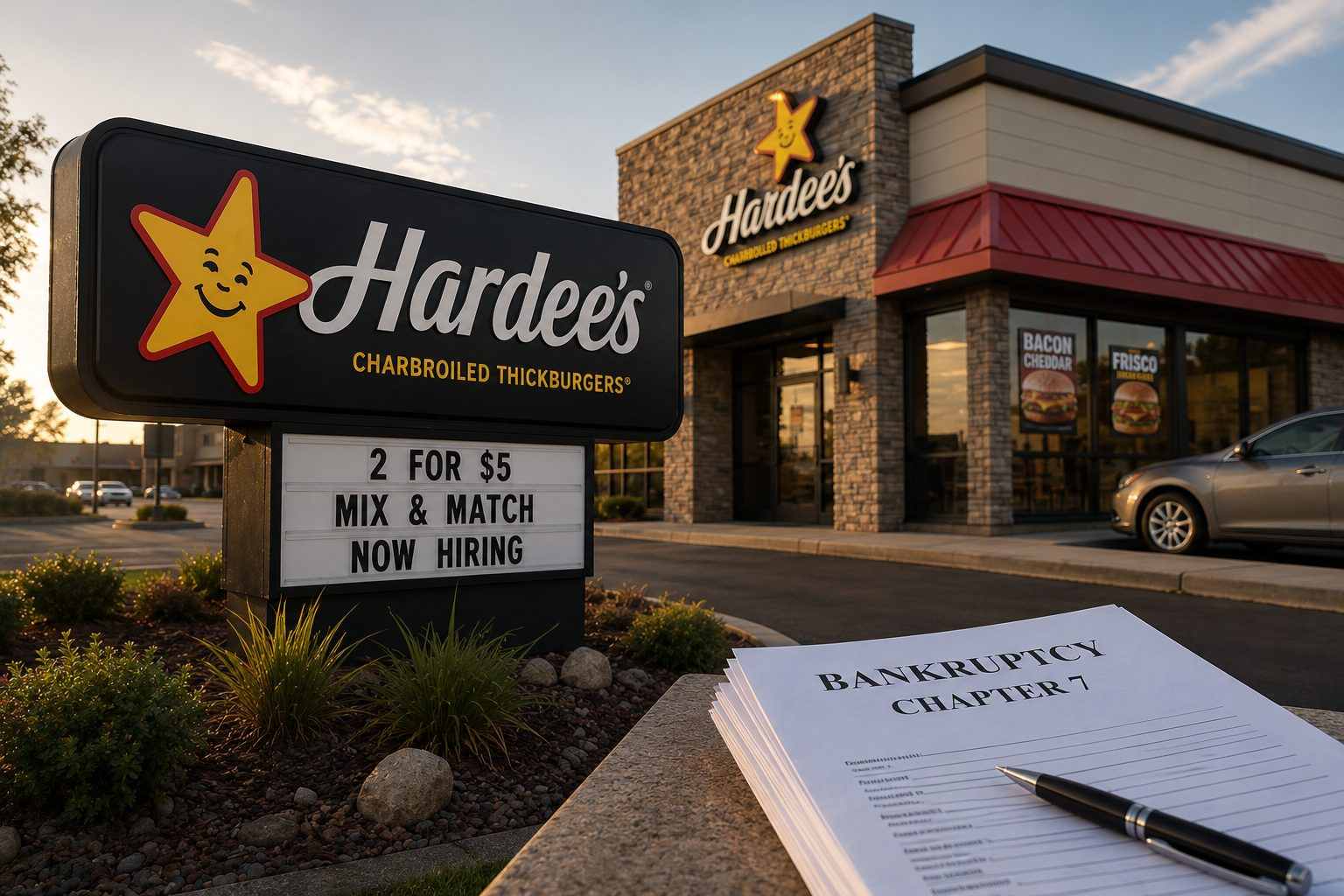
Two U.S. consumer names landed in Chapter 11 within a day. At least $9.31 million in mall guarantees and deal financing move into the bankruptcy courts. A Sneaker City Albany filed Friday, July 10. Superior Star, operator of 59 Hardee’s stores, filed Thursday. Chapter 11 lets bankrupt companies keep running while they try to work out debts.
The core issue isn’t fresh bills for goods or wages. It’s leftover debt from old growth — like lease guarantees for shuttered stores and a disputed seller loan tied to 93 restaurants. That shifts the investor view. It’s not so much about consumer demand, but about who takes on aging leases and deal debt as small operators pull back.
| Debtor | Filing snapshot | Operating base | Main concentration |
|---|---|---|---|
| A Sneaker City Albany | $47,636 in assets against $2.38 million liabilities | Albany store and website are open; five related store businesses listed as closed | Seven mall-related claims at $2.272 million, making up about 95.5% of liabilities; debts run nearly 50 times assets |
| Superior Star | Assets and debts both in $10 million to $50 million range | Runs 59 Hardee’s locations, off 36.6% versus the 93 it bought in 2023 | $7.04 million seller-finance dispute, accounting for almost 90% of the top six named claims |
Calculations are based on numbers in the filings. For Superior Star, the percentage is figured with the lowest possible totals for five creditors listed as owed “more than” the shown amounts. TheStreet
A Sneaker City is carrying a heavier balance sheet. Around $42,500 of assets are inventory counted at liquidation value. Revenue hit $162,000 in 2026 through the filing, down from $479,000 for all of 2025 and $392,000 in 2024. The Albany store and online site are still running. Most of the debt was tied to guarantees backing other stores that have already closed, according to the filing.
Seven mall names from the creditor list show up on the public center list of Simon Property Group NYSE:SPG. Their total claims, $2.272 million, come to less than 0.2% of Simon’s $1.208 billion in first-quarter real estate FFO, a standard cash flow metric for property firms. That points to limited group-level risk before any recoveries, but ownership or claim rights could differ by property. Simon said occupancy was at 96%, with rent per square foot up 5.2% and tenant sales per square foot rising 11.8%. CEO Eli Simon pointed to “continued leasing momentum” in the company’s first-quarter release. SIMON
Broader footwear numbers suggest the filing shouldn’t just be read as proof sneaker demand is tanking. Nike (NYSE:NKE) reported a 4% fourth-quarter gain in wholesale revenue, but Nike Direct was down 7% and digital sales dropped 12%. Full-year revenue stayed flat. Still, CFO Matthew Friend said “sell-through remains challenged,” meaning wholesale can expand even if retailers are pressured. Nike Investors
Superior Star’s bankruptcy centers on its 2023 buy of the Hardee’s stores. The big issue is a $7.04 million seller note, where the seller helped finance the deal. That note is disputed and subject to setoff — Superior Star says it might have counterclaims that could reduce what it owes. Five more major creditors named in a separate report on the filing are owed at least $736,000 for things like ended leases, settlements, supplies and rent. Hardee’s blamed the bankruptcy on Superior Star’s own finances and operations.
Hardee’s parent CKE Restaurants is facing a bigger problem. Hardee’s has shut more stores than it opened each year going back to 2017, logging almost 400 closures, Nation’s Restaurant News reported. After franchisee ARC Burger went under, Hardee’s brought back 25 of those locations as company stores. Meanwhile, Restaurant Brands International (NYSE:QSR), which runs Burger King, posted a 5.8% gain in U.S. same-store sales for the first quarter. CEO Josh Kobza said results showed “clear outperformance,” pointing out that chain sales and a single franchisee’s performance don’t always line up. Nation’s Restaurant News
| Public-market read-through | Latest operating signal | What the new filings add |
|---|---|---|
| Simon Property Group | Occupancy at 96%; quarterly real estate FFO $1.208 billion | Small tenant doesn’t move the needle, but old lease guarantees stick around after closures |
| Nike | Wholesale up 4%; Nike Direct fell 7% | Stress at small retailers might be about balance sheets or inventory, not just consumer demand |
| Restaurant Brands | Burger King U.S. comp sales rose 5.8% | Even with higher brand sales, franchisee lease and financing issues don’t just go away |
The wave could stay contained, with A Sneaker City pushing back on its biggest mall debt and Superior Star contesting the acquisition debt at issue. If Superior Star manages a successful restructuring, Albany and much of its 59-store group could keep running after debts and leases are reworked. Failure would mean more rejected stores or scrapped financing, which could leave landlords, food suppliers and the franchisor stuck with closures, write-downs or returned locations.
Superior Star filed Thursday. A Sneaker City filed Friday. U.S. cash-equity markets aren’t open Saturday and will open again at 9:30 a.m. EDT Monday, July 13. That date isn’t a 2026 market holiday. Next week’s court filings on cash, leases, store counts, and the seller note could firm up recovery prospects and show if either chain is cutting more locations. The NYSE calendar puts the next market holiday as Labor Day, September 7.
Investors should watch the ratio of old fixed obligations to what’s left of the business. Store sales may slump and bounce back, but things like lease guarantees and acquisition notes usually stick around, often even after the original stores are gone.
Related articles: Stock Market