NEW YORK, July 17, 2026, 09:48 EDT — U.S. stock futures fell, extending declines as the ongoing chip rout increased the $10 billion divide between growth and value shares.
U.S. stocks fell sharply at the open on Friday, with the chip sell-off extending to megacap growth shares. As of the most recent 9:33 a.m. quote, SPDR S&P 500 ETF Trust NYSEARCA:SPY was at $741.77, off 1.19%. The iShares Semiconductor ETF NASDAQ:SOXX was at $508.13, a decline of 4.22%.
Nasdaq 100 futures dropped 1.9% ahead of the open. S&P 500 futures declined 0.9%, and Dow futures were down 0.65%.
The investor cue is the expanding style gap. Nasdaq futures lagged behind Dow futures by 1.25 percentage points. This shift reflects a $10.18 billion difference between weekly outflows from growth funds and inflows into value funds.
| Relative signal | Calculation | Result |
|---|---|---|
| Nasdaq and Dow futures difference | 1.90% − 0.65% | 1.25 percentage points |
| SOXX to SPY initial cash gap | 4.22% − 1.19% | 3.03 percentage points |
| SOXX drop compared to SPY | 4.22 ÷ 1.19 | 3.55 times |
| Growth versus value funds | $7.18bn + $3.00bn | $10.18bn |
Futures quoted as of 8:33 a.m. EDT. ETF prices are from 9:33 a.m.; flow data includes the week ending July 15.
LSEG LON:LSEG Lipper data revealed investors pulled $7.18 billion from growth funds. Value funds collected $3 billion for the third consecutive week. Equity funds as a whole saw outflows of $4.8 billion, while bond funds took in $9.89 billion.
The sell-off in semiconductor stocks was widespread, with all SOXX components poised to fall ahead of the market open.
SOXX last traded below $524.01. If the index ends the session under this mark, it will mark a 20% drop from its June high. The result depends on how it finishes trading on Friday.
The Philadelphia chip index jumped 87.75% in the previous quarter, but has fallen 8.48% so far this week as of Thursday. This indicates profit-taking after a strong rally, rather than a decline caused solely by weaker demand.
Nvidia NASDAQ:NVDA slid 2.5% before the bell. Applied Materials NASDAQ:AMAT and Lam Research NASDAQ:LRCX each declined nearly 4%.
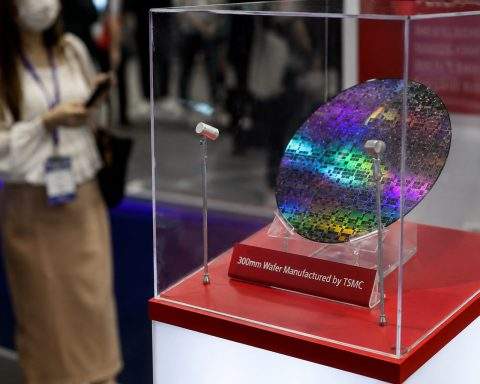
Taiwan Semiconductor Manufacturing Co. NYSE:TSM and ASML Holding NASDAQ:ASML posted robust earnings, but shares in the sector remained under pressure. Recent profit gains have proved insufficient to overcome valuation concerns.
“This is morphing from just a chip selloff into something far broader,” said Chris Beauchamp, chief market analyst at IG Group LON:IGG. The Nasdaq Composite stayed roughly 11% above its level for 2026, leaving investors with gains to shield. Reuters
Friday’s price data increased pressure. U.S. import prices climbed 0.3% in June, while economists had expected a 0.7% decrease. Yearly import inflation hit 7.1%, marking the highest level since August 2022.
Nonfuel import prices increased by 0.4%, lifted in part by higher costs for computers, peripherals and semiconductors.
Growth figures provided scant relief. Industrial production edged up 0.1% in June, and manufacturing output remained unchanged. Capacity utilisation stayed at 76.1%, still well under its historical average.
Oil added to discount-rate concerns as Brent climbed 2.1% to $86, marking a gain of roughly 13% for the week. Dallas Fed President Lorie Logan stated modestly higher rates could help better align policy risks. Fed Vice Chair Philip Jefferson said a rate hike remains possible if inflation persists.
Netflix NASDAQ:NFLX dropped 11.3% after projecting third-quarter revenue and profit below Wall Street expectations. Intuitive Surgical NASDAQ:ISRG declined almost 10% after maintaining its procedure-growth forecast.
The next key event is scheduled for 10 a.m. EDT, with the release of the preliminary University of Michigan sentiment data and household inflation expectations.
Risks persist on both sides. Weaker sentiment or easing tensions in the Gulf may trigger short covering. Alternatively, a fresh oil surge or higher inflation expectations could widen the gap between growth and value stocks.