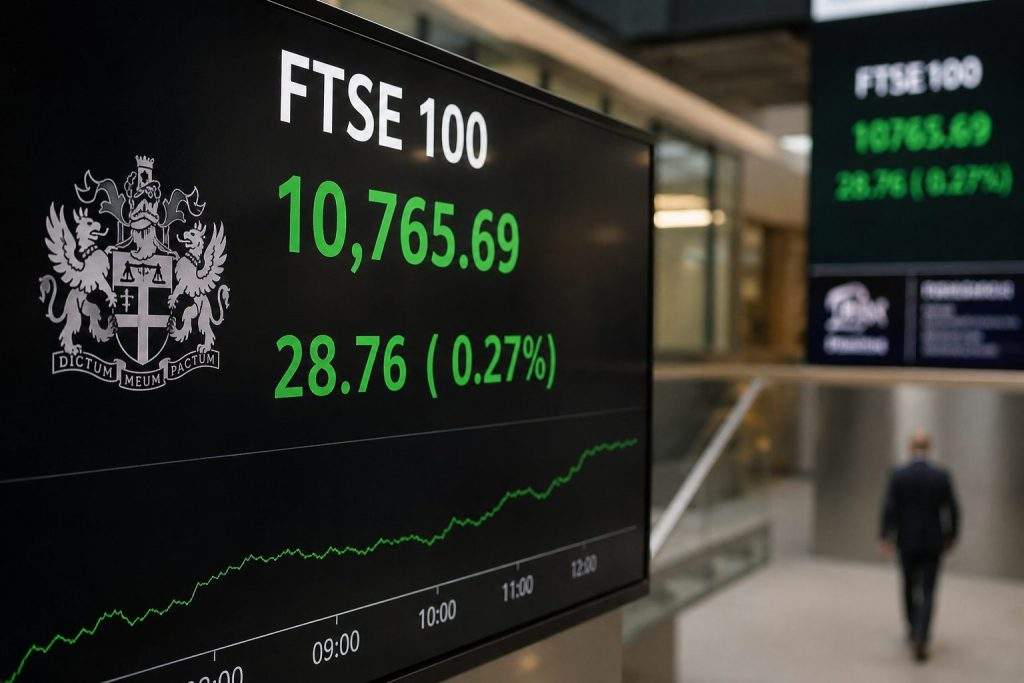
NEW YORK, July 27, 2026, 05:03 EDT — Nasdaq premarket trading has begun, with the main session to follow at 09:30 EDT.
- Apple ended Friday at $333.02, rising 3.5%, and added another 0.2% in premarket trading.
- A filing-based estimate places capital spending for the latest quarter at 1.8% of revenue.
- Analysts’ initial consensus projects revenue of $108.97 billion and earnings of $1.89 per share.
Apple approaches Thursday’s earnings report just 0.6% below its all-time high. The company gained about $167 billion in market capitalization during Friday’s surge, based on the latest share count. Shares were trading at $333.83 early Monday.
The shift diverged from the main trend. The Nasdaq slid 0.64% on Friday and was down 2.0% for the week. Investors exited technology names amid renewed worries about AI infrastructure expenses.
Alphabet Inc. NASDAQ:GOOGL, the parent company of Google, was a key source of those worries. Shares dropped almost 7% on Thursday following its earnings report. The company’s executives lifted capital expenditure guidance for 2026 to a range of $195 billion to $205 billion.
Alphabet’s expenditures reached $44.9 billion in the second quarter, representing 37.5% of its revenue and resulting in negative free cash flow of $5.9 billion. The bulk of these outlays went toward servers, data centres, and networking equipment.
Apple’s disclosures present a notably different picture. By deducting property acquisitions in the fiscal first quarter from its total over six months, the result is $1.97 billion. This amount was 1.8% of revenue in the fiscal second quarter. In comparison, Alphabet’s proportion was roughly 21 times higher.
| Company | Latest quarterly revenue | Capital spending | Capex/revenue | Forward P/E |
|---|---|---|---|---|
| Apple | $111.18 billion | $1.97 billion | 1.8% | 36.52 times |
| Alphabet | $119.8 billion | $44.9 billion | 37.5% | 24.06 times |
Apple’s number is based on its filings. Alphabet disclosed its amount outright. Valuation multiples reflected levels as of July 27.
The market is pricing in that distinction. Apple’s forward earnings multiple is roughly 52% higher than Alphabet’s. Thursday’s update needs to confirm that its leaner capital setup continues to underpin growth.
The comparison is not exactly equivalent. Alphabet has a significant cloud infrastructure division, while Apple’s income primarily comes from devices and services. Nonetheless, the disparity highlights what the market is currently valuing.
Minimal capital expenditure does not equate to a lack of investment. Apple increased its research and development outlay by 34% to $11.42 billion in the latest quarter, amounting to 10% of its revenue. The composition indicates that a larger share of investment is captured in operating expenses instead of physical assets.
Initial consensus projections point to revenue up 15.9% and earnings increasing 20.4%. This revenue forecast aligns close to the middle of Apple’s guidance range of 14%-17%. Apple is set to report results and host its earnings call Thursday at 5:00 p.m. EDT.
The previous quarter established solid momentum. iPhone revenue increased by 22% to $56.99 billion, while Services expanded by 16% to $30.98 billion. Increased demand for Pro models contributed to the iPhone revenue lift.
Apple continues to rely on services as its primary margin buffer, with gross margin for services standing at 76.7%, compared with 38.7% for products. However, Chief Executive Tim Cook cautioned: “We expect significantly higher memory costs.” SEC
Investor patience with indefinite AI spending is wearing thin. “The fear of missing out is becoming more like a fear of massive overbuilding,” said Peter Andersen, chief executive at Andersen Capital Management. Reuters
The debate will be resolved on Thursday’s call. Investors are set to scrutinize capital expenditure for the June quarter, assess demand for the iPhone, and look out for any updated margin guidance. Merely exercising restraint will not be adequate.
Risks: Apple trades at a 36.5 times forward earnings multiple. A decline in iPhone sales or a gross margin falling short of its earlier 47.5%-48.5% guidance could reduce that valuation premium. Short-term challenges also include increased memory expenses and supply limitations.
Apple’s advantage lies in funds it has not yet deployed. On Thursday, the company needs to prove that this caution has not held back sales. With shares trading close to all-time highs, there is limited tolerance for unclear results.
Related articles: NASDAQ:GOOGL