
LOUISVILLE, August 18, 2026, 08:18 EDT — U.S. regular stock markets were yet to open.
- Yum stock ended Monday roughly 15% lower than its high in July.
- Taco Bell began the outbreak period recording 7% growth in same-store sales for the quarter.
- The FDA states that the recalled lettuce is no longer available, though the investigation is still ongoing.
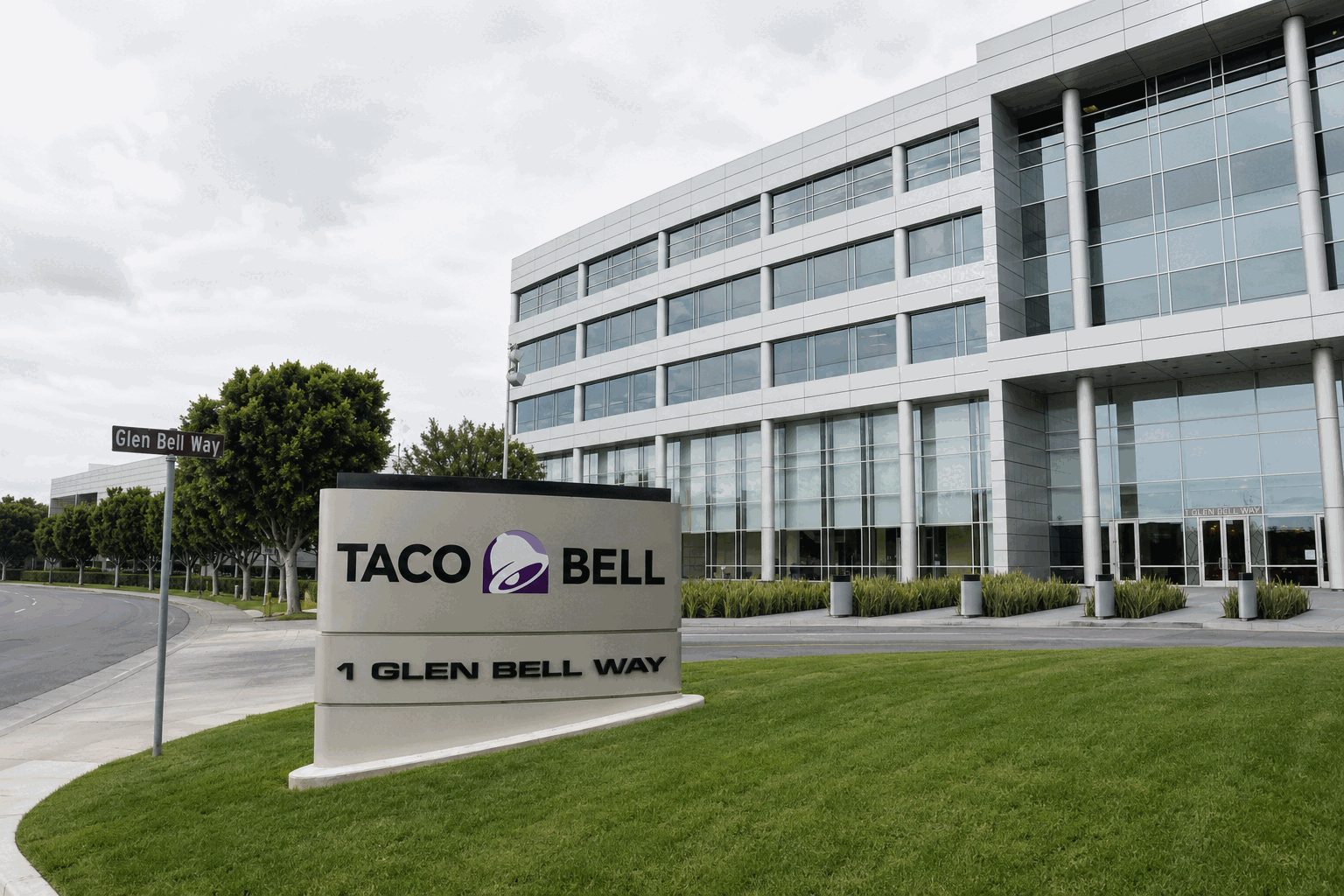
Yum! Brands, Inc. NYSE:YUM is set for a straightforward test of Taco Bell’s growth momentum. The company’s stock finished at $145.36 on Monday, down about 14.6% from its July 7 peak. Shares pointed 0.2% higher in early premarket trade Tuesday.
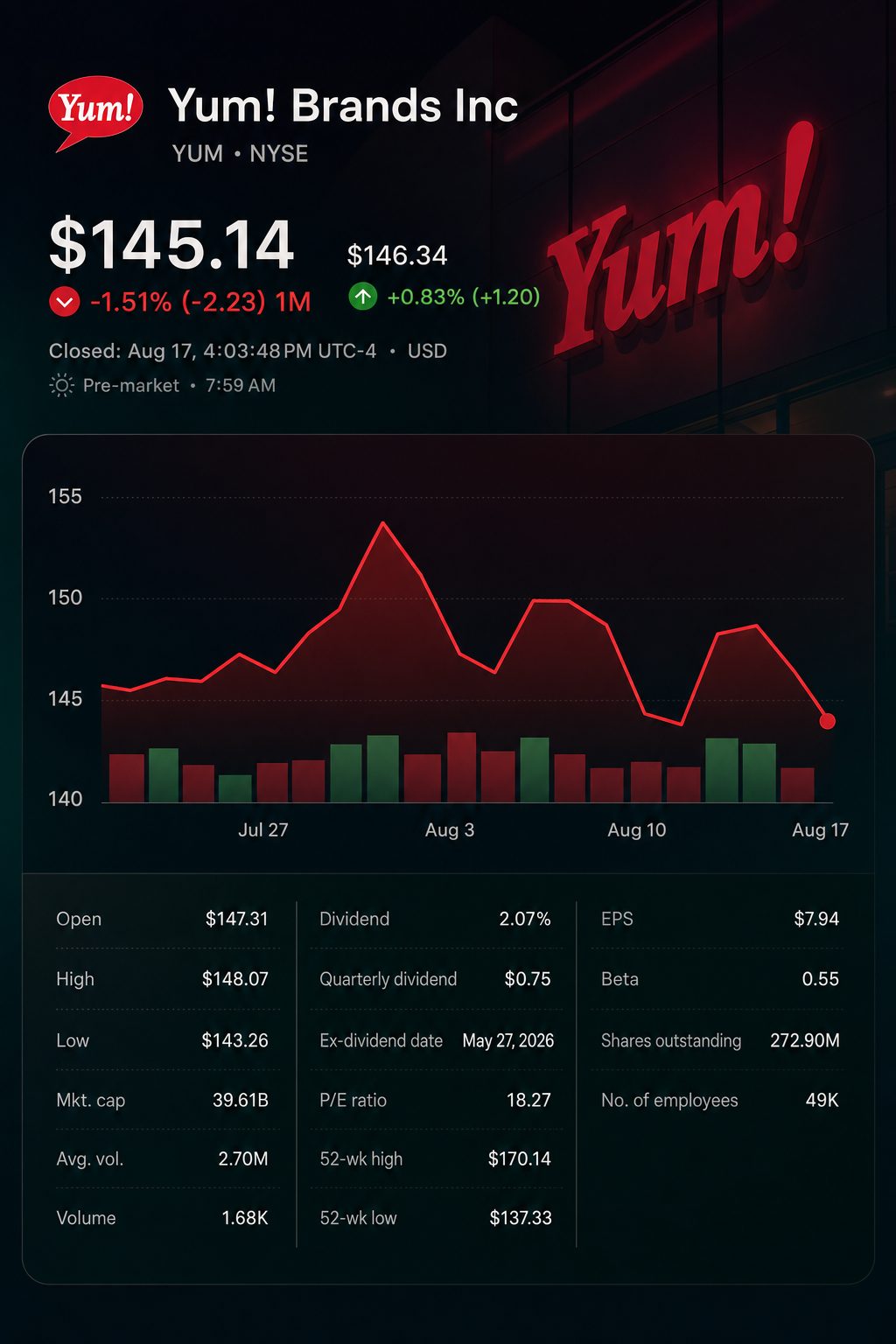
The discount is significant as Taco Bell was gaining momentum before the lettuce recall. Comparable store sales advanced 7% in the second quarter, and system sales increased by 9%. The outbreak started following the close of that quarter.
| Market and outbreak scorecard | Latest verified figure | Investor read-through |
|---|---|---|
| Monday’s closing price | $145.36 | Fell 1.86% |
| Drop from July 7 peak | -14.6% | About $24.78 per share lost |
| Consensus price target | $174.65 | Upside potential stands at 20.15% |
| Outbreak cases confirmed by FDA | 6,358 | Recorded in 15 states as of August 5 |
| Number of hospitalizations | 278 | Michigan reports two deaths |
The urgent food-safety threat has subsided. Acting FDA Commissioner Kyle Diamantas stated that the iceberg lettuce in question was “effectively removed from the market” following the July 17 recall. However, the investigation by the FDA and CDC is still underway. Reuters
Federal investigators identified Taylor Farms de Mexico as the source of the recalled lettuce. The FDA’s investigation involved individuals who reported exposure either at Taco Bell or via the recalled retail products. Taco Bell discontinued using the supplier on July 17.
| Taco Bell, second quarter | 2026 | 2025 | Change |
|---|---|---|---|
| Restaurants | 9,046 | 8,756 | +3% |
| System sales | $4.677 billion | $4.275 billion | +9% |
| Same-store sales | +7% | +4% | +3 points |
| Operating profit | $311 million | $262 million | +19% |
| Operating margin | 36.4% | 36.8% | -0.4 point |
The numbers establish a high standard. Chief Executive Chris Turner described the period as “another strong quarter with robust same-store sales and restaurant-level margin performance.” Taco Bell launched 54 gross new restaurants. Yum second-quarter release
Traffic numbers recorded the reputational impact. Placer.ai subsequently estimated that visits on July 17 were 30.9% lower than Taco Bell’s typical Friday volume. This updated figure replaced an earlier estimate of approximately 19%. The data, drawn from mobile-location activity, serves as an early indicator and does not correspond to sales figures.
| Traffic and operating comparison | Change | Period |
|---|---|---|
| Taco Bell customer visits | -30.9% | July 17 compared to 2026 Friday average |
| Overall fast-food visits | -1.9% | July 17 compared with similar average |
| Taco Bell visit gap | -29.0 points | Based on Placer.ai data |
| Taco Bell comparable-store sales | +7% | Quarter ending June 30 |
The key issue for investors is now duration. In a franchised system, a short-lived traffic decline can be quickly absorbed. However, a prolonged trust issue could put pressure on the 7% growth rate and affect franchisee financial health.
Wall Street continues to anticipate a rebound. The consensus price target among nineteen analysts stands at $174.65. Of these, twelve recommend Buy, while seven suggest Hold. However, the most recent update on Monday signaled caution: Argus analyst John Staszak maintained his Buy rating but lowered his price target to $180 from $185.
| Analyst recommendation | Date | Rating | Price target | Change |
|---|---|---|---|---|
| Consensus, 19 analysts | August 18 | Moderate Buy | $174.65 | 12 analysts rate Buy, 7 advise Hold |
| Argus | August 17 | Buy | $180 | Lowered from $185 |
| JPMorgan | August 4 | Overweight | $160 | Reduced from $170 |
| RBC | July 31 | Sector Perform | $170 | Increased from $165 |
| Deutsche Bank | July 31 | Hold | $174 | Rating maintained |
The division is notable. The consensus price target signals a potential 20.15% gain from Monday’s closing level. JPMorgan’s $160 target would equate to roughly 10% upside. Recent reductions in targets indicate investors seek proof rather than reassurance.
Weekly traffic comes next, then third-quarter sales. If numbers start to track category trends again, it would back up the idea that the recall’s negative impact was short-lived. Ongoing weak results could make the current share-price discount appear more lasting.
Risks: Case numbers may increase as reporting could require up to six weeks. Authorities might uncover additional channels or enforce stricter regulations. Hesitant consumers, softened restaurant demand, and higher franchise expenses may further postpone a rebound.