
NEW YORK, August 18, 2026, 04:40 EDT
- Toyota is recalling 508,354 Camry Hybrids in the United States due to a display malfunction.
- Camry sales increased by 15.3% in the first half, putting more emphasis on execution over repair expenses.
- The corrective action, provided at no cost, is a software update; notifications to U.S. owners begin September 21.
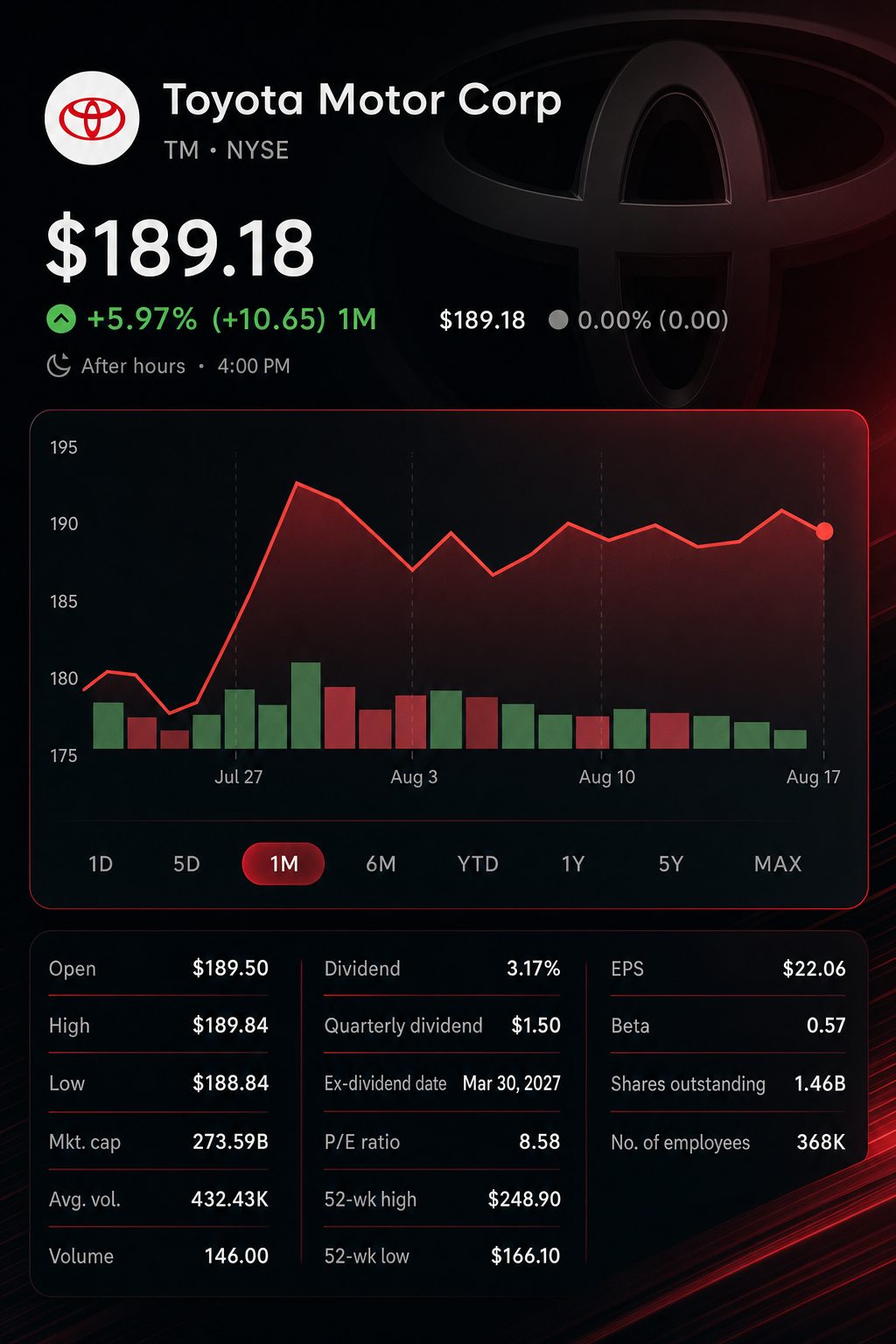
Toyota Motor NYSE:TM is carrying out a major recall in the U.S. for the Camry at a time when the sedan ranks among its top-selling hybrid vehicles. The campaign affects 508,354 cars but is not expected to significantly impact Toyota’s financial position. The key investor concern will be whether dealers can implement the required software update without interrupting the model’s robust sales trajectory.
The 2025 and 2026 Camry Hybrid models concerned are equipped with a seven-inch combination meter, which may not display at startup. This could result in the lack of turn-signal, hazard indicator, and other warnings, increasing the potential for a crash. Toyota will provide a complimentary software update to address the issue.
| Recall measure | U.S. detail | Investor reading |
|---|---|---|
| Vehicles | 508,354 Camry Hybrids | High volume for service departments |
| Model years | 2025–2026 | Exposes present model cycle |
| Remedy | No-cost software update | Cheaper per unit compared to part changes |
| Owner notices | Starting September 21 | Implementation timeline runs through fall |
The recall affects approximately 655,000 Camry vehicles globally, with U.S. models making up around 78% of the total. These cars were manufactured between December 2023 and July 2026 in facilities located in the United States, Japan and Thailand.
Focusing solely on scale exaggerates the risk to earnings. The solution involves software, rather than swapping batteries or powertrains. Toyota has yet to reveal the cost of the campaign. Investors should monitor completion rates, dealership capacity, and any potential increase in affected vehicles.
Rising demand for the Camry intensifies competition. In the first half, U.S. Camry Hybrid sales climbed to 179,033 units, an increase of 15.3%. Sales of the Crown reached 5,152, up just 1.9%. Camry volume was nearly 35 times higher.
| U.S. model | H1 2026 sales | Year-on-year change | June change |
|---|---|---|---|
| Camry Hybrid | 179,033 | up 15.3% | up 24.6% |
| Toyota Crown | 5,152 | up 1.9% | down 28.9% |
This difference highlights Toyota’s approach to sedan economics. The Camry is exclusively available as a hybrid in the United States. Its LE trim achieves up to 51 miles per gallon, and the lineup includes both front-wheel and all-wheel drive options.
Toyota reported an expanded electrified lineup, with U.S. electrified sales for the second quarter climbing 19.5% to 383,091 vehicles. Electrified models made up 56.8% of total North American sales. Executives called North American demand “solid” following the quarter. Wards Auto report
Toyota holds a significant financial buffer, with quarterly revenue reaching approximately ¥13.5 trillion and operating income totaling ¥1.06 trillion. The automaker has also approved a share repurchase of as much as ¥1 trillion. The recall serves as an indicator of product quality rather than a concern for liquidity.
| Analyst recommendation | Count | Share of eight ratings |
|---|---|---|
| Buy or strong buy | 4 | 50.0% |
| Hold | 3 | 37.5% |
| Sell | 1 | 12.5% |
| Consensus | Moderate Buy; $290 average price target | |
Wall Street sentiment is broadly positive yet divided. In a recent survey of eight analysts, four assigned buy ratings, three suggested holding, and one recommended selling. The consensus price target stood at $290. However, analysts’ approaches differ, and price targets may not always reflect current developments.
This week, keep an eye on actionable items: monitor dealer updates, watch for shifts in production, and track whether the seven-inch display issue remains limited. Toyota’s ADR market in New York was shut as of the current dateline. U.S. cash markets reopen at 09:30 EDT.
Risks: The campaign might broaden, software rollout could be delayed, or customers might postpone buying. Fluctuations in currency, tariffs, and reduced worldwide demand continue to be key factors affecting profit.