
SEOUL, August 18, 2026, 21:32 KST
- Samsung Electronics dropped 2.19%, lagging the KOSPI by 0.59 percentage point.
- SK hynix rose by 1.03%, resulting in a 3.22-point difference separating Korea’s top memory chipmakers.
- The division indicates that operational performance remains more significant than applying a standard Korea risk discount.
Samsung Electronics KRX:005930 ended Tuesday down 2.19% after a change in South Korea’s security sentiment and higher oil prices. Meanwhile, its top memory competitor saw gains. The contrasting moves are more significant than the headline index drop.
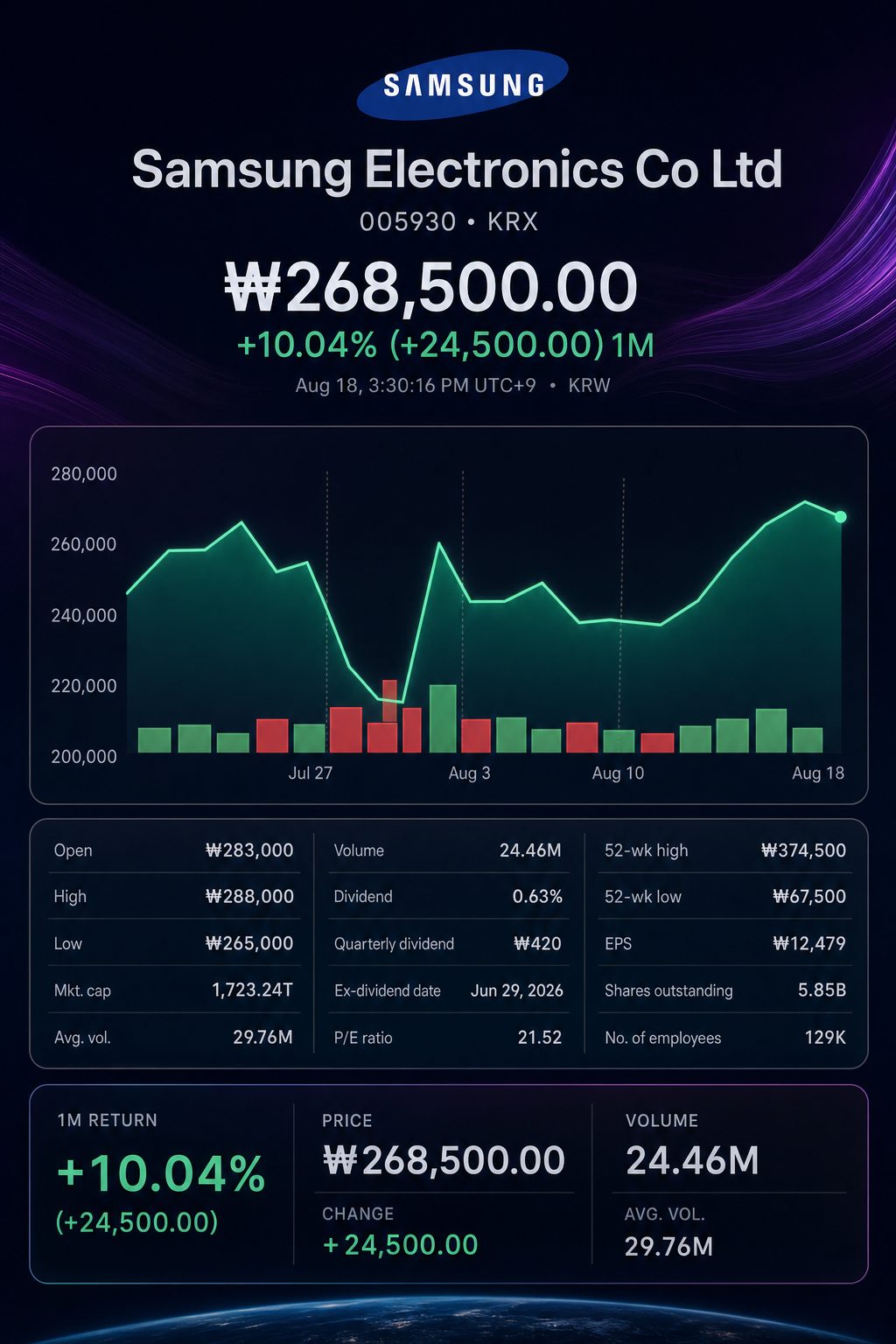
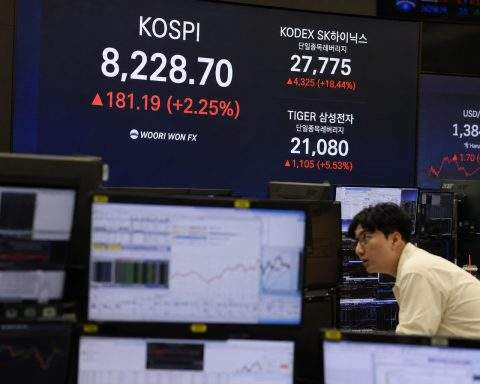
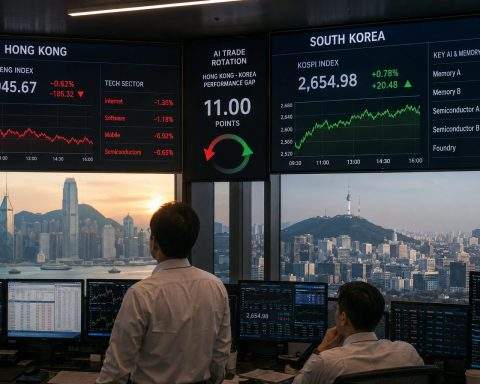
The KOSPI closed down 1.6% at 6,869.83. Samsung ended trading at 268,500 won. SK hynix KRX:000660 rose 1.03% to 1,662,000 won. Samsung trailed its main rival by 3.22 percentage points.
| Security and memory-market close | Level | Daily move | Read-through |
|---|---|---|---|
| Samsung Electronics | KRW 268,500 | -2.19% | Trailed benchmark and sector |
| SK hynix | KRW 1,662,000 | +1.03% | Memory dominance maintained |
| KOSPI | 6,869.83 | -1.60% | Korea-wide risk-off trend |
| Brent crude, early trade | $91.35/barrel | +0.50% | Upward inflation pressure |
Markets received new triggers to price in a Korea risk premium. President Donald Trump called for a significant cutback in joint military exercises. U.S. Forces Korea commander Xavier Brunson subsequently met with the defence ministry to review the drills, media outlets reported.
South Korean President Lee Jae Myung urged enhanced self-reliant defence and reaffirmed support for the U.S. alliance. “A strong alliance makes the foundation of security stronger,” Lee stated during a cabinet meeting. The Ulchi Freedom Shield military exercises are scheduled to conclude on August 27. Reuters
However, Tuesday’s differing performance among peers suggests that geopolitics alone is not to blame. Both chipmakers face identical national risks, yet investors favoured SK hynix and lowered Samsung shares.
Oil created fresh pressure. Brent crude climbed to $91.35, following a 2.7% rise on Monday. Increased energy prices pose a risk to Korean manufacturers’ profit margins and further challenge inflation control efforts.
Part of the valuation discount can be attributed to Samsung’s earnings composition. The chip business contributed nearly all of the operating profit in the second quarter, while the mobile division reported an operating loss of 700 billion won.
| Samsung Q2 2026 metric | KRW trillion | Share of group total |
|---|---|---|
| Group-wide revenue | 171.5 | 100% |
| Device Solutions sales | 127.5 | 74.3% |
| Total operating profit | 89.5 | 100% |
| Device Solutions operating income | 89.2 | 99.7% |
The group posted a 28% rise in revenue from the prior quarter, recording 171.5 trillion won. Operating profit stood at 89.5 trillion won. Memory performance boosted results, though elevated component costs weighed on phones and other products.
Samsung is working to reduce that cyclical volatility. Executive Vice President Jaejune Kim stated nearly all clients now want supply deals spanning multiple years. The firm’s goal is to have roughly two-thirds of its memory production tied up in extended contracts.
Investors continue to question the sustainability of record-high margins. “The chip narrative has weakened,” said Kim Seok-hwan, an analyst at Mirae Asset Securities, following the announcement of the results. Samsung reported a 70% operating margin in its chip division. Reuters
| Analyst recommendation | Rating | Target (KRW) | Upside from 268,500 |
|---|---|---|---|
| Macquarie | Buy | 480,000 | 78.8% |
| CLSA | Buy | 400,000 | 49.0% |
| Goldman Sachs | Buy | 490,000 | 82.5% |
| JPMorgan | Buy | 400,000 | 49.0% |
| UBS | Buy | 550,000 | 104.8% |
| 37-analyst consensus | 36 have Buy, 1 Hold, 0 Sell | 470,156 on average | 75.1% |
Analysts maintain a highly positive outlook. The mean price target is 470,156 won, reflecting a 75.1% premium over Tuesday’s closing price. This optimism is driven by sustained AI-related memory demand rather than expectations of a swift change in Korea’s risk premium.
Risks: A greater rift in alliance could prompt foreign outflows and weaken the won. A steeper jump in oil prices would increase costs. The main earnings risk continues to be reduced spending from hyperscalers or a reversal in memory prices.
Tuesday’s market close provided a valuable indicator. While Korea-related concerns weighed on the market, they did not negate stock picking strategies. Samsung is now under pressure to demonstrate that its historic chip profit results can withstand both geopolitical uncertainties and the ongoing AI cycle.
Related articles: KRX:005930