
NEW YORK, August 21, 2026, 05:00 EDT
- The Dow dropped 703.84 points on Thursday, weighed down mainly by a widespread macro selloff.
- Walmart and Boeing accounted for 109 points, or 15.5%, of the drop.
- Dow futures gained 0.2% in early Friday trading, while the 10-year yield remained close to 4.71%.
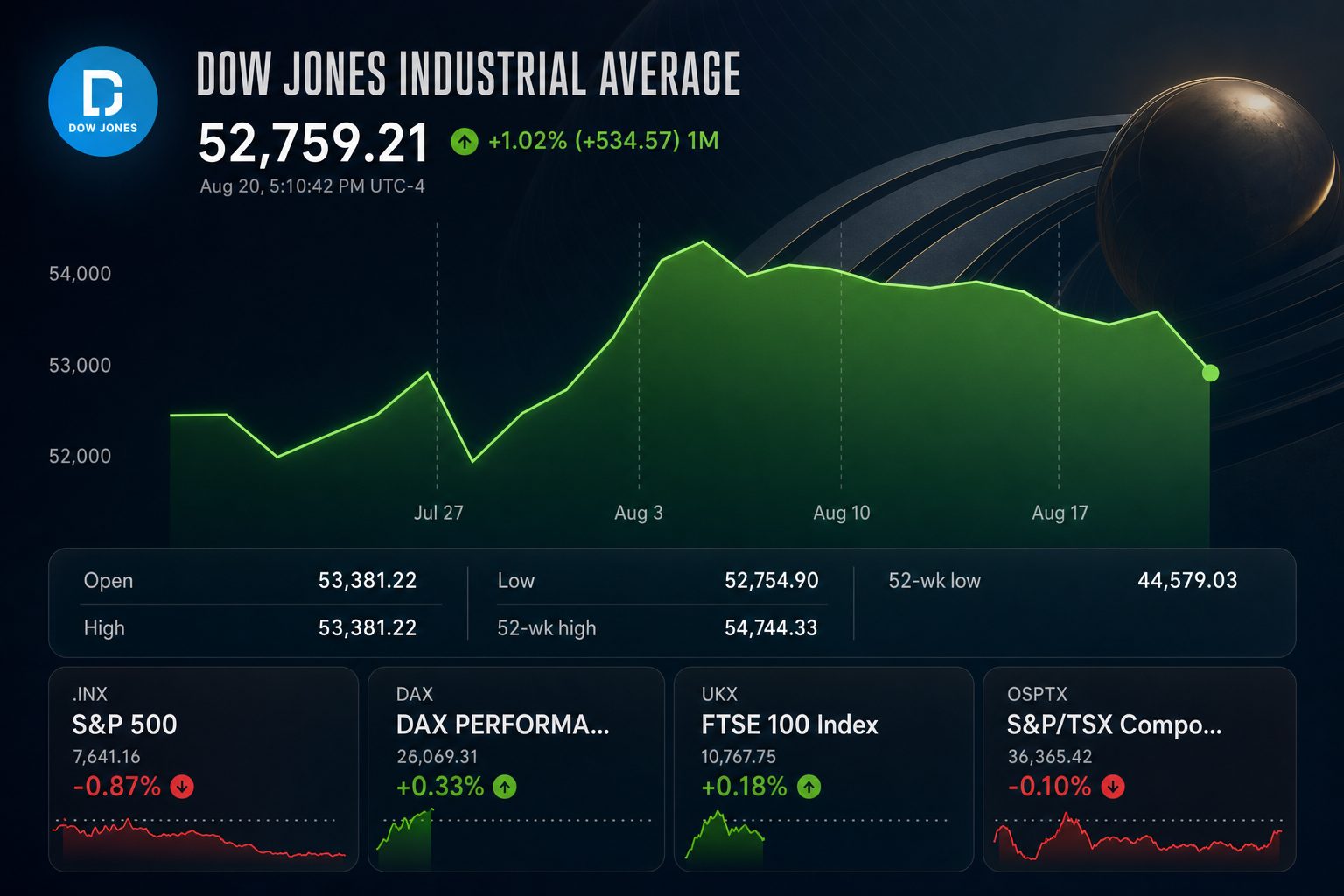
The Dow Jones Industrial Average dropped by 703.84 points on Thursday. However, its two most high-profile decliners were responsible for just a sixth of the decline. Higher bond yields and surging oil prices had a greater impact throughout the index.
Walmart Inc. NASDAQ:WMT dropped $10.60 and Boeing Co. NYSE:BA declined $7.83. As the Dow is price weighted, these declines together subtracted about 109 points, accounting for 15.5% of the index’s 703.84-point drop.
| Dow attribution | Share move | Estimated Dow impact | Share of Dow loss |
|---|---|---|---|
| Walmart | -$10.60 | -63 points | 8.9% |
| Boeing | -$7.83 | -46 points | 6.6% |
| Other 28 components | Varied | -595 points | 84.5% |
The division is significant. Thursday’s movement was more than just a surprise from Walmart’s earnings report. On both major exchanges, the number of decliners nearly doubled that of advancers. The Dow finished at 52,759.21, a decrease of 1.32%.
| U.S. index | Thursday close | Thursday | Week to Thursday | 2026 to date |
|---|---|---|---|---|
| Dow Jones | 52,759.21 | fell 1.3% | dropped 1.8% | gained 9.8% |
| S&P 500 | 7,641.16 | lost 0.9% | declined 1.9% | rose 11.6% |
| Nasdaq Composite | 26,067.17 | decreased 1.0% | slipped 2.5% | advanced 12.2% |
| Russell 2000 | 2,992.43 | retreated 1.3% | dropped 2.5% | jumped 20.6% |
The decline was widespread but lacked panic. U.S. exchanges saw 9.61 billion shares traded, marking a 42% drop from the 20-session average of 16.64 billion. The low level of activity highlights the significance of Friday’s subsequent movement.
Persistently high borrowing costs are still the primary obstacle. The 10-year Treasury yield climbed to 4.697% on Thursday and moved up to 4.707% in early Friday trading, with the 30-year yield at 5.254%. Brent crude prices stayed above $93 per barrel.
| Macro gauge | Latest reading | Investor signal |
|---|---|---|
| U.S. 10-year yield | 4.707% | Increased equity discount rate |
| U.S. 30-year yield | 5.254% | Ongoing fiscal term premium |
| Brent crude | $93.46/barrel | Pressure on inflation and consumer costs |
| Dow futures | +128 points, +0.2% | Partial recovery ahead of cash open |
“U.S. crude oil prices rising past $87 have added to worries over the financial wellbeing of American consumers,” Mona Mahajan, head of investment strategy at Edward Jones, said to Reuters. More expensive fuel can curb household spending and postpone potential rate cuts. Reuters quote and closing report
Walmart intensified worries after reporting a 2.6% increase in U.S. comparable sales, missing the consensus estimate of 3.8%. The stock finished down over 9%, wiping out more than $80 billion from its market capitalization. Despite this, the company lifted its annual forecast.
Wall Street’s sentiment towards both headline laggards remains upbeat. This sets up a valuable test: analysts point to upside specific to the companies, even as the market adjusts macroeconomic risk. Consensus price targets may trail quick shifts in yields or demand.
| Analyst recommendations | Consensus | Analysts | Average target | Target range |
|---|---|---|---|---|
| Walmart | Buy | 43 | $137.98 | $81-$155 |
| Boeing | Buy | 28 | $274.85 | $246-$305 |
The initial economic highlight on Friday is the August flash purchasing managers survey, set for release at 09:45 EDT. Dow futures gained 128 points in early trade. The uptick followed a sharper decline recorded on Thursday.
Investors face another key update on inflation in the coming week. The Bureau of Economic Analysis is set to release July data on personal income, spending and PCE prices on Wednesday. Revised figures for second-quarter GDP are also due that morning.
Dow investors are likely to see the strongest confirmation in declining yields coupled with broader market participation. If futures rise without both elements, the move may not hold. The 10-year’s 4.70% level continues to act as the key figure for the market.
Risks: A pullback in oil prices or Treasury yields might spark a swift recovery. Robust economic indicators could bolster earnings confidence, but may also maintain upward pressure on rates.
Related articles: NYSE:BA