
LIMASSOL, Cyprus, August 22, 2026, 15:55 EEST
- Just seven commodity vessels passed through the Strait of Hormuz on Thursday, marking a drop from Wednesday when 14 ships transited the waterway.
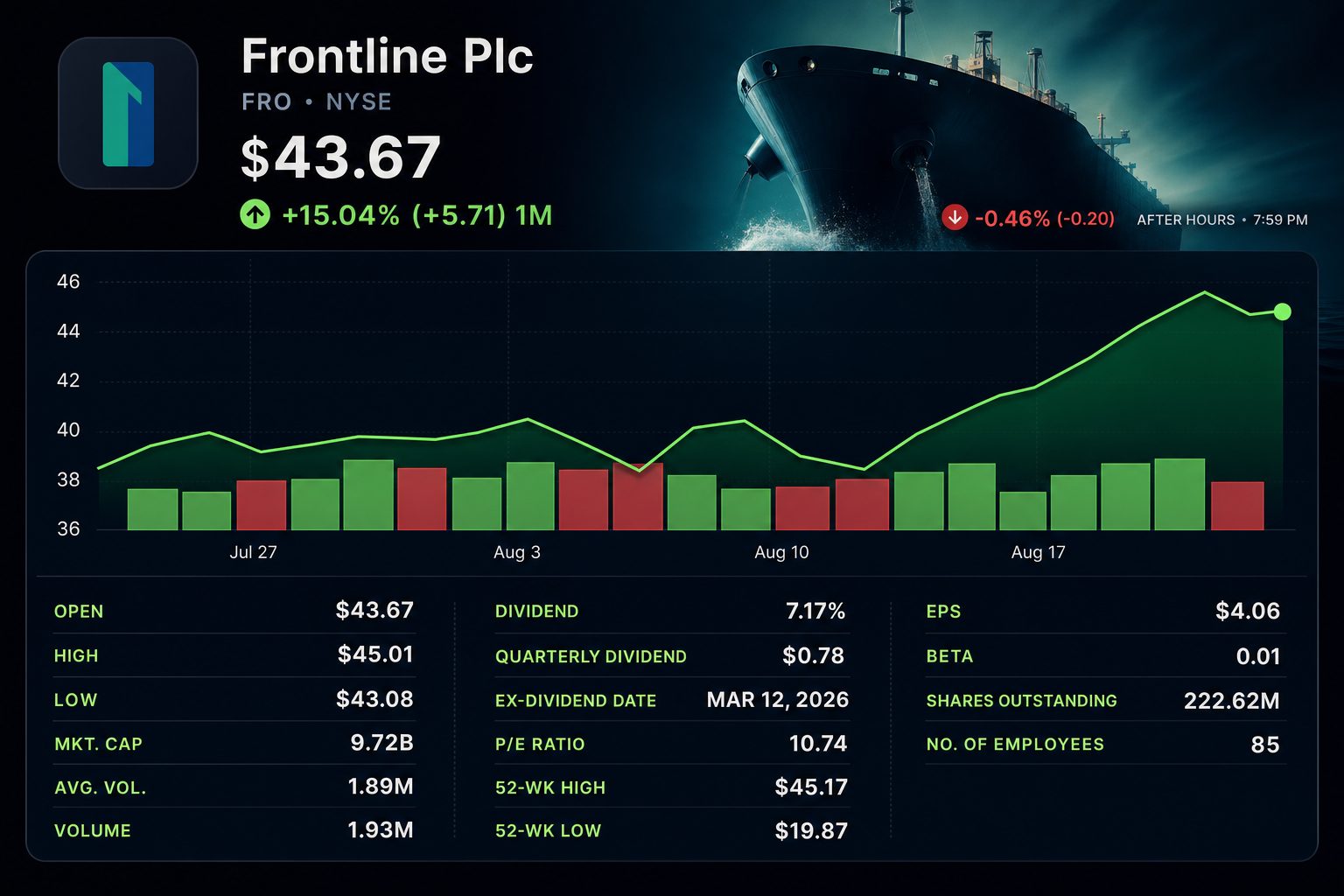
- Frontline closed at $43.70 on Friday, 1.3% under the consensus analyst target.
- The tanker share rose 6.0% over the week and is currently trading 3.2% under its 52-week peak.
- Frontline is set to announce its preliminary results for the second quarter on August 28.
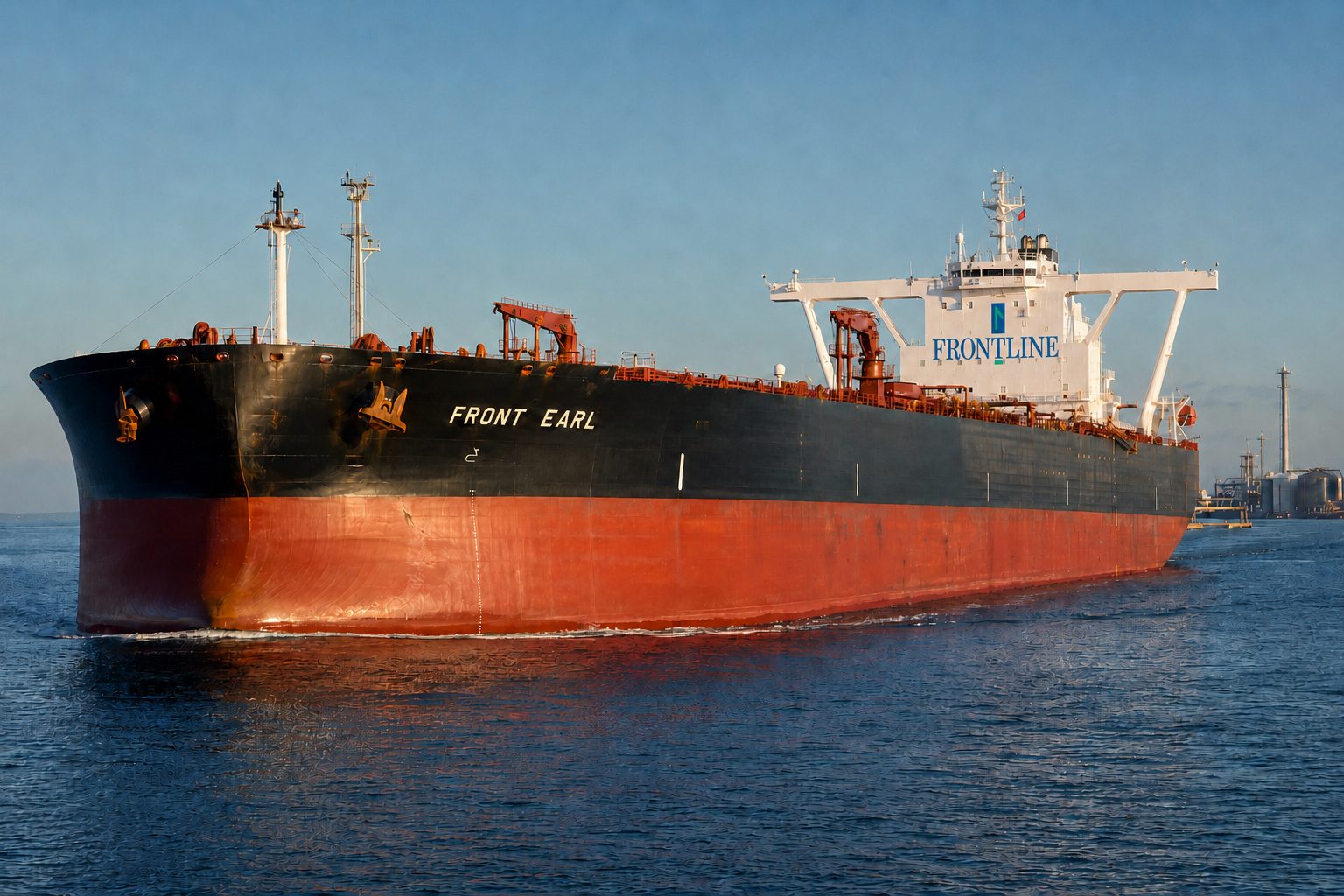
Frontline plc NYSE:FRO is nearing its valuation limit ahead of its upcoming earnings release, as reduced visible traffic and dark shipping in the Persian Gulf weigh on the tanker sector. Shares finished Friday’s session at $43.70, just 1.3% below the consensus analyst price target of $44.25.
Physical market conditions are still tight. Kpler tracked seven commodity ships passing through the Strait of Hormuz on Thursday, a drop from 14 the previous day. There were no very large crude carriers or LNG tankers among them. Vessels traveling without transponders were not included in the count.
| Hormuz shipping gauge | Latest measure | Investor read-through |
|---|---|---|
| Thursday commodity transits | 7 ships | Down 50% compared to Wednesday |
| VLCC transits in count | 0 | No crude-tanker traffic seen |
| LNG tanker transits in count | 0 | Gas export pathway remains limited |
| Prewar energy share | Nearly 20% | Crude and LNG flows at risk |
The figures do not capture all activity. Tankers are able to disable tracking devices or falsify their locations. On August 21, UANI spotted at least 51 loaded Iranian tankers near Iran’s coast. The group monitored 80 million barrels exported since mid-June, ahead of a fresh blockade that significantly curbed oil shipments.
Kpler calculates that the partial reopening resulted in roughly 374 million barrels moving at a daily pace of 6.1 million barrels. This represented just 41% of the usual 15 million-barrel rate for 2025. The later shipments were smaller and less transparent.
Frontline reflected this scarcity, with its shares climbing 6.0% this week to approach their highest levels in 14 years. The increase boosted the company’s market value by approximately $554 million, assuming 222.6 million shares are outstanding.
| Frontline price path | Close | Change since August 14 |
|---|---|---|
| August 14 | $41.21 | Starting point |
| August 17 | $42.18 | +2.4% |
| August 18 | $43.50 | +5.6% |
| August 19 | $44.45 | +7.9% |
| August 20 | $43.56 | +5.7% |
| August 21 | $43.70 | +6.0% |
Markets are factoring in unusual profit levels. Frontline reported first-quarter earnings of $559.1 million. Adjusted profit reached $344.9 million, the company’s highest figure since late 2004. Chief Executive Lars Barstad said, “Tanker markets are said to thrive in unstable conditions.” Frontline first-quarter report
| Spot tanker economics | Q1 2026 TCE/day | Q2 contracted TCE/day | Q2 coverage |
|---|---|---|---|
| VLCC | $103,500 | $181,700 | 82% |
| Suezmax | $72,400 | $131,300 | 79% |
| LR2/Aframax | $50,700 | $125,000 | 68% |
Q2 bookings point to robust rate increases from the previous quarter. VLCC rates contracted in the period were up 76% compared to the average seen in Q1. Suezmax rates rose 81%. LR2/Aframax bookings saw rates more than double.
Frontline capitalised on asset values as well. In August, it reached an agreement to sell two VLCCs built in 2017 for $270 million. The sale is set to provide $179 million in net cash and generate a gain of $110 million. Following the transaction’s completion, Frontline intends to issue a special $0.80 dividend.
Analysts remain split at these prices. Out of four recommendations, two are rated Strong Buy and two are rated Hold. The median price target stands lower than Friday’s closing level.
| Analyst recommendations | Count or target | Move from $43.70 |
|---|---|---|
| Strong Buy / Buy / Hold / Sell | 2 / 0 / 2 / 0 | Consensus: Buy |
| Average target | $44.25 | +1.3% |
| Median target | $42.50 | -2.7% |
| Low target | $37.00 | -15.3% |
| High target | $55.00 | +25.9% |
Brent settled at $94.39 per barrel for the week, marking its sixth consecutive advance. Elevated crude prices do not necessarily benefit tanker operators. Reduced export volumes may lead to fewer shipments, while extended routes and vessels being stranded can limit available tonnage. Freight rates depend on this supply-demand balance.
The next test comes on Friday. Frontline is set to publish its preliminary second-quarter results on August 28 at 09:00 EDT. Market participants are expected to scrutinise realised rates, third-quarter coverage, and management’s interpretation of dark Gulf activity.
Risks: Diplomatic progress could free stranded ships and push freight rates down. Additional attacks could reduce export volumes more rapidly than vessel numbers. AIS outages also leave real-time traffic assessments lacking.
Frontline’s surge indicates investors anticipate ongoing scarcity. Now, reported earnings need to confirm that the disruption drives cash flow. Much of this expectation appears factored into the current price.
Related articles: Energy