
NEW YORK, August 25, 2026, 02:42 EDT — U.S. equity markets did not open.
- Callaway and Good Good withdrew a Quantum driver promotion following public criticism.
- CALY declined 0.63% on Monday, with trading volume at about half its three-month average.
- Sales of golf equipment increased by 4.5% in the second quarter, with margins also widening.
Callaway Golf Company NYSE:CALY is confronting a challenge over brand management following backlash to a partner’s driver ad, which was subsequently taken down. The controversy appeared on Google Trends at a time when Callaway’s equipment operations were starting to recover.
Good Good Golf released an ad for a co-branded Quantum driver on August 21 featuring a video in which a male creator is seen pushing a female colleague. Following backlash, Good Good and Callaway removed the ad and both companies published statements.
Callaway stated it was “disappointed by the content that was posted.” The company also said it would collaborate with Good Good to help foster a more inclusive atmosphere in golf. Inc. reported that a product listing for the joint collaboration, aimed at retailers, was also taken down. Inc.
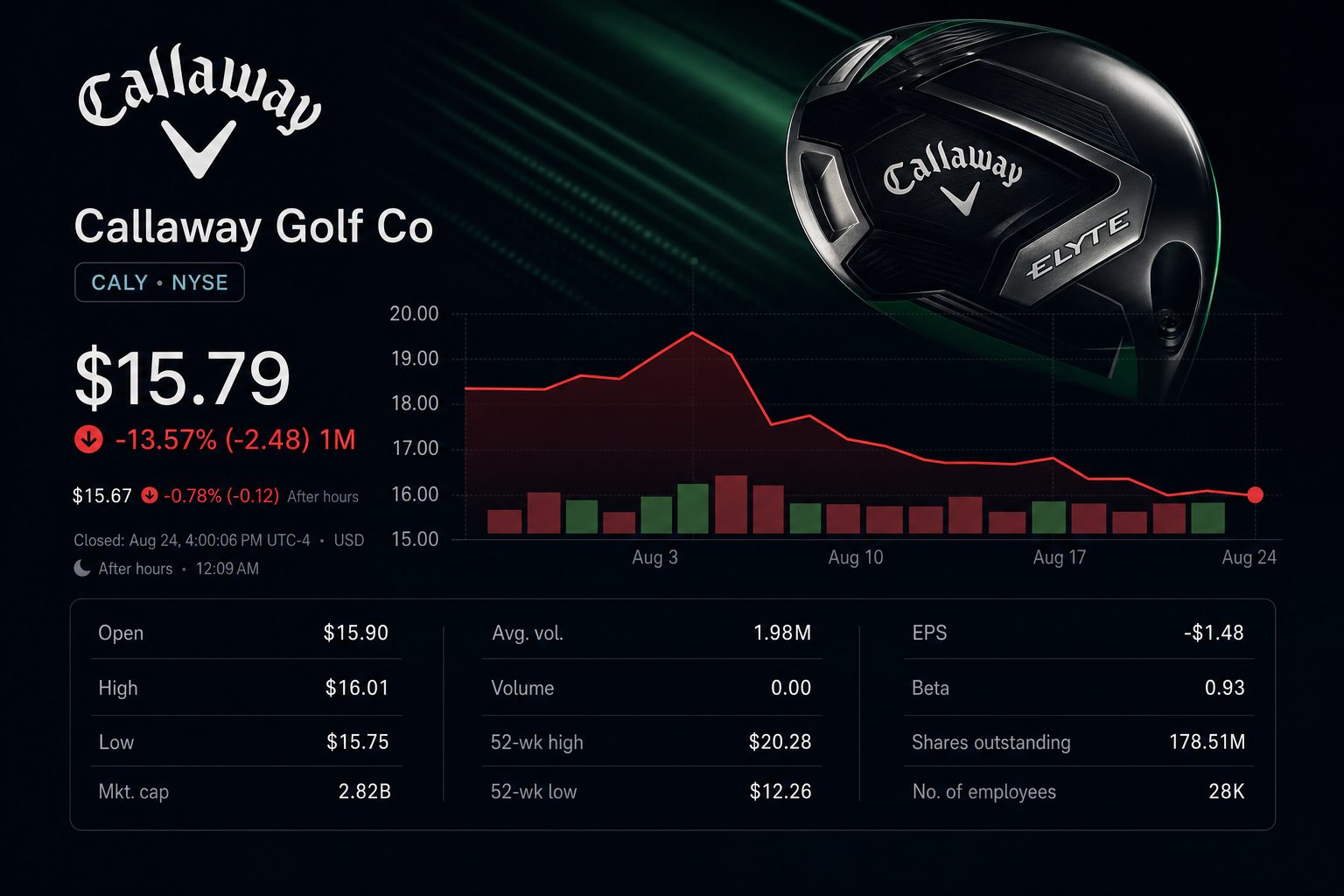
Equity reaction was muted. Callaway shares finished Monday at $15.79, slipping 0.63%. The S&P 500 dropped 0.28%, with CALY lagging by 0.35 percentage point. Trading volume reached 1.16 million shares, around 52% of its three-month average.
The trading pattern is significant. Although the stock lagged behind, trading volume did not indicate a chaotic sell-off. Investors seem to be viewing the situation as a lapse in controls rather than a major earnings issue at this stage.
| Operating measure | Q2 2026 | Year-over-year change |
|---|---|---|
| Net sales | $612.2m | up 2.0% |
| Golf-equipment sales | $430.3m | increase of 4.5% |
| Golf-ball sales | $113.8m | rose 14.8% |
| Adjusted gross margin | 48.5% | up 460 basis points |
| Adjusted EBITDA | $124.9m | jumped 35.8% |
The financial environment intensifies the pressure. Golf-equipment revenue grew 4.5% in the second quarter. Sales of golf balls surged 14.8%, and adjusted gross margin expanded by 460 basis points to reach 48.5%.
Callaway raised its 2026 adjusted EBITDA outlook to a range of $246 million to $260 million, compared with its previous guidance of $211 million to $233 million. The updated midpoint represents an increase of roughly 14%, supported by favorable pricing, cost initiatives and tariff expenses that were not as high as anticipated.
Partnerships with creators aim to expand that momentum. Good Good, which has a YouTube audience exceeding two million subscribers, is set to sponsor a PGA Tour event in November. As a result, the episode examines the approval process for a key customer-acquisition channel, rather than just a single removed post.
| Firm | Recommendation | Price target | Latest action |
|---|---|---|---|
| B. Riley | Buy | $23 | Target increased August 5 |
| KeyBanc | Overweight | $22 | Target increased August 5 |
| Goldman Sachs | Neutral | $19 | Target increased August 5 |
| Morgan Stanley | Equal Weight | $19 | Target increased August 5 |
| Truist | Buy | $19 | Target increased June 15 |
| JPMorgan | Neutral | $18 | Target increased June 11 |
Overall sentiment stays positive, with an average Buy rating given to Callaway by eleven analysts surveyed by S&P Global. Their consensus price target stands at $20.50, suggesting a potential upside of roughly 30% from Monday’s close. Forecasts range from $19 to $23.
However, CALY has dropped 19.3% since the close on August 4. Shares declined after earnings, even as guidance was raised. The ad controversy now affects a stock where investors are already uncertain about the strength of demand and timing of product launches for the second half.
The week-ahead indicators are actionable. Investors can monitor if the co-branded driver makes a comeback, observe if retailers continue to stock related products, and watch for any adjustments to the November PGA Tour partnership. Callaway’s upcoming earnings announcement is anticipated in early November.
Risks: Extended pushback may drive up marketing expenses or reduce enthusiasm from female and younger golf customers. The financial impact is likely to be minor as long as sales and retailer orders are stable. Most insight will come from updates on product supply, inventory levels in sales channels, and the company’s upcoming management guidance.
For investors, the main difference lies in whether the issue is merely reputational noise or an actual channel challenge. Monday’s low trading volume suggests it is the former. A shift in product placement or a change in partners would be a sign that the situation is nearing the latter.