
SANTA CLARA, California, August 26, 2026, 16:30 EDT — Nvidia stock declined by 1.8% after reporting quarterly revenue of $96.2 billion, as the company’s total AI-related commitments reached $366 billion.
- Revenue for the fiscal second quarter climbed 106%, reaching $96.2 billion.
- Guidance for the October quarter came in at $108.0 billion, surpassing the consensus estimate of $104.2 billion.
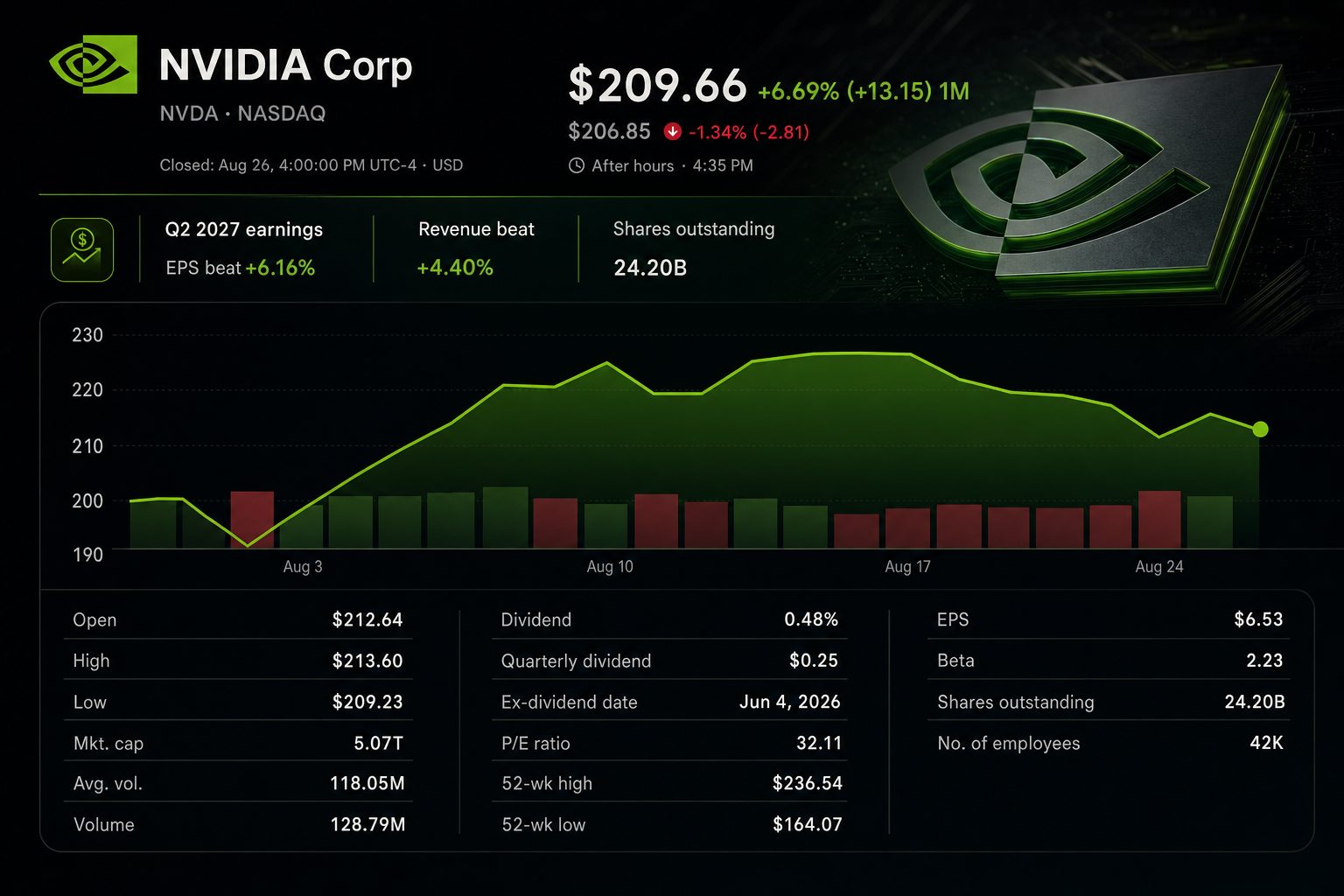
- Shares dropped 1.78% in after-hours trading to $205.92 as of 16:30 EDT.
- Disclosed commitments amounted to $366 billion, while guarantees came to $108.5 billion.
Nvidia Corporation (NASDAQ:NVDA) shares dropped 1.78% in after-hours trading on Wednesday. The chipmaker surpassed analysts’ revenue expectations by $3.9 billion and projected a new record quarter ahead.
The response highlights a more complex issue than just immediate demand. Nvidia has revealed upcoming commitments amounting to $366 billion, while its contingent guarantees increase the total by an additional $108.5 billion.
These amounts are not liabilities that must be paid at once. They represent contractual obligations and potential exposures distributed over multiple years. Still, when combined, they total 8.4 times Nvidia’s $56.6 billion in cash and marketable debt securities.
Nvidia posted fiscal second-quarter revenue of $96.22 billion, marking an 18% increase from the prior quarter. Adjusted earnings were $2.22 per share. Both figures were above FactSet projections of $92.3 billion and $2.09 per share, respectively Barron’s consensus.
| Investor measure | Reported or guided | Reference | Gap |
|---|---|---|---|
| Q2 revenue | $96.22 billion | $92.3 billion consensus | +4.2% |
| Adjusted EPS | $2.22 | $2.09 consensus | +6.2% |
| Q3 revenue | $108.0 billion | $104.2 billion consensus | +3.6% |
| Q3 gross margin | 74.0% | 75.0% in Q2 | -1.0 point |
| After-hours price | $205.92 | $209.66 close | -1.78% |
Data Center sales rose by 117% to reach $89.0 billion, accounting for 92.5% of overall revenue. Revenue from AI Clouds, Industrial, and Enterprise segments increased by 138%, exceeding the 102% growth in the Hyperscale division Nvidia CFO commentary.
CEO Jensen Huang stated that “demand is accelerating.” Nvidia announced that Vera Rubin has reached full production. The company’s revenue outlook for the October quarter stands at $108.0 billion, not including Data Center compute revenue from China Nvidia earnings release.
Supply and capacity commitments surged to $279 billion, up from $119 billion in the previous quarter. Nvidia said the majority of this rise was due to increased memory procurement. The company also reported $29 billion in cloud-service agreements and $25 billion in equity-investment commitments.
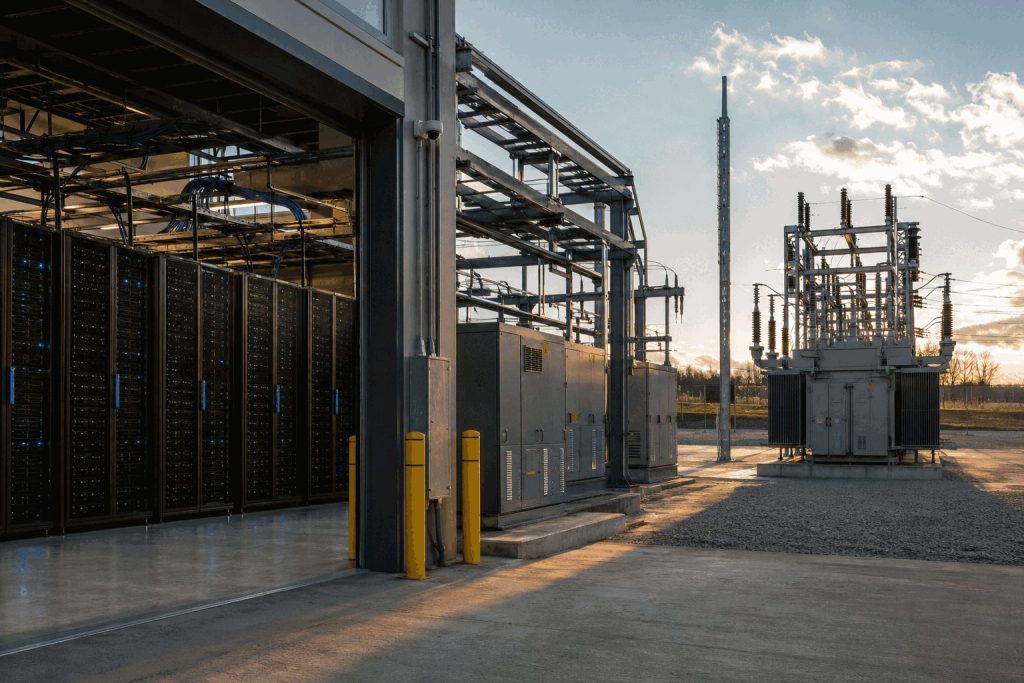
The guarantees present an alternative risk. Nvidia limited its backing for a data-center expansion in Ohio to $105 billion. The company also revealed $3.5 billion in guarantees tied to lease commitments of specific AI cloud collaborators.
Working capital consumed additional cash. Free cash flow dropped 56% from the previous quarter to $21.34 billion. Receivables climbed to $63.1 billion, and collection time increased to 60 days from 45.
Inventory rose 22% on a sequential basis to $31.6 billion ahead of Rubin’s launch. Nvidia issued $25 billion in senior notes and returned nearly $26 billion via buybacks and dividends.
By 16:30 EDT, the after-hours drop had wiped out around $90 billion in listed equity value. Trading volume during the regular session reached 128.4 million shares, which was under its three-month average. Shares had slid 1.59% over the session Yahoo Finance.
Analysts maintained optimistic views prior to the report. Bank of America had a Buy rating and set its target at $350. KeyBanc also assigned a Buy rating to Nvidia, with a target price of $330 pre-earnings analyst summary.
Risks: Securing commitments can help lock in limited supply and bolster future revenue streams. However, these also heighten risks related to execution, customer credit, and asset utilization. If AI deployment slows, Nvidia might be left maintaining infrastructure ahead of when customers generate sufficient cash flow.
The next focus is on conversion. Investors are set to monitor if $108 billion in sales can maintain margins as receivables, inventory, and infrastructure backing increase. Nvidia projected a one-point decrease in gross margin to 74%.
Related articles: NASDAQ:NVDA