
NEW YORK, August 28, 2026, 12:55 (EDT) — WTI crude is down 4.5% for the week, as expectations that the Strait of Hormuz could reopen have reduced the geopolitical risk premium in oil markets.
- WTI dropped 4.47% over the week, settling at $83.17 a barrel.
- Just seven commodity ships transited Hormuz on Thursday, compared to the 10-day average of 15.
- U.S. crude inventories increased by 95,000 barrels last week, reaching 428.9 million barrels.
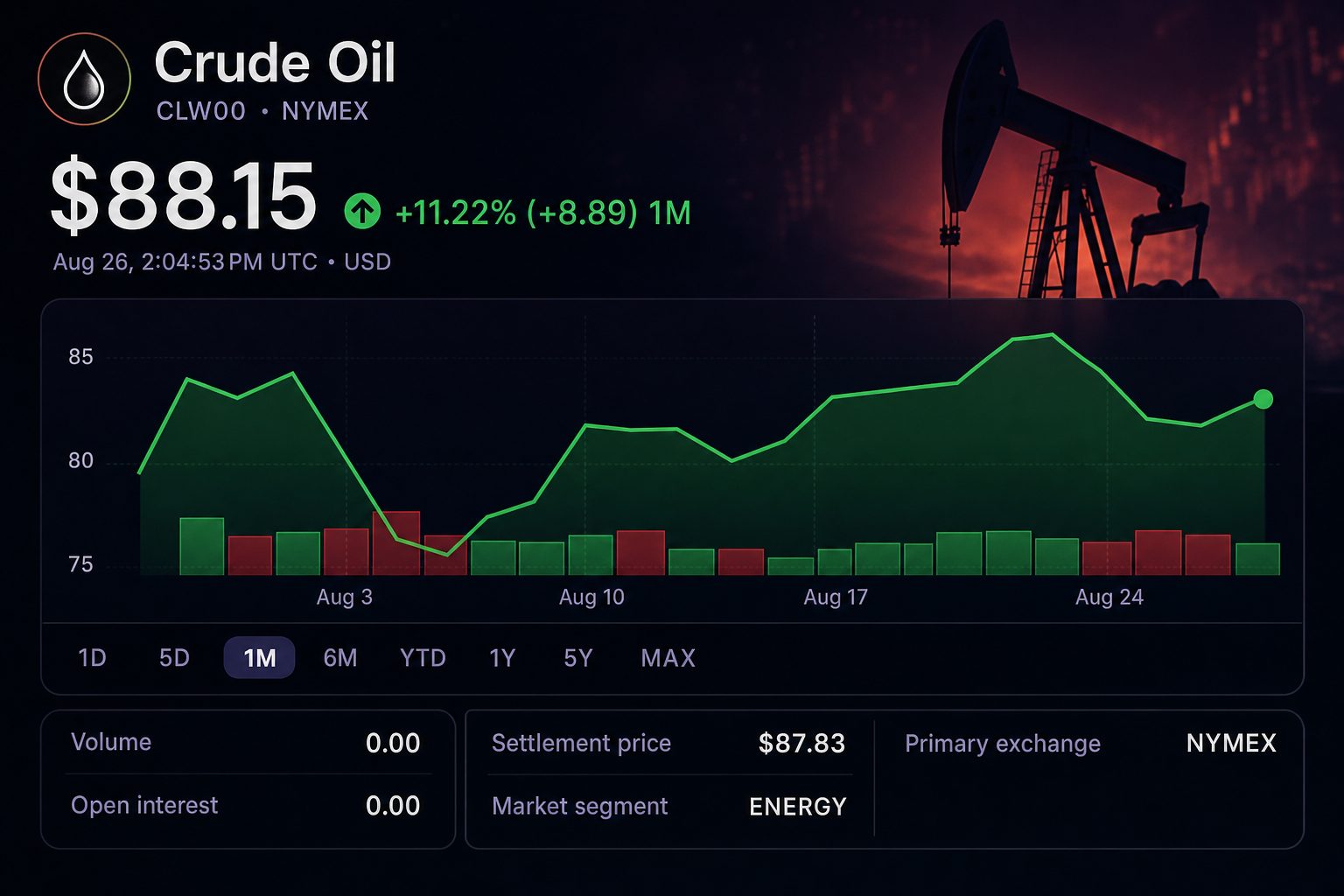
West Texas Intermediate crude recorded a 4.47% decline this week, as traders reduced the disruption premium linked to the Strait of Hormuz. The October contract was last seen at $83.17 a barrel late on Friday morning, representing a 0.43% drop for the session Reuters market report.
The decision signals a wager on gradual supply increases, rather than signaling a peace breakthrough. Gulf exports have recently ranged from 15 million to 16 million barrels per day, which is still 7 million to 8 million barrels below levels seen before the conflict, Goldman Sachs estimates reported by Reuters show.
Physical traffic remains unpredictable. Seven commodity ships transited the strait on Thursday, compared to 17 the previous day. The 10-day average stood at 15. Prior to the conflict, the corridor handled approximately 20% of worldwide oil shipments.
However, diplomacy has shifted the pricing outlook. Following Qatari mediation, Iran has committed to creating an environment for the return of routine shipping. According to U.S. military officials, there are currently no Iranian naval mines in international shipping routes Reuters diplomacy report.
| Instrument or measure | Latest reading | Investor signal |
|---|---|---|
| WTI October futures | $83.17; −0.43% Friday; −4.47% weekly | Geopolitical risk premium continues to recede |
| Brent futures | $89.32; −0.42% Friday; −5.38% weekly | Sell-off mirrored in global benchmark |
| United States Oil Fund | $129.44; −0.44% | U.S.-listed oil proxy falls further |
| Energy Select Sector SPDR Fund | $62.53; +0.38% | Shares in energy sector stay firm |
| U.S. commercial crude stocks | 428.9 million barrels; +0.095 million | Inventory build stretches to four weeks |
The split in performance among U.S. markets is significant. The United States Oil Fund (NYSEARCA: USO) was down 0.44% at $129.44 as of 12:36 EDT. Meanwhile, the Energy Select Sector SPDR Fund (NYSEARCA: XLE) climbed 0.38% to $62.53 by 12:50 EDT.
The difference indicates that stock investors are not viewing Friday’s oil price swing as an earnings surprise. XLE stayed within 3.4% of its 52-week peak. Top holdings are Exxon Mobil, Chevron and ConocoPhillips MarketWatch fund data.
U.S. reserves offer additional support. Commercial crude stocks climbed by just 95,000 barrels last week, falling short of forecasts. Inventories at Cushing were up by 1.176 million barrels. Refinery usage hit 97.4%.
Gasoline stockpiles declined by 2.536 million barrels to 206.8 million, while distillate inventories were down 2.228 million to 103.4 million. The decreases indicate robust downstream demand even as crude supplies rose for a fourth straight week U.S. Energy Information Administration.
The forward curve provides further insight. At 12:21 EDT, November WTI changed hands at $81.65, with December at $79.80. The discount to October suggests the market continues to prioritize near-term barrels NYMEX futures data.
A continued drop would lower fuel expenses for both consumers and transportation firms. For producers, staying above project breakeven levels is crucial for WTI. The strength in energy stocks on Friday signals investors anticipate balance-sheet resilience and ongoing capital discipline.
Risks: The shipping deal has not been finalized. Vessel movement is still well below typical volumes, and sanctions are becoming stricter. If attacks resume, negotiations break down, or another transit disruption occurs, the premium may return swiftly.





![Asia Stock Market Today 29/08/2026 [UPDATE: 00:55 SGT] [PayPal and Nvidia Sink as KASE Global Nears Weekend Close]](https://ts2.tech/wp-content/uploads/2026/08/Asia-market-dashboard-2026-08-29-0053-480x384.jpg "Asia Stock Market Today 29/08/2026 [UPDATE: 00:55 SGT] [PayPal and Nvidia Sink as KASE Global Nears Weekend Close]")