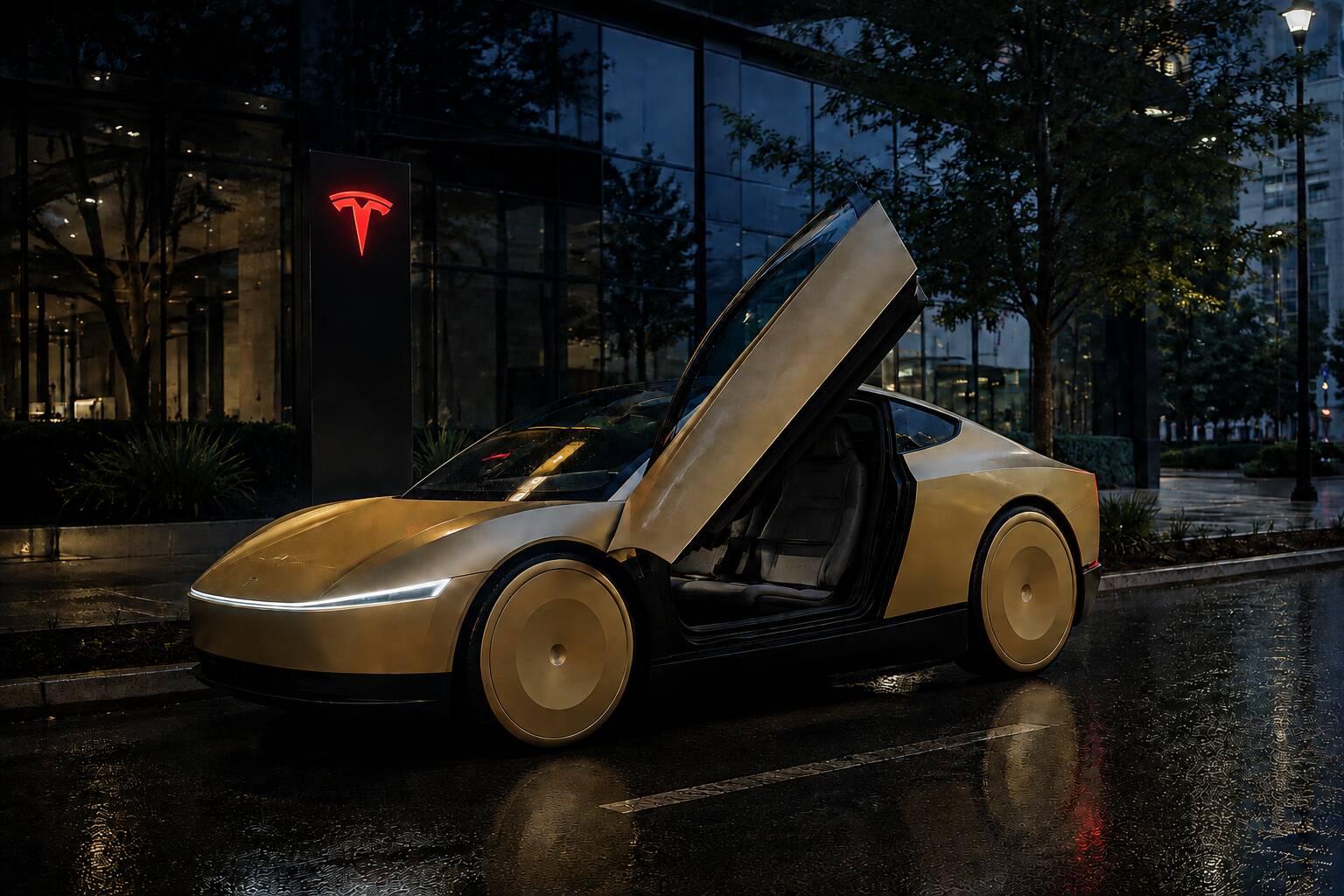

AUSTIN, Texas, September 4 at 12:23 p.m. EDT — Tesla’s Cybercab rally survived less than a day. Shares of Tesla, Inc. NASDAQ:TSLA dropped 6.50% to $351.90 after a federal certification audit reached an estimated 1,000 vehicles. Thursday’s 5.42% gain vanished. Friday’s loss in market value was roughly $97 billion.
Tesla says its Texas plant has installed capacity for more than 125,000 Cybercabs annually. Reuters found just 45 registered Cybercabs in Texas on Friday morning.
Plant capacity, registrations and an audit population are different measures that reveal nothing about inventory. They do expose the issue now facing shareholders: certification may set the pace for commercial scale.
The launch rally unwound before midday
Tesla price in U.S. dollars. Latest point: .
Source: Nasdaq real-time market data. Extended-hours prints precede the 9:30 a.m. cash open.
A self-certified car without manual controls
The National Highway Traffic Safety Administration opened Audit Query AQ26002 after the Austin launch. Tesla said it had self-certified Cybercab under the federal standards it considered applicable. NHTSA now wants the process and technical data behind that decision.
Cybercab has no permanently attached steering wheel, accelerator, brake pedal or mirrors, and NHTSA will examine whether Tesla judged some safety standards inapplicable. The Associated Press reported the review; the agency has made no final compliance finding.
A small Austin fleet began commercial Cybercab rides Thursday. Texas records listed 420 autonomous vehicles by Friday morning, with Cybercab accounting for 45. Tesla did not answer requests for comment from Reuters or AP.
Tesla disclosed the factory figure in July and said Cybercab production had begun. Its own footnote supplies the restraint: installed capacity is not the current production rate.
Robotaxi had logged roughly 2.4 million cumulative paid miles by quarter-end. More than 55% of new North American deliveries included FSD subscriptions. Those operating markers cannot settle how federal rules apply to Cybercab.
The regulatory safe harbor is narrow
NHTSA has an exemption process for vehicles outside existing standards. Reuters said it limits deployments to 2,500 vehicles each year. The regulator previously said Tesla had not applied.
Amazon.com, Inc. NASDAQ:AMZN subsidiary Zoox tried self-certification first. It withdrew that claim during an NHTSA audit. A limited exemption arrived in July 2026.
The other route leads toward court. Three former senior NHTSA officials told Reuters that a certification clash could produce litigation. Carnegie Mellon professor Philip Koopman described Tesla’s record directly: it has “tested limits and pushed boundaries on regulations.”
Friday repriced the wait
Friday’s lower share price still left Tesla worth around $1.39 trillion. Second-quarter revenue reached $28.24 billion, but operating margin was 1.4%. Capital spending left free cash flow at negative $1.09 billion.
Today’s ride revenue is small beside Cybercab’s implied role in Tesla’s valuation. The bet is that autonomy software and fleet income improve the company’s economics. Certification delay would make that payoff more distant.
That timing question divides Wall Street. Morgan Stanley’s Andrew Percoco kept a $400 target before the launch and warned that limited deployment could trigger selling. GLJ Research’s Gordon Johnson reiterated $24.86 on Friday, citing the small fleet and thin rollout detail.
The risk is two-sided. A workable agreement could clear the overhang while installed factory capacity awaits a ramp. An adverse finding, exemption demand or lawsuit could slow deployment and add compliance costs.
NHTSA’s next correspondence will matter more than another launch video. Texas registration data can then show whether expansion continues. Paid miles and service margins follow; Friday’s reversal says time has entered the Cybercab discount.