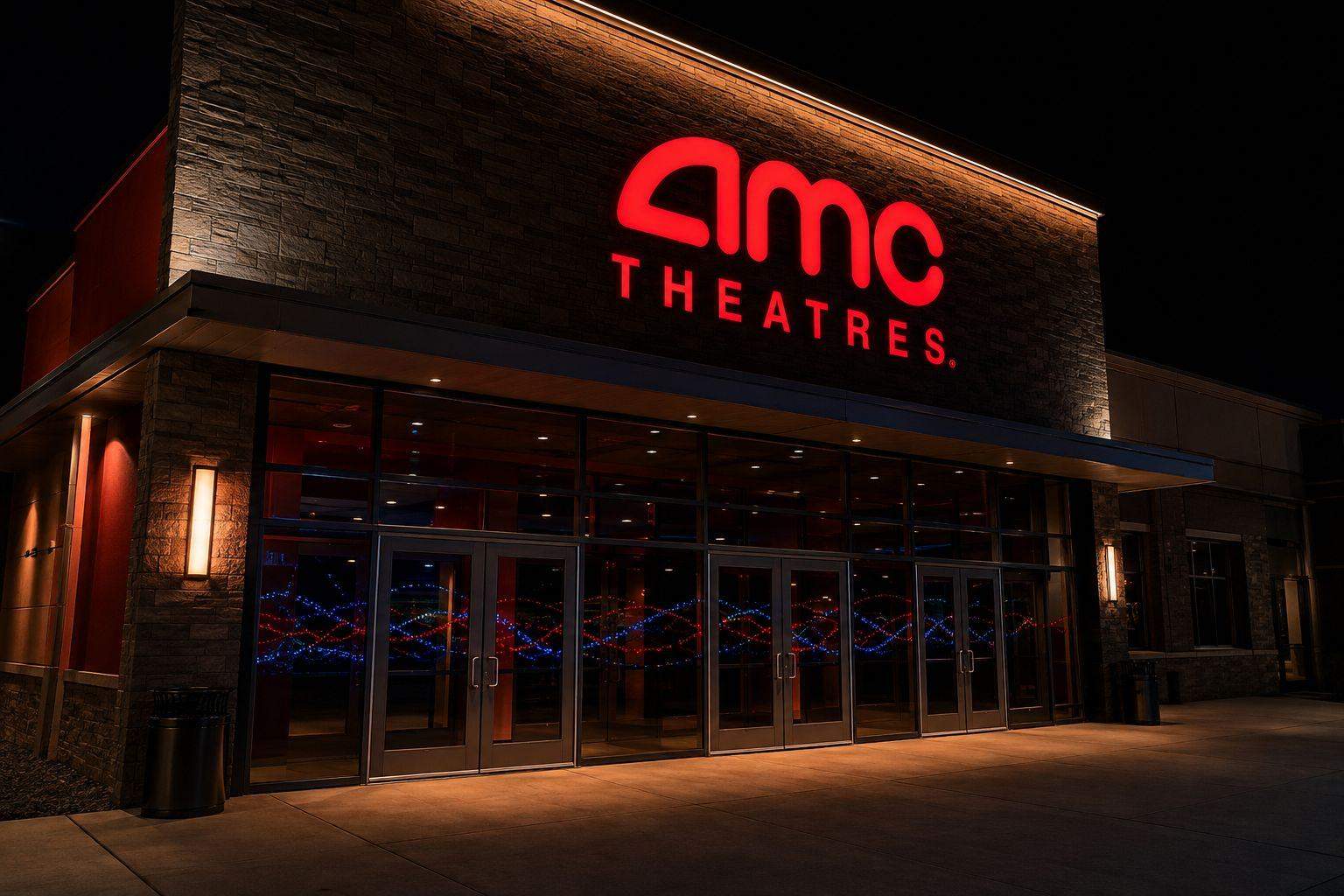

NEW YORK, Sept. 4, 2026 — AMC Entertainment Holdings, Inc. NYSE:AMC rose nearly 5% on Friday after its chief executive demanded that Robinhood Markets, Inc. NASDAQ:HOOD halt an AMC-linked stock token.
Robinhood refused. That turned a noisy branding dispute into a test of who captures investor demand. AMC says token purchases can sit outside the market for shares it has repeatedly sold to raise cash.
AMC traded at $2.665 at 2:31 p.m. EDT, up 4.9%, according to Yahoo Finance. Robinhood was down 1.3% at $123.10 one minute later.
Two sides of Friday’s token fight
Change from the previous close. Quotes as of .
Sources: AMC market data and Robinhood market data. Prices can move after the stated time.
Adam Aron had criticized the product on Thursday. Friday brought the harder step. He called for a voluntary cease-and-desist and threatened legal action and a complaint to the U.S. Securities and Exchange Commission, CoinDesk reported.
Robinhood Chief Legal Officer Dan Gallagher rejected the demand. Chief Executive Vlad Tenev wrote, “We stand behind Stock Tokens,” according to the same report.
Robinhood’s own quarterly filing draws a firm legal line. The tokens provide economic exposure to selected U.S. securities. They convey neither legal ownership nor shareholder rights, including voting rights.
A share and a stock token are different claims
Robinhood’s filing describes what an eligible EEA customer receives.
NYSE-listed AMC share
- Yes: legal equity ownership
- Yes: shareholder voting rights
- Issuer can sell new shares to raise capital
Robinhood AMC stock token
- No: legal ownership of AMC shares
- No: AMC shareholder rights
- Value references AMC’s market price
Source: Robinhood Markets Form 10-Q filed April 29, 2026.
The product launched in June 2025 for eligible customers in certain European Economic Area jurisdictions. It is not offered to U.S.-based customers.
That distinction matters unusually much for AMC. The theater operator raised $85.3 million gross through an at-the-market program during the second quarter. It also completed a $200 million registered direct equity offering.
About $155.8 million of exchangeable notes converted into common stock. AMC’s weighted average diluted share count reached 722.0 million, up 66.7% from 433.1 million a year earlier.
AMC still depends on real capital markets
Second-quarter 2026 balance-sheet and equity figures.
Source: AMC second-quarter results and financing disclosures.
A direct AMC share sale can put cash on AMC’s balance sheet. A token purchase does not do that by itself. Robinhood’s filing does not say each token order creates a matching purchase of AMC shares.
The indirect effect is less certain. A token issuer or counterparty may hedge exposure in the underlying market. The public documents reviewed for this article do not establish a one-for-one hedge for AMC tokens.
Armani Ferrante, chief executive of crypto exchange Backpack, told CoinDesk that Aron’s capital-formation concern had “real substance.” Fairmint co-founder Joris Delanoue put the distinction more bluntly: “A token is not equity.”
AMC’s operating rebound provides context. Second-quarter revenue rose 14.2% to $1.597 billion. Adjusted EBITDA increased 69.6% to $321.4 million, while the net loss narrowed to $11.4 million.
The financing burden remains visible. AMC issued $400 million of secured notes carrying a 12.75% coupon, although the transaction pushed major maturities farther out.
Robinhood also identifies the legal risk in its filing. The Bank of Lithuania has requested clarification about the tokens. Robinhood says U.S. regulators could assert jurisdiction and that challenges may bring injunctions, fines or product limits.
Friday’s tape stopped short of endorsing the strongest claims. AMC retreated from an intraday high of $3.10. Robinhood recovered from $118.35, its session low.
The risks cut both ways. No court or regulator has ruled on AMC’s complaint. Token trading could continue unchanged, while AMC shares remain exposed to dilution, movie attendance and expensive debt.
The next hard evidence will be a formal legal filing, an SEC response or fuller disclosure of Robinhood’s hedging. Until then, AMC’s gain reflects a fight over market plumbing, not new cash in the bank.