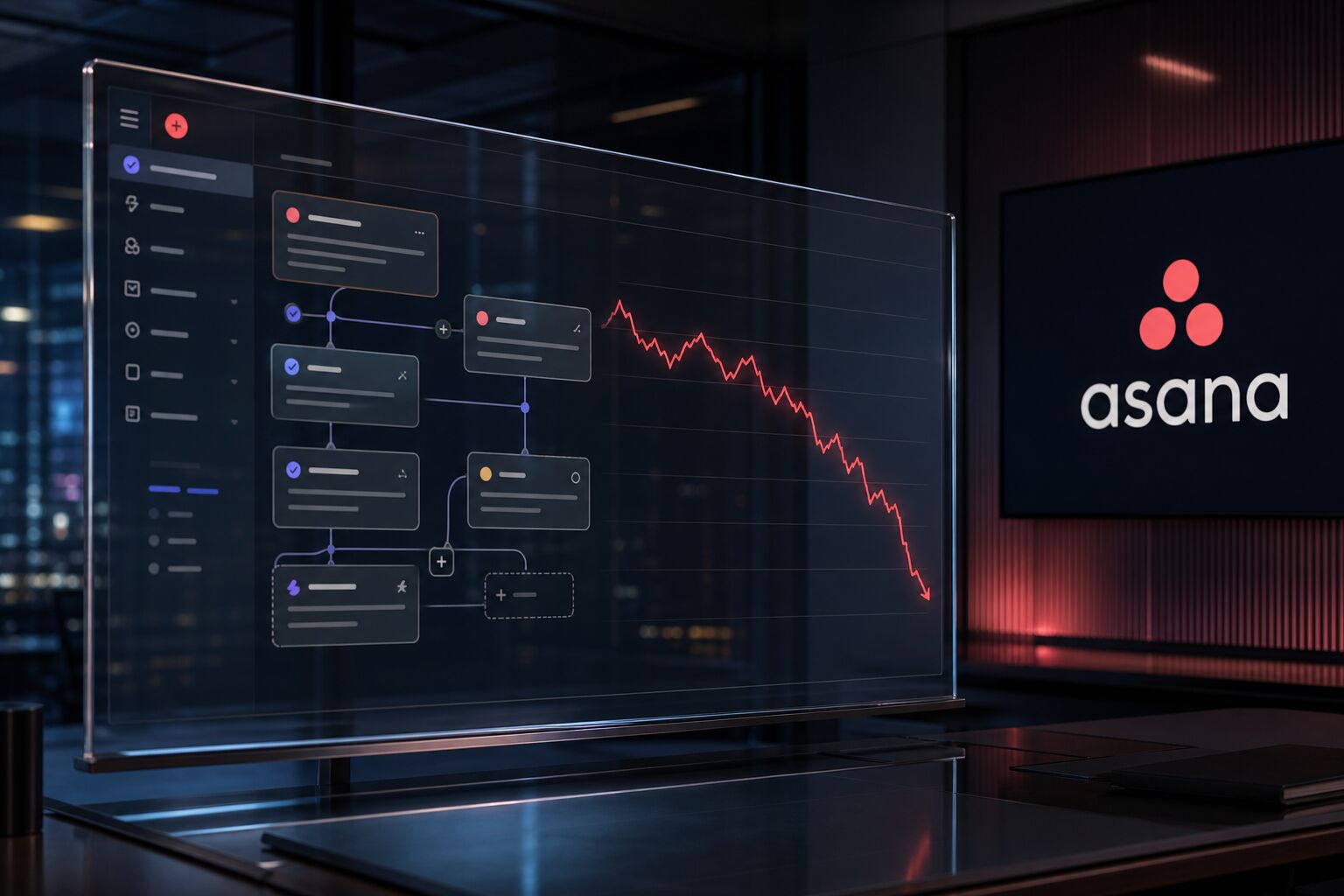

SAN FRANCISCO, Sept. 4, 2026 — Asana, Inc. NYSE:ASAN shares fell 13.3% Friday afternoon. The decline erased roughly $310 million of market value after an earnings beat.
The selloff turned on the price of Asana’s AI push. AI products supplied about 25% of net new annual recurring revenue last quarter. Management also expects them to pressure gross margin by roughly 150 basis points during the second half.
Asana’s post-earnings session
Five-minute closes through .
Source: Yahoo Finance market data. Prices can move after the stated time.
Asana forecast third-quarter revenue of $217 million to $219 million. That range implies 8% to 9% growth, below the second quarter’s 10% pace.
Adjusted earnings guidance also landed at eight cents per share. Wall Street had expected nine cents, according to consensus data cited after the release. The revenue midpoint was broadly in line.
The AI trade-off inside Asana’s guidance
Source: Asana’s Q2 FY2027 prepared remarks. Margin figures are non-GAAP where management specified them.
The quarter itself was better than the stock reaction suggests. Revenue reached $216.4 million, while adjusted earnings were 10 cents per share. Operating cash flow was $46.0 million.
Profit quality was mixed. Non-GAAP operating margin rose three percentage points to 10%. However, non-GAAP gross margin fell 120 basis points sequentially to 87%.
The statutory accounts show a steeper cost swing. GAAP cost of revenue rose about 50% from a year earlier. Revenue grew just under 10% over the same period.
Demand offered a counterweight. More than one-quarter of customers spending above $100,000 bought AI Studio or AI Teammates. One Fortune 500 media deal made AI nearly half its three-year contract value.
Asana will bundle basic AI requests into every paid tier this month. The company expects easier adoption, followed by paid consumption packs as usage expands. That second step remains unproven.
Friday’s analyst tape
Sources: UBS and Citizens JMP; DA Davidson. Targets are opinions, not forecasts of a certain return.
Retention is improving, though still below expansion territory. Overall net revenue retention was 97%, up two points from the prior quarter. The rate reached 98% among larger customers.
That leaves investors with a timing problem. Enterprise adoption is getting healthier while AI usage depresses reported margins before consumption revenue matures.
CFO Aziz Megji said Asana was “raising our full-year revenue and non-GAAP operating margin guidance.” The new revenue range is $858.5 million to $863.5 million.
Still, almost all of the reported revenue beat did not flow through immediately. Management cited the packaging change and consumption accounting. Neither adjustment affects ARR, bookings, billings or cash flow.
Risks: Bundled AI may delay purchases of paid capacity. Compute costs could stay elevated, and 97% retention still means existing customers are shrinking overall. New applications should contribute more meaningfully only in fiscal 2028.
September usage will supply the first evidence. The useful test is whether bundled requests convert into paid packs before gross margin reaches the mid-80s. Friday’s price says investors want that proof soon.