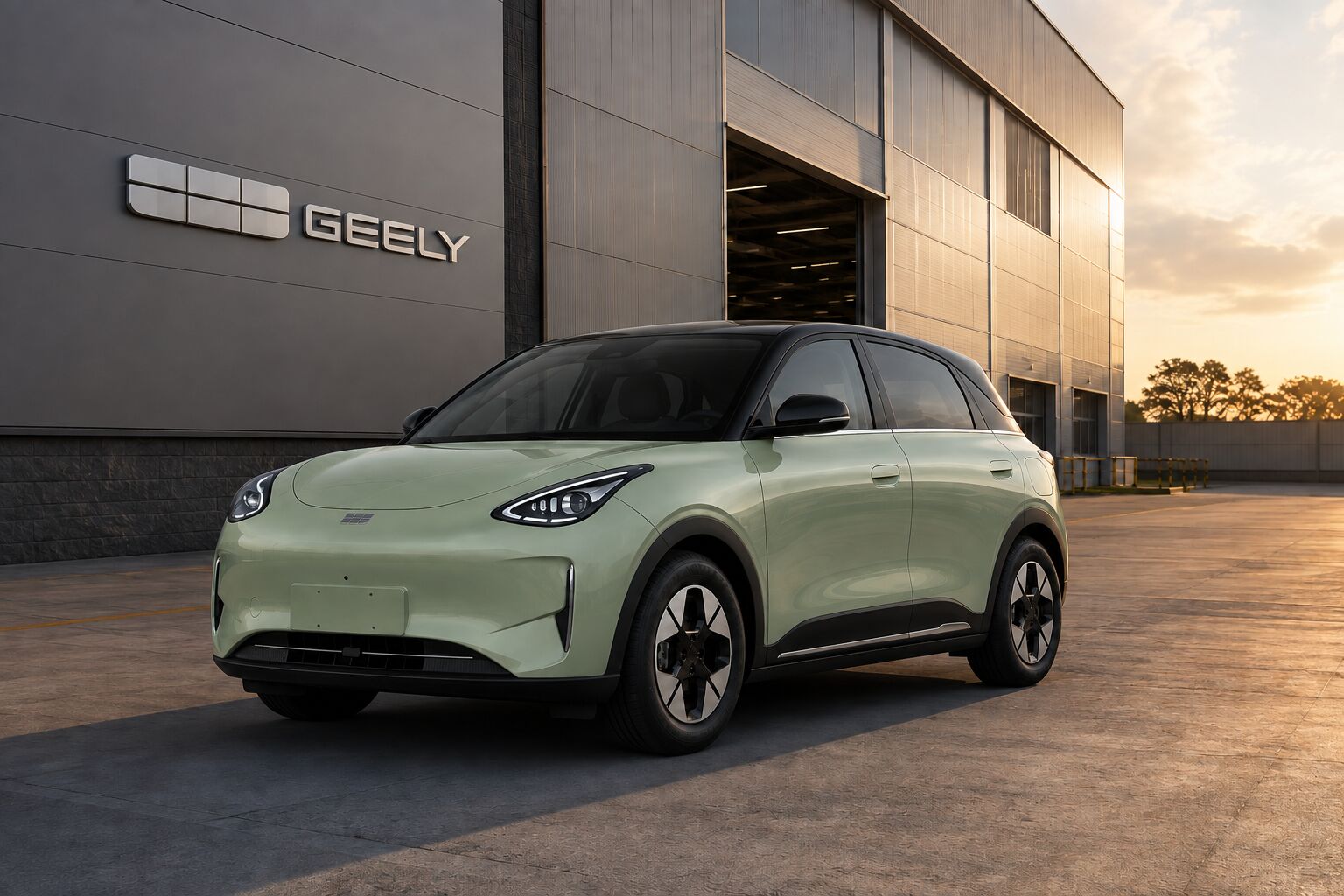

SÃO PAULO, Sept. 5, 2026, 12:24 a.m. BRT — Geely Automobile Holdings HKG:0175 has put its EX2 electric car into a new Brazilian direct-sales program. The corporate price starts at 115,134 reais, 7% below the current 123,800-real retail starting price.
The cut buys reach, not certainty. Geely says it will build the EX2 locally by year-end, after Brazil raised the import tariff on fully built electric cars to 35% in July.
That makes Brazil a live test of Geely’s export economics. The company is pushing volume before local assembly can lower its exposure to import duty, freight and currency swings.
Geely shares have given back their August high
Selected daily closes for Geely Auto in Hong Kong, HK dollars
Close as of . Source: Yahoo Finance historical market data. Prices are unadjusted; the one-month change compares Aug. 4 with Sept. 4.
Geely shares closed Friday at HK$17.28, up 0.35% for the session. They were 9.4% below the Aug. 4 close and 11.1% under the Aug. 5 closing peak.
The weaker share price has arrived beside very strong export numbers. Geely shipped 110,094 vehicles abroad in August, up 205% from a year earlier. Total monthly sales rose 8% to 270,194.
Investors now need evidence that overseas growth can carry attractive margins. Brazil exposes that tension in a single price list.
The EX2 discount depends on who is buying
Brazilian reais; advertised starting prices and program prices
EX2 Pro
EX2 Max
Sources: Geely Brazil’s Sept. 1 direct-sales announcement and current EX2 offer page. Percentage comparisons are TS2 calculations.
Taxi buyers get a much lower number: 104,212 reais for the Pro. That 15.8% gap includes statutory tax exemptions, so it should not be read as Geely-funded discounting alone.
Alex Caetano, Geely Brazil’s head of sales and network, said in Portuguese that the company was “expanding purchase options” for professional and disabled customers. The program also advertises financing for up to 36 months.
The customer pool matters because the EX2 already carries Geely’s local operation. The company reported more than 20,000 EX2 sales since its November 2025 launch. Total Brazilian sales passed 25,000 during Geely’s first 12 months.
On matching company cutoffs, the EX2 supplied at least four of every five Geely sales in Brazil. Yet the country remains small against Geely’s export machine.
Localization is the hinge in Brazil
The commercial push arrives before planned local EX2 output
Sources: Geely Brazil first-year update, local-production announcement, Brazil’s official tariff report and Geely Auto’s August sales filing. Run-rate comparison is illustrative.
Brazil’s first-year average was roughly 2,083 Geely cars a month. That equals about 1.9% of the group’s August export volume. The comparison uses different periods, but it sets the scale.
Renault Geely do Brasil plans to assemble the EX2 at its Ayrton Senna complex in Paraná. Geely owns 26.4% of that venture; Renault Group EPA:RNO owns the rest.
Local production can change the cost base. Fully built EVs now face the 35% tariff, while the government gave temporary relief to some semi-knocked-down and completely-knocked-down imports.
Geely has some room to invest. First-half revenue rose 15% to 173.6 billion yuan. Company-defined core profit attributable to shareholders increased 46% to 9.68 billion yuan, while gross margin reached 17.9%.
Those are group figures, not Brazilian unit economics. Retail discounts, taxes, dealer payments and local sourcing make a direct margin comparison unsafe.
Risks: Geely has not disclosed EX2 profitability in Brazil. Local output could slip, imported components may keep currency exposure high, and price competition can outlast tariff savings. August sales were unaudited and may be adjusted.
The next useful evidence is simple. Watch whether EX2 volume holds after local production starts, then look for higher overseas earnings per vehicle. More exports alone will not answer the margin question.
Sources
- Geely Brazil direct-sales program, Sept. 1, 2026
- Geely Brazil EX2 model and offer page
- Geely Brazil first-year sales update, July 30, 2026
- Geely EX2 local-production announcement, June 2, 2026
- Geely Auto first-half 2026 results
- Geely Auto August 2026 sales filing
- Agência Brasil report on electric-vehicle import tariffs
- Geely Auto historical market data