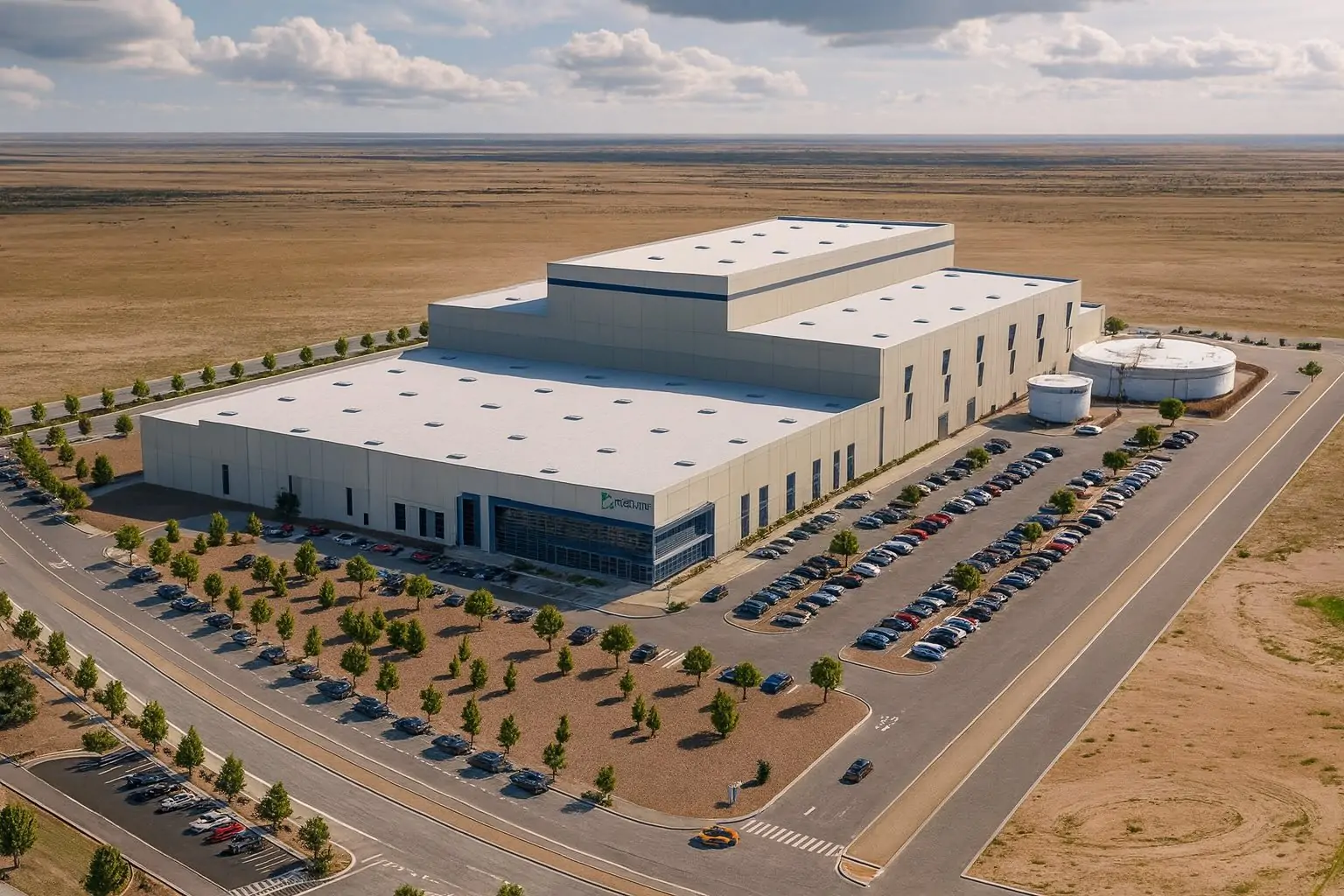
- High Stakes in ABQ: Pacific Fusion has chosen Albuquerque for a $1 billion fusion research and manufacturing campus kob.com. The 225,470 sq.ft. facility in Mesa del Sol is slated to break ground in 2026 and begin operations by mid-2027, bringing roughly 200 new high-tech jobs kob.com.
- City Support & Funding: The Albuquerque City Council approved $776.6 million in industrial revenue bonds plus $10 million in development funds for the project kob.com. Pacific Fusion itself has raised over $900 million in venture capital, backed by firms like Breakthrough Energy Ventures and Lowercarbon Capital losalamosreporter.com.
- Big Economic Impact: Officials project more than $1.17 billion in economic activity over 10 years kob.com. State and local leaders call this a “game-changer” – Albuquerque Mayor Tim Keller says it’s “proof… that our city… can define the next chapter of clean-energy innovation” losalamosreporter.com.
- Fusion Research Focus: The campus will house Pacific Fusion’s pulsed-fusion “Demonstration System,” designed to reach net energy gain by 2030 (producing more fusion power than the energy it consumes) losalamosreporter.com pacificfusion.com. In other words, it won’t feed power to the grid initially; it’s entirely an R&D and manufacturing center (no electricity generation) losalamosreporter.com.
- Statewide Clean-Tech Strategy: New Mexico officials tout this win as proof the state “can compete—and win in the race to attract the most innovative companies” losalamosreporter.com. Economic Development Secretary Rob Black called Pacific Fusion a “landmark win” that cements NM’s role in clean-energy innovation cosmico.org losalamosreporter.com.
A $1B Fusion Campus: Albuquerque’s Big Bet
Albuquerque’s leaders and New Mexico’s government see Pacific Fusion’s campus as a historic win. Governor Michelle Lujan Grisham described the company’s decision as proof that “our state can compete—and win in the race to attract the most innovative companies in the world” losalamosreporter.com. The state’s $1 billion incentive package (mostly in bonds and performance-based tax relief) helped secure the deal over competing California sites kob.com cosmico.org.
Mesa del Sol – a growing tech park on Albuquerque’s south side – was chosen for its power availability, space and nearby skilled workforce. The site already hosts Kairos Power’s advanced nuclear reactor project, creating synergy: Interim tech leader Chad Matheson notes that Mesa del Sol “has a great anchor tenant with Kairos Power… workforce synergies” that will help fill jobs cosmico.org. Local authorities also highlight proximity to Sandia National Labs, whose decades of fusion research make New Mexico a fitting R&D hub losalamosreporter.com.
Pacific Fusion’s Technology and Timeline
Pacific Fusion is a California startup (founded 2023) specializing in pulsed magnetic fusion. Unlike hot plasma in tokamaks, Pacific Fusion’s approach uses powerful capacitor banks (“pulsers”) to drive fusion reactions in tiny fuel targets. According to company CTO Keith LeChien, the Albuquerque facility will house a “Demonstration System” of 156 pulser modules by 2030 – a machine engineered to achieve net facility energy gain (more energy out than in) ans.org. LeChien notes this design aims for “100-fold higher facility gain at 10-fold lower cost than” existing experiments like Livermore’s National Ignition Facility pacificfusion.com.
In practical terms, Pacific Fusion expects to test key components now, begin manufacturing in New Mexico by year’s end, and start campus construction in 2026 losalamosreporter.com. The facility will focus solely on R&D and manufacturing, not producing power for the grid losalamosreporter.com. Albuquerque Mayor Tim Keller says reaching net-gain by 2030 “would mark a historic breakthrough toward commercial fusion power,” calling this project proof that the city has passed “a turning point” in the clean-energy era losalamosreporter.com.
Pacific Fusion’s leaders are bullish. Co-founder Carrie von Muench notes that New Mexico’s legacy in applied physics – especially Sandia’s Z Pulsed Power Facility – “will help us advance clean energy technologies… particularly fusion,” which she calls “the holy grail of clean energy” cosmico.org losalamosreporter.com. She even quips that the old joke about fusion “always being 30 years away” is outdated now: “We founded this company because that is no longer the case,” von Muench says cosmico.org.
Economic Engine: Jobs and Innovation
This fusion project is as much about jobs and industries as it is about science. When fully built, the campus is expected to support over 200 permanent high-tech positions – scientists, engineers and technicians – plus hundreds of construction jobs losalamosreporter.com kob.com. Those workers would earn above-average salaries, and their demand for local services (housing, schools, retail) will ripple through the Albuquerque economy. City officials estimate over $1.17 billion in economic activity during the next decade kob.com.
“Pacific Fusion’s decision… will create good jobs, expand our clean‑tech economy,” Gov. Lujan Grisham said in her announcement losalamosreporter.com. Economic Development Secretary Rob Black adds that a world-class company “puts New Mexico at the forefront of fusion energy,” potentially spawning thousands of future jobs and even new suppliers. He calls the campus an “anchor investment” for a broader fusion ecosystem losalamosreporter.com. Pacific Fusion itself highlighted its close ties with New Mexico leaders: CTO Keith LeChien praised “the close partnership…with the Governor’s office, the Economic Development Department, the City of Albuquerque, key legislators and the national labs,” giving the company “confidence that together we’ll be able to… deliver on the promise of low-cost fusion power” losalamosreporter.com.
It’s not just government money. Pacific Fusion has secured more than $900 million from top venture firms (including Breakthrough Energy and General Catalyst) losalamosreporter.com. The New Mexico State Investment Council has also poured $1 billion into VC funds backing local tech, helping swing the deal losalamosreporter.com. In short, public and private investors see this as a potentially lucrative clean-energy bet.
New Mexico’s Strengths in Fusion and Clean Tech
Analysts say Albuquerque offers unique assets. Its high desert altitude is good for fusion experiments, and New Mexico has decades of defense and science expertise. Sandia Labs in Albuquerque, for instance, built the Z Machine – one of the world’s most powerful fusion devices – and continues fusion and pulsed-power research. Pacific Fusion specifically cited Sandia as a research partner pacificfusion.com. The region also has growing infrastructure for advanced reactors: Kairos Power’s molten-salt reactor and commercial projects in Los Alamos show a budding nuclear cluster.
Local leaders emphasize “workforce synergies” too. Mesa del Sol’s development plans include tech jobs housing, and nearby employers (like Kairos) will create a pool of nuclear and engineering talent. “Mesa del Sol has tremendous housing growth… Anchor tenants like Kairos Power… help attract people,” noted an Albuquerque business leader cosmico.org. Pacific Fusion will add its specialized training programs as it builds out the campus.
Meanwhile, performance-based incentives make the deal cost-effective for taxpayers. The bonds and tax breaks kick in only as Pacific Fusion hires staff and invests capital. City documents note the project should remain “tax-positive” (eventually paying more in taxes than it receives in breaks) over time, thanks to the economic boost kob.com.
Fusion’s Global Context: Joining the Clean-Energy Race
Albuquerque’s $1B lab comes amid a flurry of fusion activity worldwide. Big investments and tech advances suggest fusion energy could be closer than ever, though it’s still unproven commercially. In the U.S., dozens of startups and national labs (including ITER in France) are racing to tame fusion. In September 2025, for example, Helion Energy closed a $425 million funding round and began building a pilot plant in Washington State to power Microsoft, reflecting “growing confidence that fusion…is on the cusp of commercialization” reuters.com reuters.com. Massachusetts-based Commonwealth Fusion Systems is constructing a powerful tokamak (“SPARC”) with Google’s help, aiming for net output in the early 2030s reuters.com. Even traditional energy giants (like Chevron and Shell) and tech titans (Google, Microsoft, OpenAI) have signed on as investors or partners reuters.com reuters.com.
Experts see fusion as a long-term game. The Fusion Industry Association reports most developers expect a net‑energy pilot reactor by 2030–2035 reuters.com. Andrew Holland (FIA CEO) cautions that “fusion can’t solve [the industry’s] energy problem in two years…but [it] can solve their problems by the late 2020s or early 2030s” reuters.com. Michl Binderbauer of TAE Technologies notes that surging power demand from AI data centers is creating “momentum” for fusion, making it a “practical and scalable energy solution” for the future reuters.com. Indeed, the U.S. Department of Energy even launched a Milestone-Based Fusion Program funding several startups, hoping to accelerate fusion breakthroughs.
Pacific Fusion’s campus is one high-profile example of this push. It leverages a newer “pulsed-power” method (inspired by the Sandia Z-machine) rather than the magnetic tokamak path most others take ans.org. Each approach has pros and cons, but the industry consensus is that multiple parallel efforts increase the chance of success. Importantly, fusion promises huge benefits: essentially limitless fuel (from hydrogen isotopes) with no carbon emissions and far less long-lived radioactive waste than fission reactors reuters.com. As TAE’s Binderbauer points out, fusion machines are inherently safe (no chain-reaction meltdown), which means their licensing hurdles are far lower than even “small modular” fission reactors reuters.com. In theory, that could allow fusion plants to go online on a similar timescale as advanced fission SMRs – assuming the science checks out.
Hurdles Ahead, But Eyes on the Prize
Skeptics remind us that no fusion system has yet achieved sustained net power in a commercial setting. Los Alamos’ press noted skeptics calling fusion “‘mission impossible’ or ‘dangerous’,” but leaders are optimistic koat.com. The recent laser-fusion “ignition” at Livermore and technical advances in magnets and pulsed power give some hope, but major engineering challenges remain (extreme heat, materials endurance, costs).
For now, Albuquerque’s project isn’t meant to deliver electricity – it’s about proving the physics. As Governor Lujan Grisham said, this is about cementing “New Mexico’s leadership in the industries of the future” losalamosreporter.com. If Pacific Fusion’s team can hit net-gain by 2030 with its new machine, it would indeed be a historic milestone on the way to a commercial fusion plant. In the meantime, the $1 billion investment is already reshaping New Mexico’s economy, drawing top scientists and fueling new innovation. Whether this “holy grail” of clean power becomes reality is still an open question, but Albuquerque has just staked a claim on the fusion frontier.
Sources: Local and national reports from KOB-TV, Los Alamos Reporter (Gov. press release), Reuters, Scientific outlets, and Pacific Fusion kob.com losalamosreporter.com cosmico.org losalamosreporter.com ans.org reuters.com, among others. Each fact and quote above is supported by linked citations.