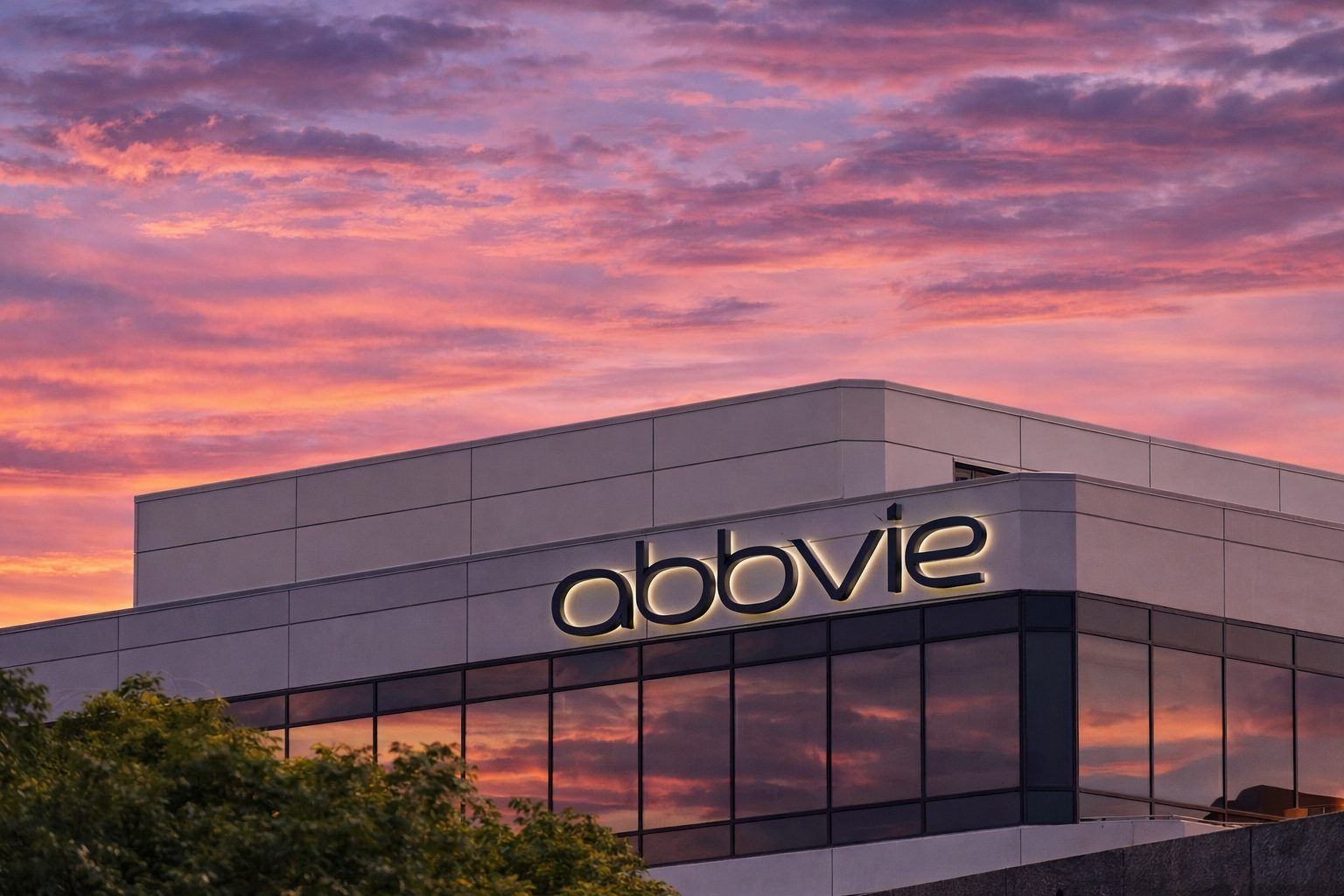
AbbVie Inc. (NYSE: ABBV) heads into the Monday, December 22, 2025 U.S. market open with a familiar bull case—Skyrizi and Rinvoq continuing to replace lost Humira revenue—and a less familiar overhang: Washington’s accelerating push to reframe U.S. drug pricing through “most‑favored‑nation” style commitments and new direct-to-consumer programs.
Below is what investors and traders should keep on their radar before the opening bell, using the most recent available company updates, analyst forecasts, and late‑breaking policy developments.
1) Where AbbVie stock stands heading into Monday
AbbVie last closed at $226.82 (Friday, Dec. 19), up about 1.8% on the day. StockAnalysis+1
One detail that stood out: trading volume spiked to about 18.6 million shares, far above its 50‑day average (per MarketWatch’s data note), a sign that institutions may have been repositioning into year‑end. MarketWatch
Extended-hours pricing tracked close to the regular-session level, suggesting no obvious after-hours shock—yet. MarketBeat
2) The biggest near-term driver: White House drug-pricing negotiations (TrumpRx + MFN)
If you’re looking for the single headline most likely to move ABBV in the near term, it’s U.S. drug pricing policy—not a clinical trial readout.
AbbVie is still “in conversations” as Trump’s pricing deals expand
On Dec. 19, Reuters reported President Donald Trump announced deals with nine major pharmaceutical companies to cut prices for Medicaid and cash payers, alongside broader commitments tied to a TrumpRx.gov approach and “most‑favored‑nation” (MFN) pricing framing. Reuters+1
Crucially for AbbVie investors: Reuters reported that CMS Director Mehmet Oz said AbbVie (along with Johnson & Johnson and Regeneron) would visit the White House after the holidays for the launch of the TrumpRx website—and all three companies confirmed they were in conversations with the administration. Reuters
Reuters: AbbVie among companies expected near an MFN-style deal
Just two days earlier (Dec. 17), Reuters reported AbbVie was among major drugmakers expected to finalize agreements with the U.S. government aligned with Trump’s MFN pricing initiative, with an announcement anticipated around that time. Reuters
Why this matters for ABBV:
Even if AbbVie is not in the first wave of announced signatories, investors are clearly treating “policy uncertainty” as tradable. These deals can cut both ways:
- Potential negative: greater price pressure over time, depending on scope (Medicaid, Medicare, cash payers, and “new launches”).
- Potential positive: reduced risk of more disruptive outcomes (tariffs, abrupt regulatory action, or broader price-control narratives) if agreements provide a framework and a runway. Reuters noted the market reaction to the Dec. 19 deal set was generally positive for participating companies. Reuters
3) Medicare pricing models are getting more aggressive—and more technical
Investors have been debating “drug price controls” in the abstract for years. The latest shift is toward pilot programs that operationalize global price comparisons.
On Dec. 19, Reuters reported the U.S. government announced two Medicare pilot programs:
- GLOBE (launching Oct. 1, 2026) tied to Medicare Part B
- GUARD (launching Jan. 1, 2027) tied to Medicare Part D
Both use international price benchmarks to calculate manufacturer rebates and set out-of-pocket costs for certain drugs. Reuters
What to watch for AbbVie:
This doesn’t rewrite AbbVie’s 2026 numbers overnight—but it can influence forward multiples if the market decides that global benchmarking will migrate from “pilot” to “policy standard” over time.
4) The core fundamental story: Skyrizi + Rinvoq are still doing the heavy lifting
AbbVie’s strategy since Humira’s U.S. biosimilar era began has been straightforward: lean hard into immunology growth while expanding in oncology and neuroscience.
The most cited data point: Skyrizi and Rinvoq momentum
In AbbVie’s Q3 update (reported Oct. 31), Reuters noted:
- Q3 net sales $15.78 billion, beating consensus estimates
- Adjusted EPS $1.86, above consensus
- Skyrizi Q3 sales $4.71 billion (above estimates)
- Rinvoq Q3 sales $2.18 billion (above estimates)
- Humira global sales $993 million, dipping below $1B for the first time since U.S. competition began Reuters
Management also raised 2025 adjusted EPS guidance to $10.61–$10.65 in that same period. Reuters+1
Longer exclusivity runway for Rinvoq: now a 2037 conversation
One of the most bullish “durability” updates this year came in September: Reuters reported AbbVie said it expected no generic competition for Rinvoq until April 2037 following a settlement framework, effectively extending the perceived runway for a key growth driver. Reuters
For a market that constantly discounts “loss of exclusivity,” that kind of extension can change how analysts model cash flows—especially if Skyrizi and Rinvoq remain the central offset to Humira’s decline.
Clinical positioning still matters too
Reuters also reported a head-to-head rheumatoid arthritis study where Rinvoq showed superiority vs. Humira on key endpoints, strengthening the product narrative as AbbVie continues broad label expansion efforts. Reuters
5) The soft spot investors keep re-checking: Allergan Aesthetics demand (Botox)
While immunology has been powering the narrative, AbbVie’s aesthetics segment has been a source of periodic investor unease—often tied to consumer spending sensitivity.
In October, Reuters reported AbbVie said quarterly aesthetic product sales fell 3.7% year over year, and shares dropped sharply that day as investors reacted to the aesthetics weakness. Reuters
AbbVie’s Q3 release similarly showed aesthetics net revenues down and Botox Cosmetic net revenues lower year over year. PR Newswire
Aesthetics isn’t only about demand—it’s also about defending the franchise
On the legal front, Reuters reported AbbVie’s Allergan unit won $56 million in a patent trial tied to Botox-related process claims versus a rival product (Revance’s Daxxify). Reuters
That kind of decision can support the competitive moat, but it doesn’t eliminate the bigger investor question: how quickly aesthetics reaccelerates if consumers stay cautious.
6) Pipeline and R&D catalysts: oncology visibility rises into 2026
AbbVie’s equity story isn’t just “two immunology blockbusters.” Management has been trying to build the next wave across oncology and neuroscience—especially to reduce dependence on any single franchise.
ASH 2025 data puts AbbVie’s blood cancer platform on display
In early December, AbbVie said it would present new data at ASH 2025, highlighting a range of modalities (including T‑cell engagers, BCL‑2 inhibitors, and antibody‑drug conjugates) and named programs including EPKINLY (epcoritamab), VENCLEXTA (venetoclax), investigational ABBV‑383, and pivekimab sunirine (PVEK). AbbVie News Center
Among the details AbbVie highlighted: a Phase 3 trial where an epcoritamab combination reduced the risk of progression or death by 79% versus standard of care in a follicular lymphoma setting (as described in the company’s ASH preview). AbbVie News Center
Capstan acquisition: strategic upside, plus legal noise
AbbVie has also been buying platforms to extend its long-term optionality. Its Q3 release noted the company completed the acquisition of Capstan Therapeutics, adding an in vivo targeted lipid nanoparticle CAR‑T candidate and platform. PR Newswire+1
An SEC filing around the deal described a structure including an upfront cash payment and the possibility of additional option and milestone payments (with royalties), underscoring why acquisition accounting and IPR&D charges have been an earnings headline this year. SEC
But it’s not all upside headlines: Reuters reported Arcturus Therapeutics sued AbbVie in September over alleged trade secret misappropriation tied to lipid nanoparticle technology, connected to AbbVie’s Capstan subsidiary. Reuters
Investor takeaway: platform deals can expand long-term growth options, but they can also bring litigation risk and earnings volatility from acquisition accounting.
7) What Wall Street forecasts say: moderate upside, but opinions are not uniform
Consensus still skews positive, but ABBV is no longer “cheap enough that everyone agrees.”
- StockAnalysis shows a consensus “Buy” rating and an average price target around $242 (roughly mid single-digit upside from the Dec. 19 close), with a wide range of targets. StockAnalysis
- MarketBeat shows a consensus price target around $246 and a “Moderate Buy” style consensus framing. MarketBeat
Recent rating actions also suggest the Street is actively recalibrating around valuation versus durability (especially with drug-pricing policy uncertainty rising). StockAnalysis lists December 2025 target moves from major banks including Morgan Stanley and HSBC. StockAnalysis
8) The calendar: earnings timing and dividends matter into early 2026
Next earnings date: estimates cluster around late January / early February
AbbVie has not universally confirmed a single date across all market calendars, and different providers show different estimates:
- Nasdaq shows an estimated earnings date of Jan. 30, 2026. Nasdaq
- MarketBeat also lists Jan. 30, 2026 as an estimated date based on prior reporting patterns. MarketBeat
- Other calendars place it in early February (for example, Investing.com lists early February timing). Investing.com
If you trade around earnings, treat dates as tentative until AbbVie confirms.
Dividend: AbbVie signaled continued commitment to payout growth
AbbVie’s Q3 release announced a 5.5% dividend increase to $1.73 per share, beginning with the dividend payable Feb. 17, 2026, to shareholders of record Jan. 16, 2026. PR Newswire
MarketBeat’s dividend page also lists the $1.73 next quarterly payment and an ex-dividend date of Jan. 16, 2026. MarketBeat
For income-focused investors, AbbVie’s dividend narrative remains a central pillar—but keep in mind that policy shifts affecting U.S. pricing can influence long-run payout capacity.
9) One more competitive headline worth noting: psoriasis remains crowded
AbbVie’s immunology strength is a major reason investors have been willing to “look through” Humira’s decline. But competition never stops.
On Dec. 18, Reuters reported Takeda’s experimental psoriasis pill succeeded in late-stage studies and would compete in a market that includes injectables such as Skyrizi (among others). Reuters
This isn’t an immediate AbbVie earnings hit, but it’s a reminder that immunology is a battlefield, and new entrants—especially differentiated oral therapies—can influence long-term expectations.
What could move ABBV specifically on Monday, Dec. 22
Going into the open, ABBV-sensitive catalysts look like this:
- Any incremental White House/CMS headlines about AbbVie’s status in TrumpRx/MFN-related negotiations. Reuters+1
- Market interpretation of the Medicare pilot programs and whether global benchmarking becomes a broader template. Reuters
- Risk-on/risk-off positioning into year-end—especially after the high-volume session on Dec. 19. MarketWatch
Bottom line
AbbVie enters the Dec. 22 open as a classic “big pharma” split-screen story:
- Strength: durable growth engines (Skyrizi and Rinvoq), better-than-feared durability signals like the Rinvoq runway update, and a dividend policy that management continues to emphasize. Reuters+2Reuters+2
- Tension: U.S. drug-pricing policy is moving quickly, and the market is actively repricing the sector around what MFN-style commitments and global benchmarking might mean over the next several years. Reuters+2Reuters+2