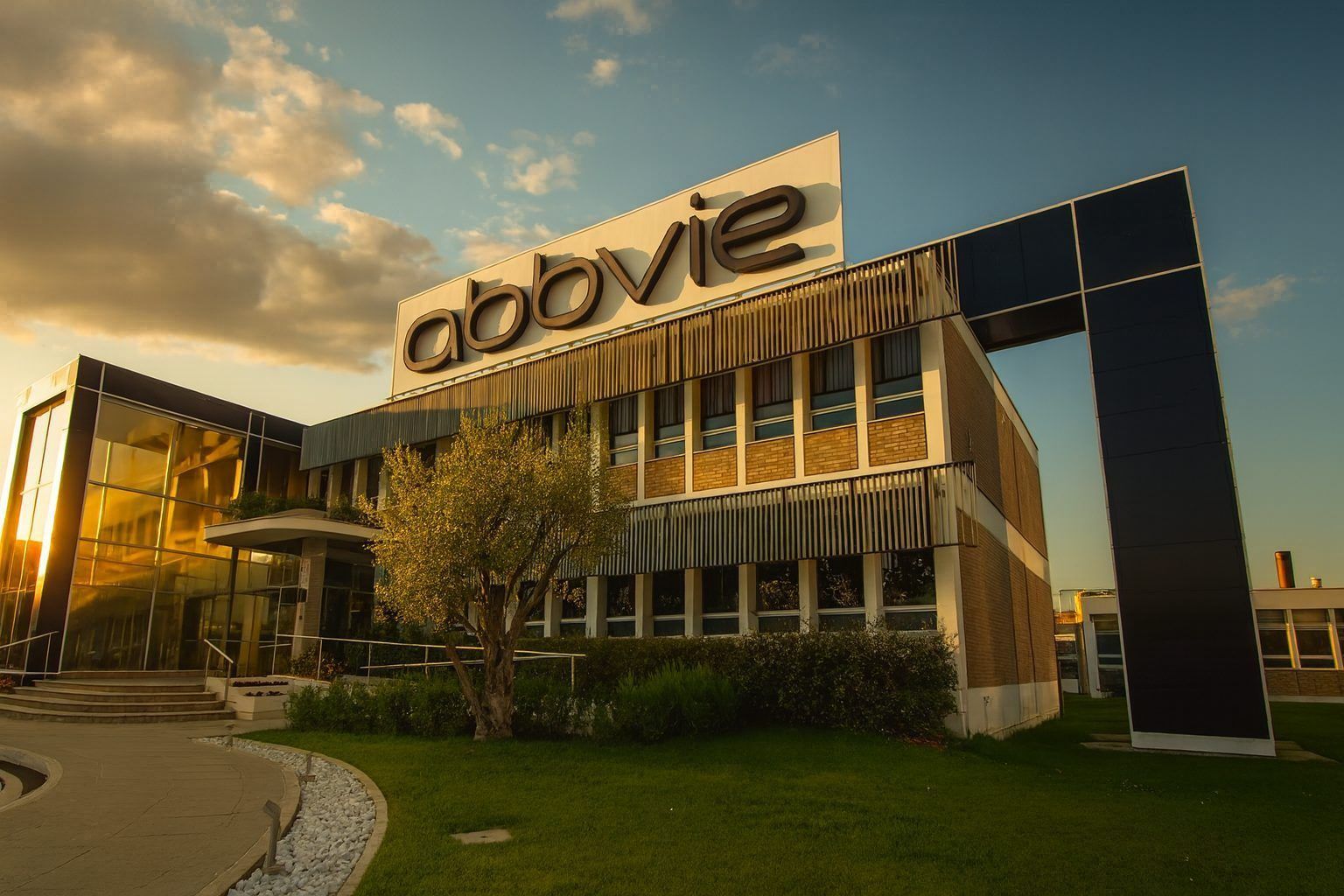
AbbVie Inc. (NYSE: ABBV) ended Friday’s session almost unchanged, closing around $227.70 per share, up a negligible 0.02%, after earlier trading slightly in the red.StockAnalysis+2StockAnalysis+2 Even with today’s flat finish, the pharma giant remains one of 2025’s standout healthcare names, with year‑to‑date gains of roughly 30–33%, easily beating the S&P 500.Investing.com+1
The calm price action masks a busy news day for AbbVie:
- Canada’s drug agency issued a positive reimbursement recommendation for Skyrizi in ulcerative colitis, and AbbVie concluded a key pricing agreement with national negotiator pCPA.MarketScreener+3GlobeNewswire+3GlobeNewswi…
- Multiple institutional investors reshuffled their AbbVie positions, with some funds adding to their stakes while others trimmed holdings.MarketBeat+3MarketBeat+3MarketBeat+3
- The stock continues to trade against the backdrop of a recent dividend increase, strong Q3 earnings, and new FDA approvals that reinforce AbbVie’s immunology and oncology franchises.Nasdaq+3Reuters+3Barron’s+3
Below is a detailed look at what today’s news means for AbbVie stock investors.
AbbVie Stock Price and Valuation Snapshot (November 28, 2025)
- Closing price: ~$227.70
- Intraday action: Shares traded around $226.8 (down ~0.3%) around midday before drifting back to essentially flat at the close.StockAnalysis+1
- 12‑month range: Approximately $164.39 – $244.81.MarketBeat+1
- Market cap: About $402 billion.Yahoo Finance+1
- Trailing P/E: Extremely elevated, around 170+, distorted by one‑time charges and low GAAP earnings.Yahoo Finance+2FinanceCharts+2
- Forward P/E: Far more modest, roughly 16–17x next year’s earnings.Yahoo Finance+2FinanceCharts+2
- Dividend yield: Around 2.9–3.0%, based on an annualized payout of $6.92.Barchart.com+4Yahoo Finance+4Investing.com…
- Beta: ~0.5, underscoring AbbVie’s status as a relatively defensive, low‑volatility name.MarketBeat
In short, AbbVie trades like a high‑quality, income‑oriented growth stock: pricey on trailing earnings, reasonable on forward estimates, and anchored by a sizable dividend.
Canada’s Skyrizi Reimbursement Move: Today’s Big Fundamental Catalyst
The dominant AbbVie headline on November 28, 2025 is a Canadian win for its blockbuster IL‑23 inhibitor Skyrizi (risankizumab).
What happened?
AbbVie Canada announced that:
- Canada’s Drug Agency (CDA‑AMC) issued a positive reimbursement recommendation for Skyrizi in ulcerative colitis (UC), following an earlier positive opinion in Crohn’s disease.TradingView+3GlobeNewswire+3GlobeNewswire+…
- AbbVie has concluded a Letter of Intent with the pan‑Canadian Pharmaceutical Alliance (pCPA), which negotiates pricing for provincial and territorial public drug plans.GlobeNewswire+2TradingView+2
The recommendation applies to adult patients with moderately to severely active UC who have failed or become intolerant to conventional therapy, prior biologics or JAK inhibitors, assuming certain criteria are met.GlobeNewswire+1
Feedback from 25 Canadian clinicians and patient groups including Crohn’s and Colitis Canada and the GI Society was incorporated into the assessment, reinforcing the clinical and patient‑centric rationale for broader access.GlobeNewswire
Why investors care
- New reimbursed population in a high‑value market
Public reimbursement is often the gatekeeper for broad adoption in Canada. A positive CDA‑AMC recommendation plus a completed pCPA LOI is typically a prelude to inclusion on provincial drug formularies, expanding Skyrizi’s addressable market beyond private plans.GlobeNewswire+1 - Reinforcement of AbbVie’s IBD franchise
Skyrizi is already a top revenue driver and a pillar of AbbVie’s strategy to offset Humira erosion. In Q3 2025, Skyrizi posted $4.71 billion in sales (up ~47% year‑over‑year), while JAK inhibitor Rinvoq delivered $2.18 billion (up ~35%).Investors+1 - Signal for global pricing negotiations
Canadian reimbursement decisions don’t directly set prices elsewhere, but they send a strong signal for payers internationally and underscore the robustness of Skyrizi’s clinical data in inflammatory bowel disease.
Commentary from analysts and AI‑driven outlets framed today’s decision as a “catalyst for long‑term growth” for AbbVie’s immunology franchise, even if the near‑term revenue impact from Canada alone is modest relative to global sales.AInvest+1
Big Money Watch: Institutions Rotate Around AbbVie
Several 13F‑style filings and institutional‑flow stories hit the tape today, painting a nuanced picture of how professional investors view ABBV.
Who’s buying?
- Groupama Asset Management
- Boosted its AbbVie position by 1.6% in Q2 to 149,687 shares, worth roughly $27.3 million.MarketBeat+1
- MarketBeat highlights that institutions collectively hold about 70.2% of AbbVie’s float.MarketBeat+1
- Level Four Advisory Services LLC
- Increased its stake by 3.1%, buying an additional 4,041 shares to reach 133,406 shares, valued around $24.8 million. AbbVie now represents ~0.9% of its portfolio and is its 18th‑largest holding.MarketBeat
Who’s trimming?
- Skandinaviska Enskilda Banken AB publ
- Reduced its AbbVie position by 1.1%, selling 10,092 shares but still holding 884,419 shares worth about $164.2 million, making ABBV its 21st‑largest holding.MarketBeat
- Neuberger Berman Group LLC
- Cut its stake by 9.7%, selling 132,804 shares to end Q2 with 1,240,254 shares, valued around $230.2 million.MarketBeat+1
What does this tell us?
Net‑net, today’s filings suggest healthy but mixed institutional sentiment:
- Several managers added incrementally after AbbVie’s Q3 beat and guidance raise.
- Others chose to take profits after a strong year for the stock, a natural move given ABBV’s sizeable run and still‑robust institutional ownership.MarketBeat+3MarketBeat+3MarketBeat+3
Across these reports, MarketBeat notes a “Moderate Buy” consensus rating and an average Wall Street price target around $241–242, with some bullish targets as high as $289 per share.MarketBeat+1
Dividends: AbbVie’s Income Story Keeps Getting Bigger
Income investors had plenty to digest in the wake of AbbVie’s Q3 earnings and subsequent coverage.
Dividend hike details
- AbbVie has raised its quarterly dividend from $1.64 to $1.73 per share, a ~5.5% increase, starting with the payout scheduled for February 17, 2026, to shareholders of record on January 16, 2026.Barchart.com+3Barron’s+3MarketBeat+3
- The new rate translates to an annualized dividend of $6.92 and a forward yield of roughly 3.0% at current prices.Yahoo Finance+3MarketBeat+3Investing.com+3
On a trailing basis, data providers still show an annual payout of $6.56 and a trailing yield near 2.9%, reflecting the previous dividend rate.Yahoo Finance+2lightyear.com+2
Dividend King narrative
Several recent features from outlets like Nasdaq and The Motley Fool continue to highlight AbbVie as a “Dividend King”‑type stock, noting that:
- AbbVie (and its former parent Abbott) have collectively delivered over 50 consecutive years of dividend increases.Nasdaq+1
- The company’s current yield is competitive within large‑cap healthcare, especially given its growth profile and strong immunology drivers.
Dividend‑focused analysis pieces published this month also spotlight AbbVie as one of only a few dividend‑paying stocks up more than 30% in 2025, underlining how rare it is to find both double‑digit capital gains and a 3% yield in one package.Investing.com+1
Earnings Backdrop: Skyrizi and Rinvoq Drive Q3 Beat
Today’s trading unfolds against a strong fundamental backdrop from AbbVie’s third‑quarter 2025 results, released October 31.
Headline numbers
- Revenue: $15.78 billion, up about 9% year‑over‑year, slightly ahead of consensus estimates (~$15.59 billion).Reuters+2Investors+2
- Adjusted EPS:$1.86 per share, beating expectations around $1.77–1.78.Investing.com+4Reuters+4www.alphaspread.co…
- Guidance: AbbVie raised its full‑year 2025 adjusted EPS outlook to $10.61–$10.65, up from $10.38–$10.58, despite ongoing investment and pricing headwinds.Reuters+2Barron’s+2
Segment performance
According to Reuters, Barron’s and other coverage:Reuters+2Barron’s+2
- Immunology (Skyrizi & Rinvoq)
- Skyrizi sales: $4.71 billion, +47% YoY.
- Rinvoq sales: $2.18 billion, +35% YoY.
- Collectively, these newer drugs are more than offsetting the decline in Humira, which fell to $993 million globally — its first quarter under $1 billion since U.S. biosimilar competition began.
- Neuroscience: Revenue up around 20%, helped by Botox’s therapeutic uses and other CNS assets.
- Oncology: Roughly flat, with a stable contribution from therapies like Imbruvica and Venclexta/Venclyxto.
- Aesthetics (Allergan Aesthetics, incl. Botox Cosmetic and fillers): Down about 3–4%, missing expectations as macro headwinds weigh on discretionary procedures.
AbbVie’s GAAP earnings remain compressed due to large R&D and in‑process R&D (IPR&D) charges, including an earlier $2.7 billion hit that temporarily forced a downward revision to its profit outlook in October.Reuters+2www.alphaspread.com+2 That distortion helps explain the eye‑popping trailing P/E ratio north of 170, even as forward P/E sits in the mid‑teens.Yahoo Finance+2FinanceCharts+2
Regulatory Momentum: Epkinly Combo Approval in Lymphoma
Another major medium‑term pillar for AbbVie’s story is oncology.
On November 18, 2025, AbbVie announced that the U.S. FDA approved EPKINLY (epcoritamab‑bysp) in combination with rituximab and lenalidomide (EPKINLY + R²) for adults with relapsed or refractory follicular lymphoma after at least one prior systemic therapy.Nasdaq+2AbbVie News Center+2
Key highlights from the approval and supporting Phase 3 EPCORE FL‑1 trial:
- EPKINLY + R² is now the first and only bispecific antibody combination therapy approved for this indication.Nasdaq+1
- The combo reduced risk of disease progression or death by about 79% versus standard‑of‑care R² in the trial.Nasdaq+1
- Roughly three out of four patients achieved a complete response, pointing to a potentially best‑in‑class efficacy profile in a difficult‑to‑treat population.Nasdaq+1
For investors, this approval:
- Deepens AbbVie’s hematology/oncology portfolio, complementing Imbruvica, Venclexta and other assets.
- Offers incremental growth in a niche but high‑value segment of non‑Hodgkin lymphoma.
- Reinforces the company’s strategy of investing in targeted, high‑margin therapies despite near‑term R&D charges that weigh on GAAP earnings.
Market Tailwinds: Atopic Dermatitis and Neurology Opportunities
Beyond this week’s specific headlines, AbbVie is positioned inside several secular growth markets:
- A fresh atopic dermatitis drugs market report published today projects the global market to reach $29.43 billion by 2032, with biologics and JAK inhibitors driving growth. AbbVie is listed among key players, and the report cites positive head‑to‑head data for Rinvoq versus Sanofi/Regeneron’s Dupixent in moderate‑to‑severe atopic dermatitis.GlobeNewswire+1
- In neurology, AbbVie is investing in Parkinson’s disease and other CNS indications. It recently submitted a new drug application to the FDA for tavapadon, a dopamine D1/D5 partial agonist for Parkinson’s, while market research sees the Parkinson’s treatment market growing to around $8.75 billion by 2032.AbbVie News Center+2Taurigo+2
These long‑term tailwinds sit on top of the near‑term earnings engines of Skyrizi and Rinvoq, supporting the growth half of AbbVie’s “growth + income” equation.
Policy and Pricing Headwinds Still Matter
Not all recent news has been rosy.
Reuters reported in late October that the Trump administration is pressing for deeper Medicare drug price cuts, with AbbVie’s drugs such as Linzess (for IBS, co‑marketed) and Vraylar (antipsychotic) among those subject to ongoing negotiations.Reuters+1
Key takeaways from that coverage:
- Medicare price negotiations could lead to discounts taking effect in 2027, but AbbVie says they do not alter its long‑term guidance.Reuters+2Reuters+2
- AbbVie raised its 2025 profit forecast despite these negotiations, citing resilient demand for Skyrizi and Rinvoq.Reuters+2Reuters+2
- The aesthetics franchise (Botox Cosmetic, fillers) remains a weak spot as economic concerns and inflation pressure consumer‑driven procedures.Reuters+2Reuters+2
Investors should therefore balance today’s positive reimbursement news and growth drivers with:
- Ongoing U.S. drug‑pricing risk,
- Sensitivity of aesthetic revenues to consumer sentiment, and
- The concentration risk around Skyrizi and Rinvoq as they become ever larger pieces of AbbVie’s revenue mix.
What Today’s News Means for AbbVie Stock
Putting it all together, November 28, 2025 looks like a fundamentally constructive day for AbbVie, even if the share price barely moved:
- Skyrizi’s reimbursement progress in Canada confirms the drug’s expanding global footprint in inflammatory bowel disease and should modestly enhance long‑term revenue.MarketScreener+3GlobeNewswire+3GlobeNewswi…
- Institutional flows show big money is still engaged — some funds are adding on strength, others trimming after a strong run, but overall ownership and analyst sentiment remain supportive.MarketBeat+3MarketBeat+3MarketBeat+3
- Dividend growth plus solid forward earnings guidance makes ABBV attractive for investors seeking a blend of income and growth.Yahoo Finance+3Barron’s+3Reuters+3
- Recent FDA approvals (Epkinly combo) and pipeline progress in immunology and neurology add optionality beyond the Skyrizi/Rinvoq duo.GlobeNewswire+3Nasdaq+3Applied Clinical Tr…
At the same time, rich trailing valuation metrics, Medicare pricing risks, and aesthetics softness mean AbbVie is not without controversy, which helps explain why the stock can deliver strong fundamentals yet still trade sideways or even pull back on good news.StockAnalysis+4Reuters+4Reuters+4
For long‑term investors, today’s developments largely reinforce the existing thesis: AbbVie remains a high‑quality, dividend‑growing pharma leader transitioning successfully beyond Humira, powered by Skyrizi and Rinvoq, while layering in oncology and neuroscience growth drivers.
Disclaimer: This article is for informational purposes only and does not constitute investment advice, tax advice, or a recommendation to buy or sell any security. Always do your own research or consult a licensed financial advisor before making investment decisions.