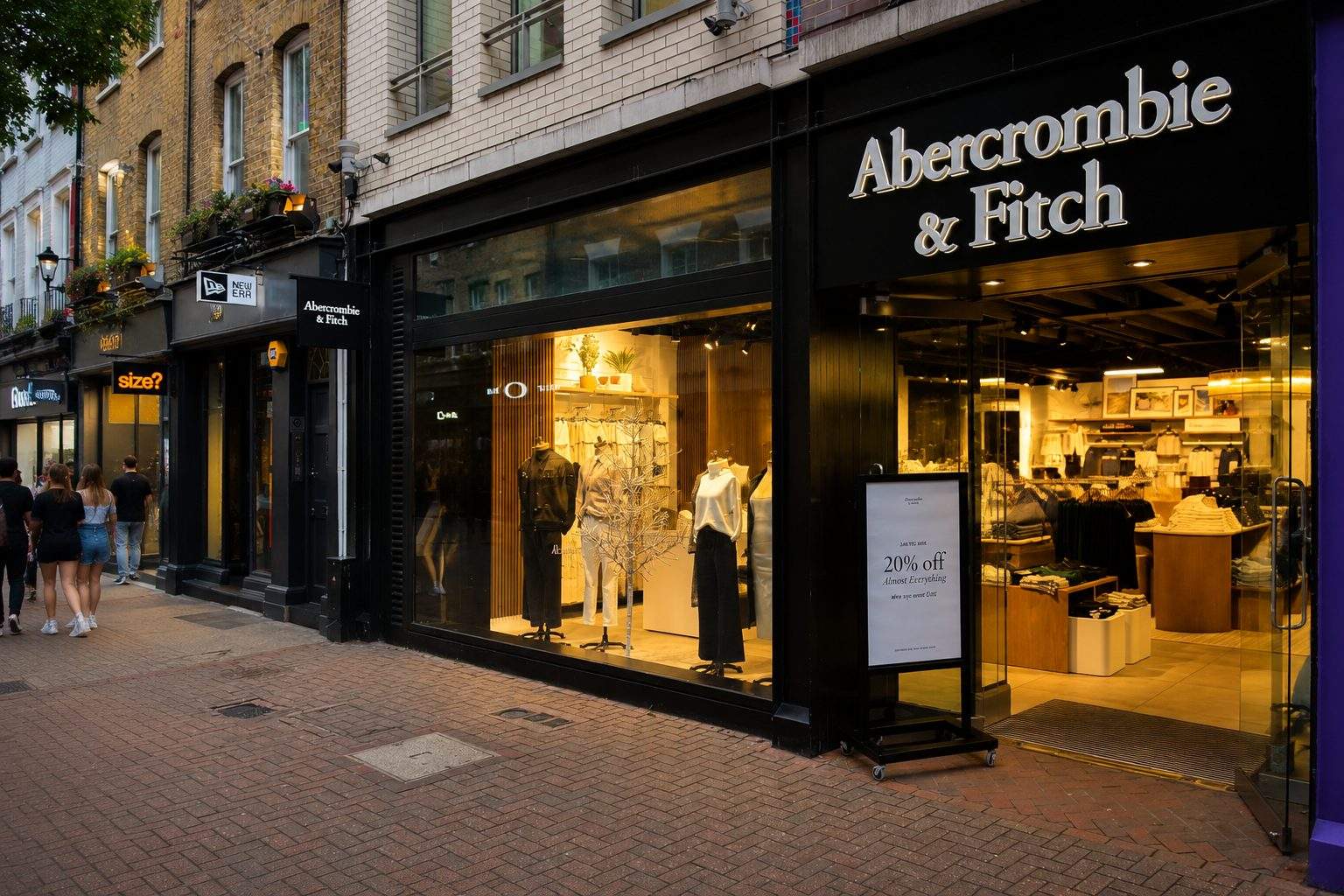

New York, May 27, 2026, 09:01 EDT
- Abercrombie & Fitch was up about 4%-5% in premarket trading after the retailer came in ahead of Wall Street expectations for first-quarter profit.
- Net sales increased 2% to $1.11 billion. Sales climbed 3% in the Americas, jumped 24% in APAC, and fell 10% in EMEA.
- Abercrombie & Fitch is sticking with its full-year forecast, calling for 3%-5% sales growth and earnings per diluted share between $10.20 and $11.00.
Abercrombie & Fitch stock looked strong ahead of the bell Wednesday after the company topped quarterly profit targets and kept its full-year outlook steady. Investors got a clearer look at demand as the shares pushed higher in premarket trade, following a choppy run for the retailer’s stock.
ANF shares had dropped over 40% this year heading into the report, as traders doubted if the company’s turnaround would keep driving growth. Demand has slowed, and apparel retailers are facing higher tariff costs. The reaction is important.
NYSE hadn’t opened for its regular session yet at the dateline. The main trading day kicks off at 9:30 a.m. ET. In premarket action, SPDR S&P Retail ETF added roughly 0.5%. SPDR S&P 500 ETF Trust was ahead about 0.6%.
Abercrombie posted net sales of $1.11 billion for the quarter ended May 2, a 2% increase from a year ago. Earnings per diluted share came in at $1.47, topping the $1.28 analysts were looking for, based on LSEG numbers reported by Reuters.
Abercrombie & Fitch reported “record first quarter net sales,” but comparable sales, which measure demand at stores open at least a year plus digital, dropped 1%. CEO Fran Horowitz said the quarter played out in a “dynamic global environment.” GlobeNewswire
Americas sales climbed 3% and Asia-Pacific jumped 24%, but Europe, the Middle East and Africa dropped 10%. The split was uneven. Horowitz said “demand softened” in EMEA, blaming the Middle East conflict for the impact, hitting Hollister in particular. GlobeNewswire
Abercrombie brand sales were up 3% at $564.7 million. Hollister sales held flat at $549.1 million. Comparable sales at Hollister dropped 2%. That’s notable since Hollister targets a competitive teen and young-adult market.
Margins dipped but stayed positive. Operating margin slipped to 8.0% from 9.3% a year ago. The company bought back $105 million of its own shares this quarter. It said there is $745 million left on its buyback plan.
Tariffs landed lighter than Abercrombie had thought. The retailer now puts the full-year tariff impact at around 20 basis points, a cut from its earlier 70 basis point view; 100 basis points equals a percentage point. Abercrombie said it has filed for roughly $100 million in tariff refunds under the International Emergency Economic Powers Act.
Abercrombie is looking for second-quarter sales to rise 2% to 4%, with earnings per diluted share projected between $1.80 and $2.00. Full-year guidance stays at 3% to 5% sales growth and an operating margin of 12.0% to 12.5%.
Abercrombie’s numbers gave some, but not huge, support to consumer-facing names. Reuters reported that Abercrombie’s results matched up with better demand at Capri and Bath & Body Works. Still, Abercrombie relies more on apparel and has a narrower focus. Barclays cut ANF to Equal Weight earlier in May, warning about heavier promotions and a crowded field in teen and young-adult apparel.
The beat may not end the debate for Abercrombie. EMEA remains weak, Hollister sales are flat, and tariff refunds look uncertain. If demand drops before the back-to-school or holiday periods, a more promotional market could cut into margins. The company flagged ongoing risks around trade policy, consumer demand, global conflicts, supply chains, and fashion misses in its statement.
Related articles: Stock Market