Shanghai, Jan 11, 2026, 00:48 GMT+8 — Market closed
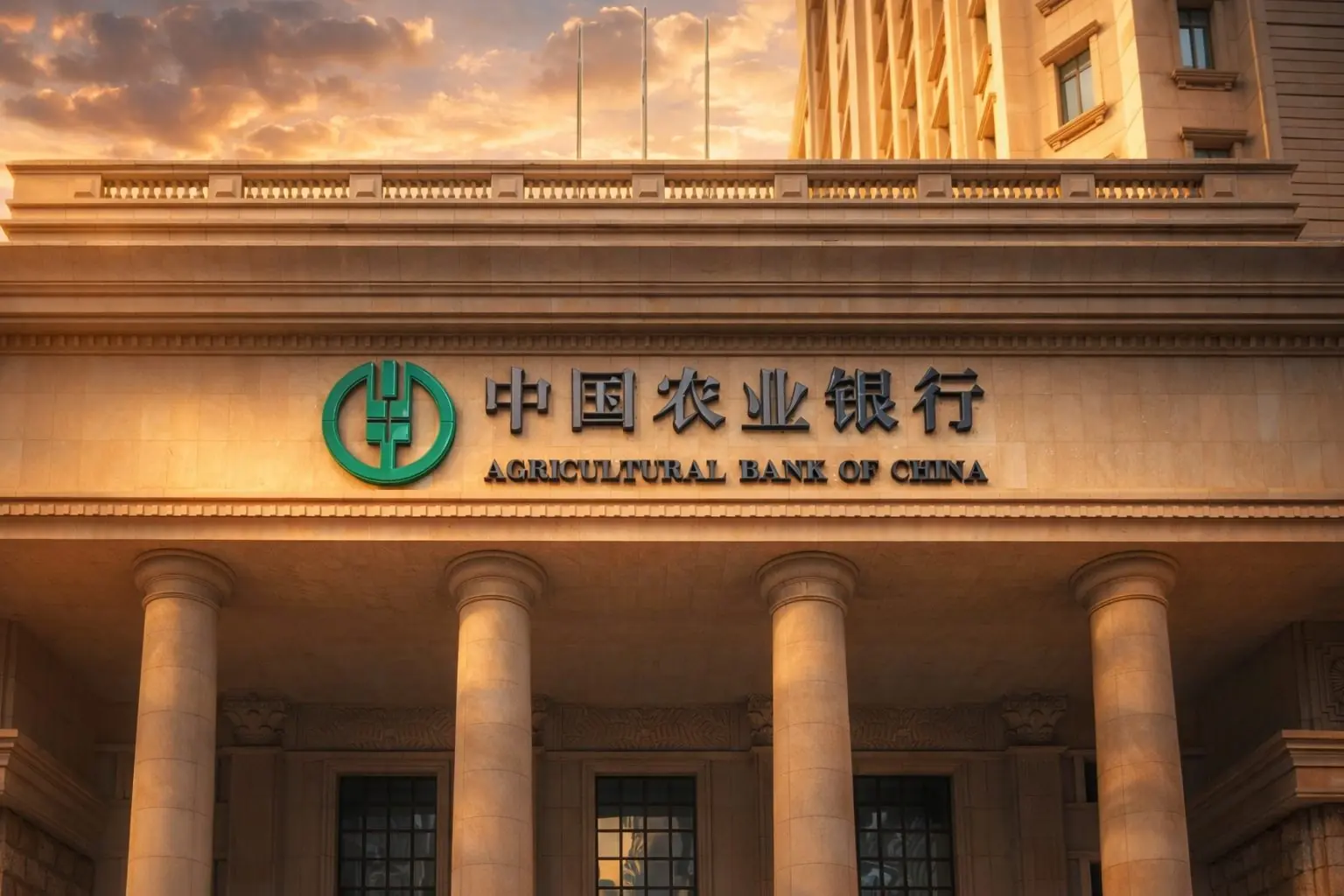
- Agricultural Bank of China’s Class A shares ended Jan. 9 down 0.4% at 7.41 yuan, a fifth straight daily drop
- Beijing rolled out a fresh domestic-demand policy package that leans on loans and interest subsidies
- Traders now look to China’s December credit and trade releases for the next read on growth and bank risk
Agricultural Bank of China Ltd’s Class A shares (601288.SS) ended Friday down 0.4% at 7.41 yuan, marking a fifth straight session of declines. The stock is down 3.5% over the past five sessions and has traded between 7.36 and 7.68 yuan over the past week, with about 223 million shares changing hands on Friday, MarketScreener data showed. MarketScreener
The timing matters. Beijing is leaning harder on credit to push demand, and the big state banks sit right in the middle of it — as lenders, as policy conduits, and as profit machines that can get squeezed when rates and subsidies move.
China’s cabinet said on Friday it would implement a package of fiscal and financial policies to spur domestic demand, including stronger loan support for services providers and wider interest-subsidy policies for personal consumer loans. It also flagged interest subsidies for loans to small firms and a risk-sharing mechanism for bonds issued by private companies, state media reported. Reuters
Investors now want to see whether the push is showing up in the numbers. Economists in a Reuters poll expect Chinese banks to have issued around 800 billion yuan in net new loans in December, up from 390 billion yuan in November, while M2 money supply growth is seen steady at 8.0% year on year. “With the government unlikely to widen its budget deficit target next year, growth in government bond issuance is set to slow further,” Capital Economics’ Leah Fahy wrote in a note cited by Reuters. Reuters
Property stress is still the other shoe. China Vanke is drawing up a debt restructuring plan at the request of authorities, Bloomberg News reported on Friday, a step that would bring the developer closer to default, according to Reuters. Reuters
The broader tape looked better than the banks. The Shanghai Composite rose 0.92% to 4,120.43 points on Friday, its highest close since 2015, The Business Times reported. “We remain positive on Chinese equities,” said William Bratton, head of cash equity research for APAC at BNP Paribas Exane, while Panshi Fund’s Zeng Wanping said policy pledges and a firmer yuan “should continue to boost A shares,” the report said. The Business Times
On valuation, Agricultural Bank’s A-shares trade at about 0.81 times book value and show a dividend yield near 4.9%, according to Investing.com data. The site also shows the next earnings date as March 31, 2026, and puts the 14-day RSI — a price-momentum gauge — at about 37. Investing.com
For banks, the tug-of-war is familiar and messy. Easier policy can lift loan volumes, but it can also pinch net interest margin — the spread between what banks earn on loans and what they pay on deposits.
But the downside case is easy to sketch. If credit demand stays soft, the policy effort looks like pushing on a string. If lending jumps, investors will ask who is borrowing — and at what cost — in an economy still dealing with patchy consumption and property-linked strains.
Peers such as Industrial and Commercial Bank of China, China Construction Bank and Bank of China tend to trade as a pack around the same macro prints, leaving stock-pickers hunting for small differences in asset quality and dividend durability.
The next catalyst comes mid-week: China’s December trade data and the December credit prints (M2, loan growth and new yuan loans) are scheduled for Wednesday, Jan. 14, according to S&P Global Market Intelligence’s week-ahead calendar. spglobal.com