
New York, May 13, 2026, 05:04 EDT
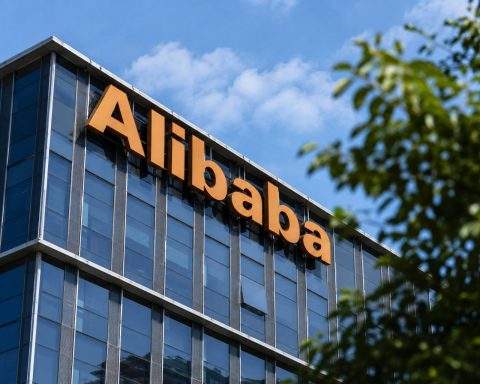
- Alibaba’s U.S. ADRs are trying to stabilize in early premarket after a weak Tuesday close, with fiscal fourth-quarter results due before the U.S. open.
- The move is about margins as much as growth: AI/cloud spending and quick-commerce subsidies are still the pressure points.
- Bulls see Alibaba Cloud and Qwen as real AI assets. Bears see JD.com, Meituan and PDD keeping the retail fight expensive.
Alibaba Group’s U.S.-listed American depositary receipts, the NYSE-traded proxy for the Chinese company, were quoted at $136.15 in early premarket, up 1.02%, after closing Tuesday at $134.78, down 1.84%. That is the first read on the stock today: buyers are not gone, but the chart still carries the damage from pre-earnings risk cutting. Google Finance showed Tuesday’s low at $133.82 and a 52-week high of $192.67, so the rebound starts from a bruised level, not a fresh breakout.
The timing matters. Alibaba is scheduled to release March-quarter and full fiscal 2026 results on May 13, with management’s conference call set for 7:30 a.m. U.S. Eastern time. Until those numbers land, the stock is trading less on proof and more on positioning: who wants to own the print, and who would rather wait for clarity on spending.
The basic tension is easy to state and harder to resolve. Revenue is expected to rise to 282.44 billion yuan from 255.29 billion yuan a year earlier, while net profit is projected to fall to 11.71 billion yuan from 12.96 billion yuan, according to Barron’s. The same setup explains the share move: investors are willing to pay for Alibaba’s AI story, but not if cloud infrastructure and loss-making quick commerce keep eating the gain. Benchmark Research’s Fawne Jiang is still in the bull camp, with a Buy rating and a $220 ADR target, but that optimism has to fight the margin math today.
This is not only an Alibaba issue. China’s big platform stocks have missed part of the broader AI rally, while smaller AI and hardware names have drawn more aggressive buying. Financial Times reported that Hong Kong’s Hang Seng Tech index had fallen more than 8% in 2026 even as China’s CSI AI index gained 28%, with investors shifting toward more direct AI exposure. That matters for Alibaba’s chart: it is being judged as an old platform business with an AI option, not yet as a pure AI winner.
The bull case is still credible. In its December-quarter update, Alibaba said Cloud Intelligence revenue rose 36% to 43.28 billion yuan and AI-related product revenue grew at a triple-digit pace for the tenth straight quarter. Chief Executive Eddie Wu said the company was “well-positioned to drive growth” in enterprise and consumer AI, and Alibaba also pointed to Qwen adoption and its model-as-a-service business, which means selling AI models through cloud tools rather than just selling raw compute. Alibaba Group
The bear case starts in the same report. Quick commerce grew fast, but fast growth in one-hour delivery is not free; it needs discounts, logistics spending and rider capacity. Reuters reported after the March results that Alibaba’s U.S.-listed shares dropped more than 6% when revenue missed expectations and net income sank, with one-hour delivery and promotions weighing on profit while China’s consumer backdrop stayed weak. That is the scar traders are carrying into today’s release.
Peers are making the read more complicated. JD.com reported a 5% rise in quarterly revenue to 315.7 billion yuan, beating estimates, but net income still fell 53% as fulfilment, R&D and marketing costs rose. JD’s result says demand has not vanished. It also says the cost of fighting for that demand remains high, especially in the same delivery and retail lanes where Alibaba is spending.
The Hong Kong tape showed that split in real time. Alibaba’s Hong Kong shares slipped 0.38% on May 13, while JD.com jumped 8.28% and Meituan rose 4.10%, according to Google Finance. That is a blunt sector signal: investors rewarded JD’s narrower-loss story and Meituan’s delivery leverage, while Alibaba was still waiting to prove its own mix of cloud, commerce and cost control.
Prediction-market pricing is mildly constructive, but thin. TipRanks reported that Polymarket gave Alibaba a 68% chance of beating an 84-cent adjusted EPS estimate; adjusted EPS means profit per U.S.-listed share after stripping out selected items, so it is not the same as statutory net profit. The underlying Polymarket contract showed only $323 of volume, so it is a sentiment marker, not a deep institutional signal.
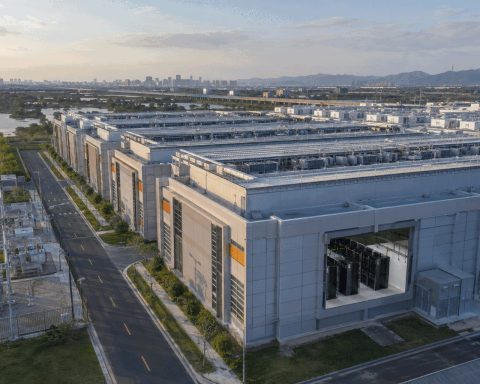
The bigger question is whether Alibaba can turn heavy AI spending into operating leverage. The company has targeted more than $100 billion in AI and cloud revenue over five years and pledged 380 billion yuan over three years for AI and cloud infrastructure. That can support a higher valuation if demand keeps compounding. It can also depress earnings if customers do not absorb the capacity fast enough.
So the stock’s next move probably will not hinge on one headline number. A modest revenue beat with weak profit quality may not be enough. What the market needs is cleaner evidence that cloud acceleration is real, quick-commerce losses are being contained, and the core Taobao-Tmall engine is not funding an open-ended subsidy race. Without that, a premarket bounce stays just that — a bounce before the harder part of the day.
Related articles: NYSE:BABA