NEW YORK, April 8, 2026, 09:12 EDT
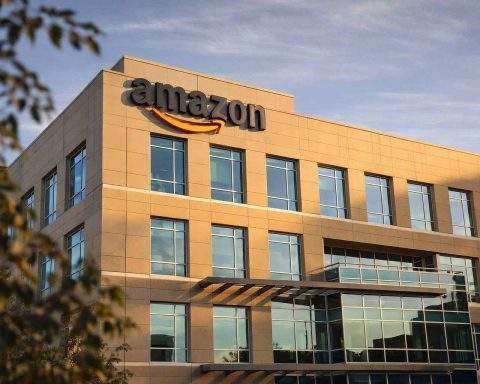
BNP Paribas still sees room for Amazon.com shares to climb by as much as 50%, even as the company moves ahead with a $200 billion AI infrastructure investment this year. The bank reiterated its outperform call and stuck with a $320 price target in a note Tuesday. Shares ended the day at $213.77, leaving that target nearly 50% above the current level. MarketWatch
The call comes while investors debate if top cloud firms are pouring cash into AI before it pays off. Goldman Sachs noted this week that big capital outlays from these players—and persistent anxiety over AI-driven shakeups—have erased much of tech’s valuation edge, despite solid earnings. Reuters
Amazon reignited the debate back in February, telling investors it plans to ramp up capital spending to roughly $200 billion for 2026, up from $131 billion projected for 2025. Shares slid 11.5% after hours on the news, Reuters noted, despite AWS posting a 24% revenue jump in the December quarter to $35.6 billion. Reuters
Andy Jassy hasn’t let up defending the cloud expansion. Back in March, speaking at an internal all-hands, the CEO called AI a “very unusual opportunity” for Amazon to scale up its cloud business, pointing to “very clear and significant demand signals”—not just a roll of the dice. According to Reuters, Jassy is now pitching an AWS sales target of $600 billion by 2036, doubling his own prior internal projection.
Nick Jones at BNP Paribas echoed that view in a note Tuesday. According to MarketWatch and Benzinga, Jones pushed back on fears around Amazon’s spending, calling them “overdone.” He argued the company’s bigger budget is “appropriate and necessary given demand levels and the size of the future opportunity.” For Jones, it’s not the capex total that matters most — it’s the backlog, the volume of contracted business supporting each dollar of new infrastructure. Benzinga
It all comes down to Amazon’s size. On the February earnings call, Jassy pointed out AWS was expanding at a 24% clip on a hefty $142 billion annualized run rate. For the quarter, Reuters reported Google Cloud shot up 48% to $17.75 billion, while Microsoft Azure gained 39%. Reuters
Plenty of skeptics aren’t prepared to wait around for Amazon. “The market just dislikes the substantial amount of money that keeps getting put into capex for these growth rates,” Dave Wagner, portfolio manager at Aptus Capital Advisors, told Reuters back in February. D.A. Davidson analyst Gil Luria put it bluntly: Amazon needs to invest at that scale “just to stay in the race.” Reuters
Rivals aren’t dialing back. Alphabet, in its February update, flagged that 2026 capex might land between $175 billion and $185 billion. Over at Microsoft, Reuters reported a fresh quarterly capex record, highlighting just how much the AI surge is pushing major cloud and software names to ramp up spending long before any clear returns materialize. Reuters
There’s a catch: the investments could get tougher before they start delivering returns. S&P Global’s Melissa Otto told Reuters last week that if energy prices keep climbing, tech giants might have to rethink their capital spending plans. On Monday, Reuters reported that Amazon, Microsoft and Google are getting fresh questions from investors about how much water and power their U.S. data centers are consuming, after resistance from local communities stalled or halted several projects. Reuters
Amazon hasn’t struggled to drum up cash for its expansion, thanks to heavy appetite among debt buyers. Back in March, Reuters noted the company pulled in roughly $37 billion through a U.S. bond offering on March 10, then turned around and tapped European markets with a 14.5 billion euro deal just a day later. The moves highlight how easily top cloud players like Amazon can still secure funding to keep up with growing AI costs. Reuters
That’s the bet Jassy is making, and BNP’s price target depends on it. AWS must convert fresh AI investments into actual sales for that $200 billion figure to stop spooking investors; if it falls short, Amazon’s spending spree stays the top reason for caution. Reuters