
New York, April 17, 2026, 12:41 EDT
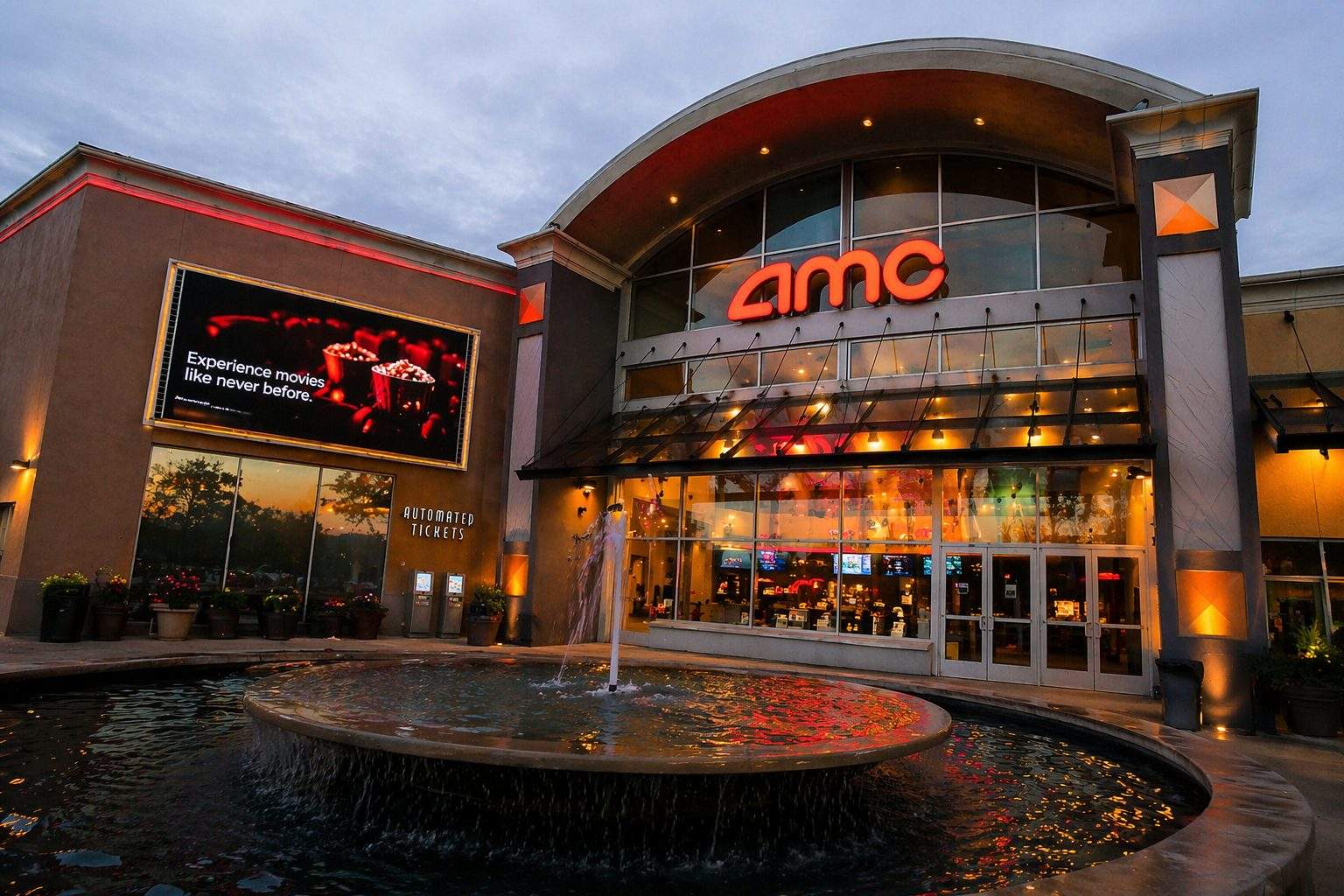
AMC Entertainment surged almost 20% Friday, with the stock racing ahead of other theater names after the chain’s record Easter weekend fueled more gains. By 12:25 p.m. EDT, AMC shares added $0.32 to reach $1.93. Cinemark picked up roughly 1.9%, Marcus climbed 6.6%.
Theater chains are betting a higher-profile 2026 film lineup can keep business more consistent, rather than just fueling short-lived stock pops. During CinemaCon in Las Vegas this week, Paramount Skydance assured exhibitors it will stick with a 45-day theatrical window and put out at least 30 movies a year—assuming the Warner Bros deal gets the green light. Disney also highlighted some late-2026 releases: “Avengers: Doomsday,” “The Mandalorian and Grogu,” and “Moana.” Reuters
AMC reported April 6 that the Easter stretch from April 1-5 drove the biggest five-day global ticket and concessions haul ever for any Easter weekend in the company’s 106 years. Crowd numbers topped 6 million across AMC and Odeon cinemas, following the debut of “The Super Mario Galaxy Movie,” which media pegged at $372 million in worldwide box office. Still, CEO Adam Aron stressed revenue gains weren’t tied to just one film. AMC Entertainment Holdings, Inc.
The boost at the box office carried on past opening weekend. “The Super Mario Galaxy Movie” grabbed $69 million more across the U.S. and Canada last weekend, bumping its domestic tally to $308.1 million. Worldwide, it’s now racked up $629 million. Comscore’s Paul Dergarabedian called those numbers “all the more impressive,” especially given the family-friendly ticket prices. AP News
AMC wasn’t the outlier. Cinemark reported the biggest domestic Easter stretch in its history, spanning five days, while Marcus Theatres also reached a record for five-day Easter holiday revenue. Cinemark CEO Sean Gamble described the run as a “powerful reminder” of moviegoers’ appetite for theaters. Over at Marcus, CEO Greg Marcus pointed to the period bolstering what he called the “strong box office performance” already underway in 2026. Cinemark Holdings, Inc.
Yet AMC continues to show its volatility. Shares slipped 3.59% Thursday to close at $1.61, trailing gains across the broader market. Even with Friday’s bounce, the stock remains far under its 52-week high of $4.08.
Any pickup in the release schedule would be a welcome shift for the company. Back in February, Reuters noted AMC had topped fourth-quarter revenue projections, yet U.S. attendance dropped 7.5% year over year. AMC later posted 2025 revenue at $4.85 billion, logged a net loss of $632.4 million, counted $428.5 million in cash, and ended up with just over $4.0 billion in corporate debt.
Management’s been busy shoring up the balance sheet. Back in March, AMC announced its Odeon European arm lined up a credit facility for as much as $425 million, aiming to refinance 12.75% notes maturing in 2027 with new debt due in 2031 at a fixed 10.50% rate. The move is part of the company’s ongoing push to cut interest expenses and extend its debt runway.
Still, a handful of blockbuster weekends doesn’t answer the tougher question of whether rising ticket and concession revenue is enough to offset debt, new equity sales, and a choppy stock price. Back in February, AMC disclosed plans to sell up to $150 million in stock, having raised $26.2 million as of Feb. 20. That month’s prospectus flagged the shares as “highly speculative,” cautioning that price swings might have little to do with AMC’s actual business.
Industry headwinds beyond AMC’s reach are also surfacing. Michael O’Leary, Cinema United’s chief, cautioned theater owners this week that “consolidation results in fewer films”—a pointed reference to the Paramount Skydance and Warner Bros merger in the works. David Ellison, though, is countering that with a pledge: no fewer than 30 films a year, each getting a theatrical window of at least 45 days. Reuters
Right now, traders are banking on a packed film slate and the Mario hype this spring to help keep theater seats from going empty. But AMC needs to prove those busy weekends actually boost quarterly results, instead of simply sparking another wave of action in a stock that—even by the company’s own admission—can drift away from its fundamentals.
Related articles: NYSE:AMC