
NEW YORK, August 21, 2026, 12:28 EDT — U.S. markets begin trading.
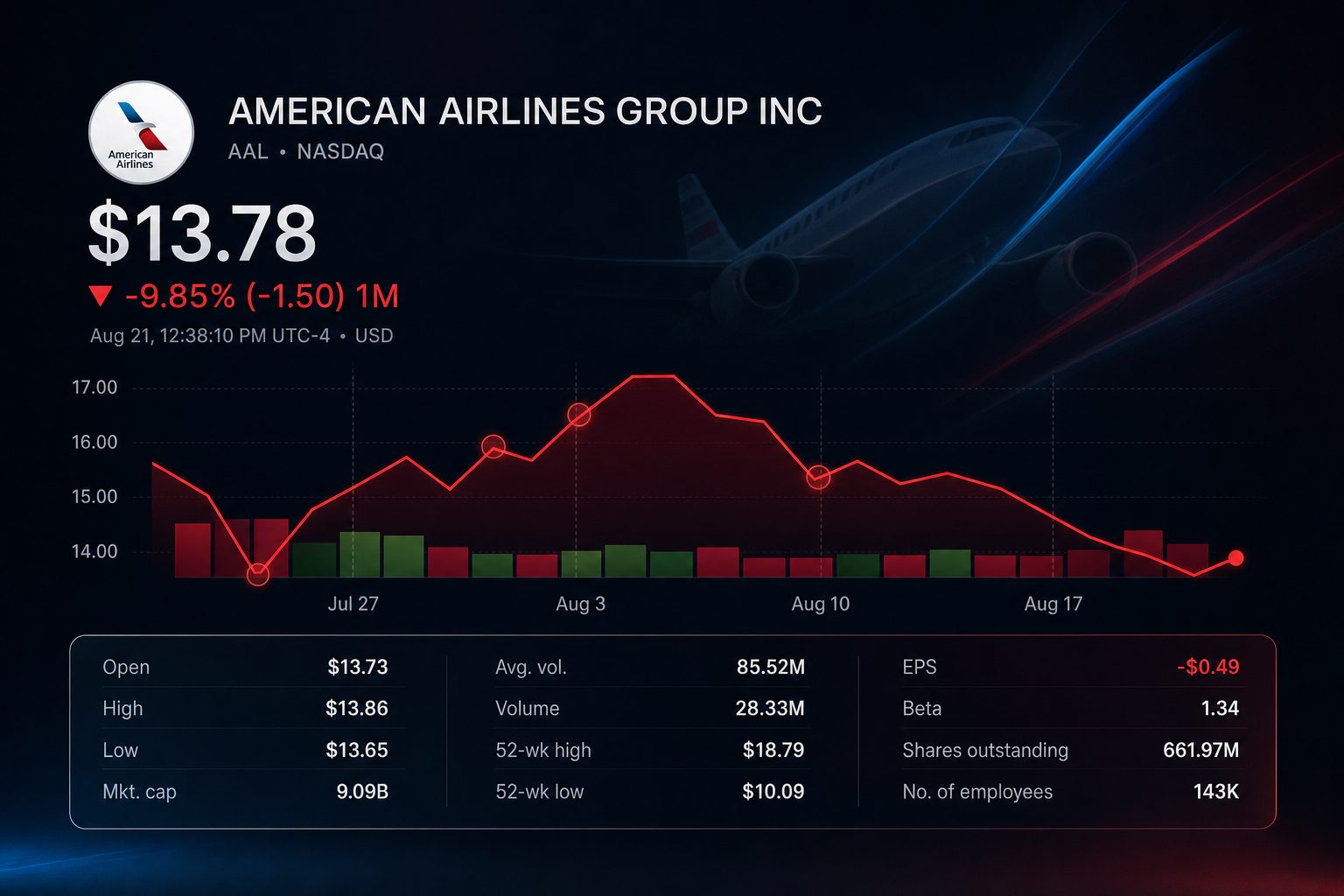
- Shares of American Airlines gained 1.6% to $13.74 following Thursday’s sector-wide decline.
- Premium-seat capacity on narrowbody aircraft is set to swell by 60%, while comprehensive retrofitting efforts begin in 2028.
- Despite guidance suggesting earnings around break-even, Wall Street’s average target of $19.03 signals a potential upside of 38.5%.
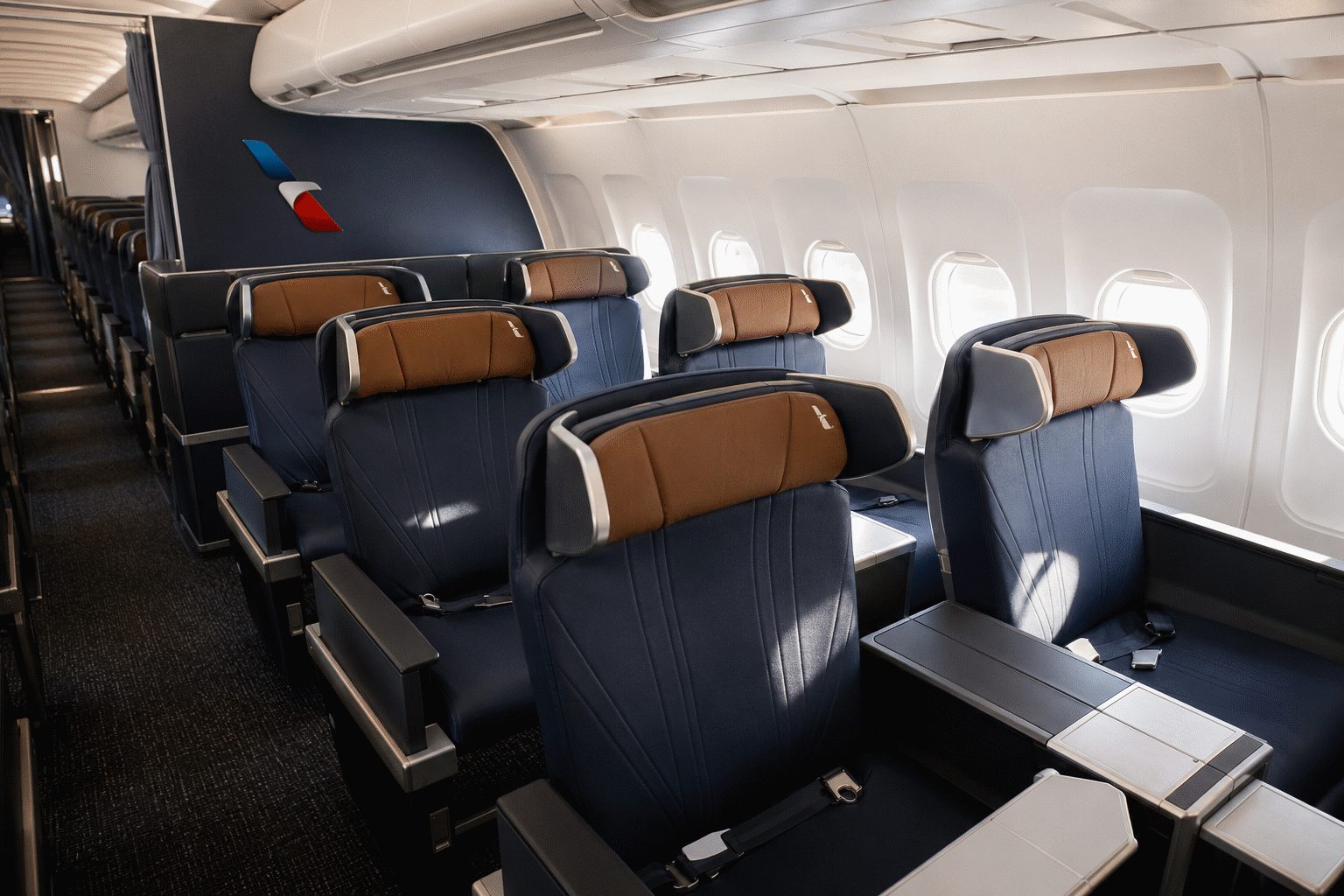
American Airlines Group Inc. NASDAQ:AAL recovered 1.6% on Friday, yet its updated profit strategy means investors face a lengthy wait. The airline’s aim is to boost premium seats to roughly 40% of narrowbody capacity, up from the current 25%, representing a 60% proportional increase. Major cabin modifications are not scheduled to start before 2028.
Timing plays a key role. Premium passengers generated close to half of ticket revenue in the second quarter. Nonetheless, American remains behind Delta Air Lines Inc. NYSE:DAL and United Airlines Holdings Inc. NASDAQ:UAL in profitability. Plans call for more than 800 planes to be equipped with seatback screens, with completion slated for early next decade. American has not revealed the expenditure involved.
| Market update | Price | Change | Timestamp |
|---|---|---|---|
| American Airlines | $13.74 | +1.63% | Aug. 21, 12:28 EDT |
| American Airlines | $13.52 | -2.45% | Aug. 20 close |
| Delta Air Lines | $81.06 | -2.68% | Aug. 20 close |
| United Airlines | $111.71 | -3.52% | Aug. 20 close |
| Southwest Airlines Co. NYSE:LUV | $39.89 | -3.69% | Aug. 20 close |
The rise on Friday came after a broad-based market recovery, but offset only a portion of Thursday’s 2.45% decline. American shares stayed 12.8% under their 50-day moving average and 26.9% beneath the 52-week peak. The stock also remained 1.2% lower than its 200-day average.
There is data supporting the product shift. Premium passenger unit revenue at American grew 13.4% in the second quarter. Unit revenue for Main Cabin was up 8.8%. Managed corporate revenue advanced 26%, marking the fifth consecutive quarter with double-digit gains.
| Premium plan | Current or recent | Target | Investor read-through |
|---|---|---|---|
| Narrowbody premium-seat presence | 25% | Around 40% | +15 points; +60% comparative capacity |
| Seatback-screen equipped aircraft | Some new deliveries | 800+ | Entire fleet aligns, costs not disclosed |
| Scope of major retrofits | Not begun | Kicks off 2028 | Extended earnings gap |
| Narrowbody Starlink installation | Preparations in progress | Launches 2027 | Connectivity introduced before inflight screens |
| International lie-flat seat expansion | 2026 benchmark | +50% by end of decade | Increased upscale seating |
The company posted second-quarter revenue of $16.7 billion, a new high and a rise of 16.3%. Adjusted net profit stood at $99 million, equal to $0.15 per share. Fuel costs surged by over $2.2 billion, marking an 83% climb. The earnings foundation remains thin.
| Operating measure | Q2 2026 / latest outlook | Comparison |
|---|---|---|
| Revenue | $16.7 billion | 16.3% higher from a year ago |
| Adjusted net income | $99 million | $0.15 a share, diluted |
| Premium passenger unit revenue | Up 13.4% | Main Cabin: Up 8.8% |
| Q3 revenue guidance | Increase between 16% and 19% | Capacity: Up 3% to 5% |
| FY adjusted EPS guidance | ($0.65) to $0.65 | Range includes break-even level |
| Quarter-end liquidity | $11.3 billion | Backs investment program |
American projects third-quarter revenue growth between 16% and 19%. The company’s fuel guidance stands at roughly $3.75 per gallon. For the full year, adjusted earnings are estimated to range from a loss of $0.65 to a profit of $0.65 per share. As such, a standard forward earnings multiple provides limited insight.
Chief Executive Robert Isom stated that “revenue growth was strong across all entities and cabins.” This backs the premium argument. However, it does not address the impact of fuel costs or the expense of upgrading cabins.
| Analyst / firm | Recommendation | Target | Implied move from $13.74 | Latest action |
|---|---|---|---|---|
| Atul Maheswari / UBS | Buy | $18 | +31.0% | Lowered from $21, July 27 |
| Catherine O’Brien / Goldman Sachs | Sell | $13 | -5.4% | Reduced from $15, July 24 |
| Michael Goldie / BMO Capital | Market Perform | $19 | +38.3% | Decreased from $19.50, July 24 |
| Jamie Baker / JPMorgan | Overweight | $24 | +74.7% | Increased from $22, July 24 |
| Christopher Stathoulopoulos / Susquehanna | Positive | $25 | +82.0% | Lifted from $16, July 7 |
Analysts are divided. The average price target stands at $19.03, suggesting a potential rise of 38.5% from Friday’s close. Targets vary between $10.30 and $25.00, reflecting ongoing uncertainty about fuel expenses, profit margins and operational performance.
Sequencing will be crucial for investors. Free onboard Wi-Fi has rolled out to a large portion of the narrowbody fleet, and Starlink installations are scheduled to start in 2027. Screens, along with an expanded cabin retrofit, are set for 2028. The strategy relies on revenue growth to bridge the gap.
Risks: Fuel prices may remain higher than American’s forecasts. Expenses for retrofitting could strain cash flow, and postponed deliveries might delay revenue gains. Premium demand could face additional challenges if the economy slows.
Currently, the stock provides a lower-cost way to bet on improved premium economics. Fuel continues to drive short-term results. Benefits from cabin upgrades are expected down the line.
Related articles: NASDAQ:AAL