
ABU DHABI, May 11, 2026, 02:04 GST
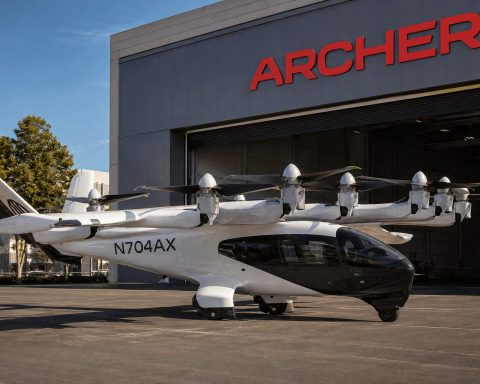
Archer Aviation is set to report first-quarter results Monday, this time with a boost: its Midnight aircraft has been bumped onto an accelerated regulatory pathway in the UAE, opening up a more direct shot at starting limited service in Abu Dhabi. According to the company, the UAE General Civil Aviation Authority has now placed Midnight under a Restricted Type Certificate program—marking Archer as the first electric vertical takeoff and landing (eVTOL) manufacturer to secure this spot with the regulator.
The timing is crucial here—Archer’s valuation leans heavily on progress markers, not revenue yet. The company will release its first-quarter operating and financial results after U.S. markets shut on Monday, May 11, with a webcast scheduled for 2:00 p.m. Pacific.
U.S. markets didn’t open Sunday. Archer last changed hands at $6.48 on Friday, leaving its market cap sitting around $4.28 billion as investors await management’s next round of remarks on certification, production, and how it’s spending cash.
The UAE move falls short of full commercial approval. What Archer has is a Restricted Type Certificate, which means certain aircraft operations are permitted under defined conditions as certification efforts go on. Archer is still waiting for full FAA Type Certification back in the U.S., according to Gulf News.
Calling the UAE initiative a “major step” for electric air taxis, Archer founder and CEO Adam Goldstein put the spotlight on the country’s ambitions. Eng. Aqeel Al Zarooni, assistant director general for aviation safety at the GCAA, emphasized the regulator’s priority: “safely integrating” new aviation technology into the UAE’s airspace. Zawya
Archer and the GCAA have laid out an eight-point plan aimed at commercial readiness, spanning aircraft certification, operations, maintenance, pilot training, airspace, vertiports, security, and oversight. The company’s Midnight vehicle is slated for launch in Abu Dhabi, where Abu Dhabi Aviation will handle operations as Archer’s partner on the ground.
Archer wrapped up 2025 sitting on $1.96 billion in cash, cash equivalents, and short-term investments, with a net loss for the year coming in at $618.2 million. The company says it’s still equipped—both financially and on the regulatory front—to keep going. The FAA has now signed off on 100% of Midnight’s Means of Compliance, the key test and analysis process for airworthiness.
The path forward is still risky. Archer, in its annual report, pointed out that there are no eVTOL aircraft certified by the FAA yet for U.S. commercial flights. The company said setbacks or a failure to get those approvals could slow down—or even block—commercialization. Battery issues, supplier concerns, and production challenges were also highlighted in the filing. These are significant obstacles, especially since the company hasn’t yet seen meaningful revenue from its intended aircraft business.
Archer’s top competitor in the Gulf air-taxi scene is still Joby Aviation. Back in March, Reuters said Joby kicked off flights with its first FAA certification-test aircraft and had its sights set on starting Dubai operations later this year. Two of the city’s four landing pads were already being built, according to the report.
Monday, investors are watching for more than just the headline loss. Barchart Research calls out three points: FAA certification milestones, cash burn, and signs of manufacturing or partnership traction—a direct punch-list for a business still working to turn years of experimental flights and agreements into actual revenue service.
Bulls see it plain: Abu Dhabi could hand Archer that initial, tightly managed market before the U.S. signs off. The tougher angle isn’t murky either. A restricted certificate just cracks the door; you’re not seeing fleets take off yet. Monday’s update has to prove cash, planes, and the regulators aren’t out of sync.
Related articles: NYSE:ACHR