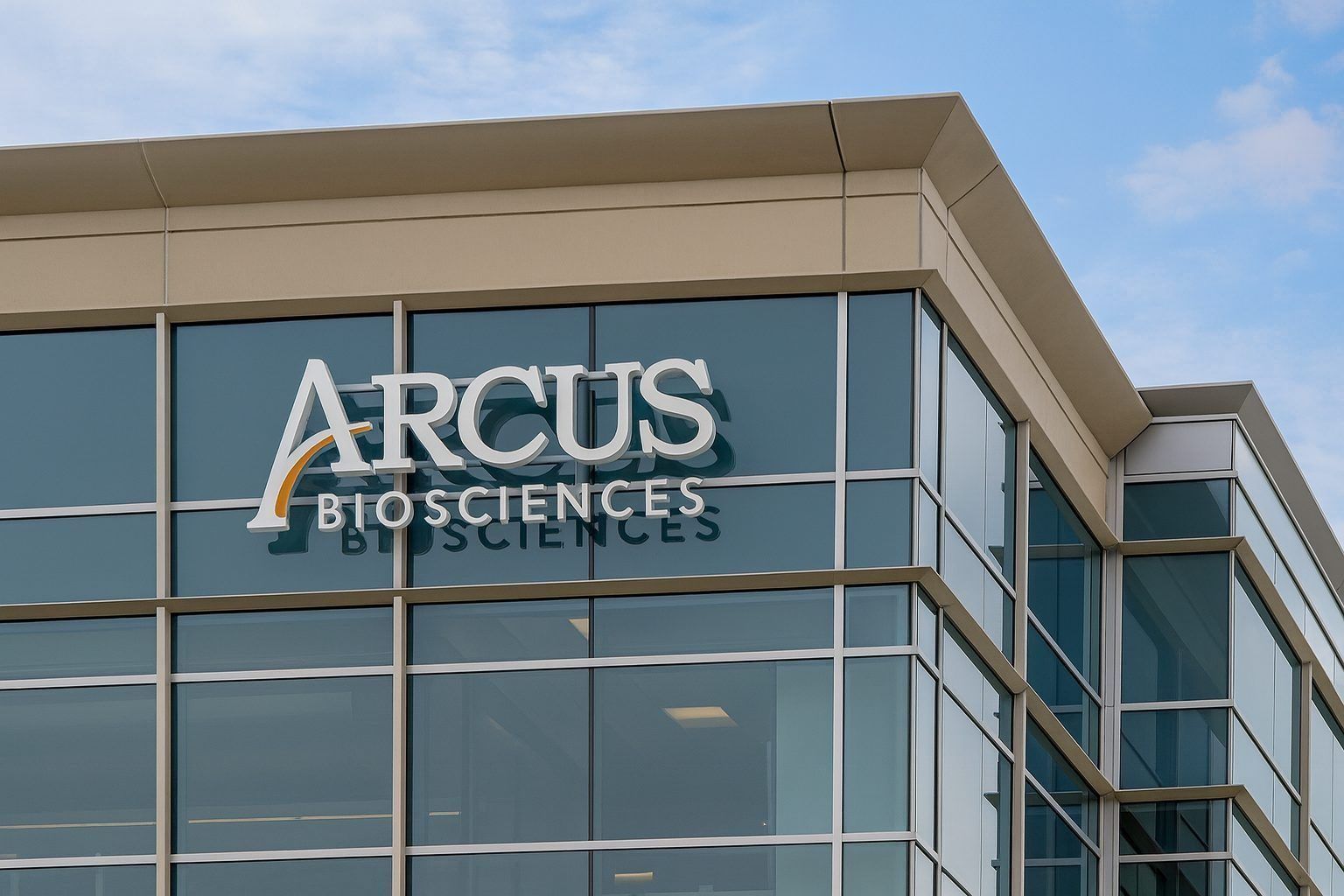
Arcus Biosciences, Inc. (NYSE: RCUS) is ending the weekend under a bright—and volatile—spotlight after a major clinical-program reset triggered a sharp Friday selloff. As of Sunday, December 14, 2025, the last reported close was $21.53, down 14.36% from the prior session, reflecting investor repricing after Arcus and partner Gilead halted a pivotal upper-GI cancer study. StockAnalysis
What comes next for Arcus Biosciences stock now hinges less on TIGIT in gastric cancer and more on whether casdatifan can become a durable “anchor” asset in kidney cancer—and whether Arcus’ early move into inflammation and immunology can add long-dated upside without burning credibility (or cash) along the way. Reuters+1
Why Arcus Biosciences stock moved: STAR‑221 was stopped for futility
The most consequential “current” Arcus headline shaping RCUS stock into Dec. 14 is the company’s Dec. 12 update: Arcus and Gilead said they will discontinue the Phase 3 STAR‑221 study after a pre-specified interim overall survival (OS) analysis indicated the trial was unlikely to meet its objective (futility). Arcus Biosciences+1
What STAR‑221 tested: a regimen combining Arcus’ anti‑TIGIT domvanalimab plus anti‑PD‑1 zimberelimab and chemotherapy, versus Bristol Myers Squibb’s nivolumab (Opdivo) + chemotherapy in previously untreated advanced gastric / gastroesophageal junction / esophageal adenocarcinoma. Arcus Biosciences+2Reuters+2
What went wrong (in investor terms):
- The domvanalimab-based combination did not improve overall survival compared with the control regimen at the interim analysis. Arcus Biosciences+2Reuters+2
- Arcus and Gilead reported no new safety signals, with a safety profile described as similar to the comparator. Arcus Biosciences+1
- The companies also said the Phase 2 EDGE‑Gastric study using the same regimen would be discontinued as they work through next steps and a more detailed analysis. Arcus Biosciences+2Benzinga+2
In a sector where “one trial” can be “the whole equity story” for months at a time, the market response was fast: RCUS closed Dec. 12 at $21.53, down 14.36% on the day, according to price history data. StockAnalysis
The bigger theme: TIGIT setbacks are industry-wide, not isolated
Reuters framed STAR‑221’s outcome as part of a broader cooling period for the TIGIT class, noting multiple large pharma players have pulled back from TIGIT programs after disappointing results. Reuters
This matters for Arcus Biosciences investors because the market often prices platform risk, not just program risk: if a target class falls out of favor, even “still-running” trials can be valued more skeptically until a clean win arrives.
That said, Arcus and Gilead emphasized that other domvanalimab trials in different cancers will continue, with the upper‑GI program being the one directly impacted by this specific futility call. Reuters+1
Arcus’ strategic pivot: casdatifan moves to center stage
In the same Dec. 12 update, Arcus made its strategic intent explicit: R&D investment will concentrate on casdatifan (a HIF‑2α inhibitor) and a growing inflammation and immunology portfolio starting in 2026. Arcus Biosciences+1
What is casdatifan—and why investors care?
Casdatifan is being developed primarily for clear cell renal cell carcinoma (ccRCC), a large and competitive kidney cancer segment. Arcus highlighted encouraging activity in more than 120 late-line ccRCC patients from its ARC‑20 study, and multiple sources covering the pivot noted casdatifan as the company’s next “value driver.” Arcus Biosciences+2Benzinga+2
PEAK‑1: the Phase 3 catalyst investors will track
One of the most concrete, “forecastable” milestones is PEAK‑1, a Phase 3 study evaluating casdatifan + cabozantinib versus placebo + cabozantinib in advanced ccRCC, with progression‑free survival (PFS) as the primary endpoint. ClinicalTrials+2Arcus Biosciences Clinical…
Because PEAK‑1 is a late-stage program in a validated disease area, it is now positioned as a primary driver of how Wall Street models RCUS.
Arcus’ stated 2026 timeline (what the company says to watch)
Arcus’ Dec. 12 update laid out a cadence of potential catalysts:
- Early 2026: additional ARC‑20 analyses (including updates tied to the selected dose/formulation) Arcus Biosciences+1
- Mid‑2026: more mature ARC‑20 combination data (casdatifan + cabozantinib) Arcus Biosciences+1
- 2H 2026: initial early-line cohort data and a “go/no-go” decision related to the Phase 3 portion of eVOLVE‑RCC02 Arcus Biosciences+1
- Late 2026: potential initiation of another registrational Phase 3 study in earlier-line ccRCC Arcus Biosciences+1
For a stock like RCUS, these timelines often function as “volatility waypoints”—periods where positioning changes ahead of data.
Beyond kidney cancer: Arcus’ pipeline still includes other shots on goal
Even as Arcus de-emphasizes the upper‑GI TIGIT path, it is not becoming a single‑asset company overnight.
Quemliclustat and PRISM‑1 (pancreatic cancer)
Arcus also highlighted quemliclustat (a CD73 inhibitor) and said PRISM‑1 (Phase 3 in metastatic pancreatic ductal adenocarcinoma) completed enrollment earlier in 2025, with results expected in 2027. Arcus Biosciences+1
Inflammation & immunology (I&I): an attempt to diversify the equity story
Arcus stated it plans to advance oral small‑molecule I&I programs, with an MRGPRX2 program expected to enter the clinic in 2026 (atopic dermatitis and chronic spontaneous urticaria were cited), and a TNF inhibitor program targeted for late 2026 to early 2027 across multiple inflammatory diseases. Arcus Biosciences+2Benzinga+2
For investors, this is a classic biotech tradeoff:
- Pro: diversification can reduce single‑trial dependency.
- Con: early I&I is time-consuming and expensive, and the market may discount it until clinical proof appears.
The Gilead connection: why this partnership still matters for RCUS
Arcus’ partnership with Gilead Sciences remains a core part of how the company is financed and how parts of its oncology pipeline are developed.
Key partnership facts that matter to equity holders:
- In January 2024, Gilead and Arcus announced an amended collaboration and an additional $320 million equity investment at $21.00 per share, which raised Gilead’s ownership stake to 33%. Gilead+1
- Arcus’ investor materials describe a 10‑year collaboration initiated in 2020 under which Gilead obtained time‑limited exclusive option rights to Arcus clinical programs during the collaboration term. Arcus Biosciences
- Arcus notes it is co-developing multiple investigational medicines with Gilead (including domvanalimab, zimberelimab, quemliclustat, and etrumadenant), while also participating in collaborations with other partners such as AstraZeneca. Arcus Biosciences
Even after the STAR‑221 setback, the presence of a large strategic partner and a clearly articulated “next focus” can affect sentiment—especially for generalist investors who view partnership backing as a partial de-risking mechanism (without removing scientific risk).
Analyst forecasts and sentiment as of Dec. 14, 2025
Sunday’s freshest “forecast-related” item is not a new clinical result—it’s rating and target maintenance/revisions following the STAR‑221 stop.
Wall Street Zen upgrade and consensus framing (Dec. 14)
MarketBeat reported that Wall Street Zen upgraded RCUS from “sell” to “hold” in a research note dated Dec. 14, 2025, and summarized broader analyst positioning as a mix of Buys and Holds with a consensus price target of $28.89. MarketBeat
MarketBeat also cited recent target levels attributed to multiple firms (including HC Wainwright $32, Truist $30, and BofA $26) while maintaining that overall consensus remained “Moderate Buy.” MarketBeat
Truist: target cut to $30, Buy maintained (Dec. 12 note)
Investing.com reported Truist lowered its price target to $30 from $39 while maintaining a Buy rating, citing the loss of STAR‑221 as a near‑term value driver and expressing increased skepticism around the TIGIT program more broadly. Investing.com+1
H.C. Wainwright: target raised to $32, Buy reiterated (Dec. 12 note)
Investing.com also reported that H.C. Wainwright raised its price target (to $32 from $28) and kept a Buy rating, describing model changes that shift emphasis toward casdatifan and reflect expected R&D cuts after the STAR‑221 stop. Investing.com
TradingView consensus snapshot: $33.30 target, range $16–$56
TradingView’s forecast page lists an analyst-aggregated price target of $33.30, with a stated range from $16.00 (min) to $56.00 (max). TradingView
How to read these “forecasts” responsibly: price targets are not guarantees; they are scenario-based valuations that can change quickly after new data, financing events, or shifts in competitive dynamics.
Financial runway: what Arcus says about cash and operating horizon
Arcus and Reuters both pointed to a substantial cash position. Reuters reported Arcus had about $1 billion in cash and expected to fund operations into the second half of 2028. Reuters
Separately, Arcus’ Q3 2025 update reported $841 million in cash, cash equivalents, and marketable securities as of Sept. 30, 2025, providing a concrete anchor for how the runway was building heading into the December program pivot. Arcus Biosciences
For RCUS shareholders, runway matters because it influences whether upcoming trials can be executed without dilutive financing—though biotech cash burn can change meaningfully when programs are stopped or expanded.
What to watch next: RCUS stock catalysts and “risk points” into 2026–2027
If you’re following Arcus Biosciences stock into year-end, these are the practical checkpoints implied by the latest company update and coverage:
- Detailed STAR‑221 analysis/publication timing: Arcus and Gilead said they plan to publish a more detailed analysis later. Reuters+1
- Casdatifan ARC‑20 updates (early/mid/2H 2026 cadence): multiple readouts and decisions are expected across 2026. Arcus Biosciences+1
- PEAK‑1 execution: enrollment pace, trial conduct, and eventual PFS data will matter because PEAK‑1 is a Phase 3 backbone for the casdatifan thesis. ClinicalTrials+1
- PRISM‑1 (quemliclustat) path to 2027 data: a longer-dated but still meaningful asset for multi-program valuation. Arcus Biosciences+1
- I&I programs entering clinic (2026 onward): a strategic diversification bet that could broaden RCUS’ investor base if early signals are strong. Arcus Biosciences+1
Bottom line: the Arcus stock story has changed—now the market wants proof in kidney cancer
As of Dec. 14, 2025, the RCUS narrative is no longer “TIGIT breaks out in upper-GI.” The market has moved on to a sharper question: can Arcus translate promising casdatifan activity into Phase 3 validation while maintaining financial discipline—and can it layer in an I&I portfolio without diluting focus? Arcus Biosciences+1
Analyst targets still imply upside in many models (with widely varying ranges), but the near-term stock path will likely remain headline-sensitive as investors recalibrate probabilities after STAR‑221 and wait for the next definitive data points. MarketBeat+2TradingView+2