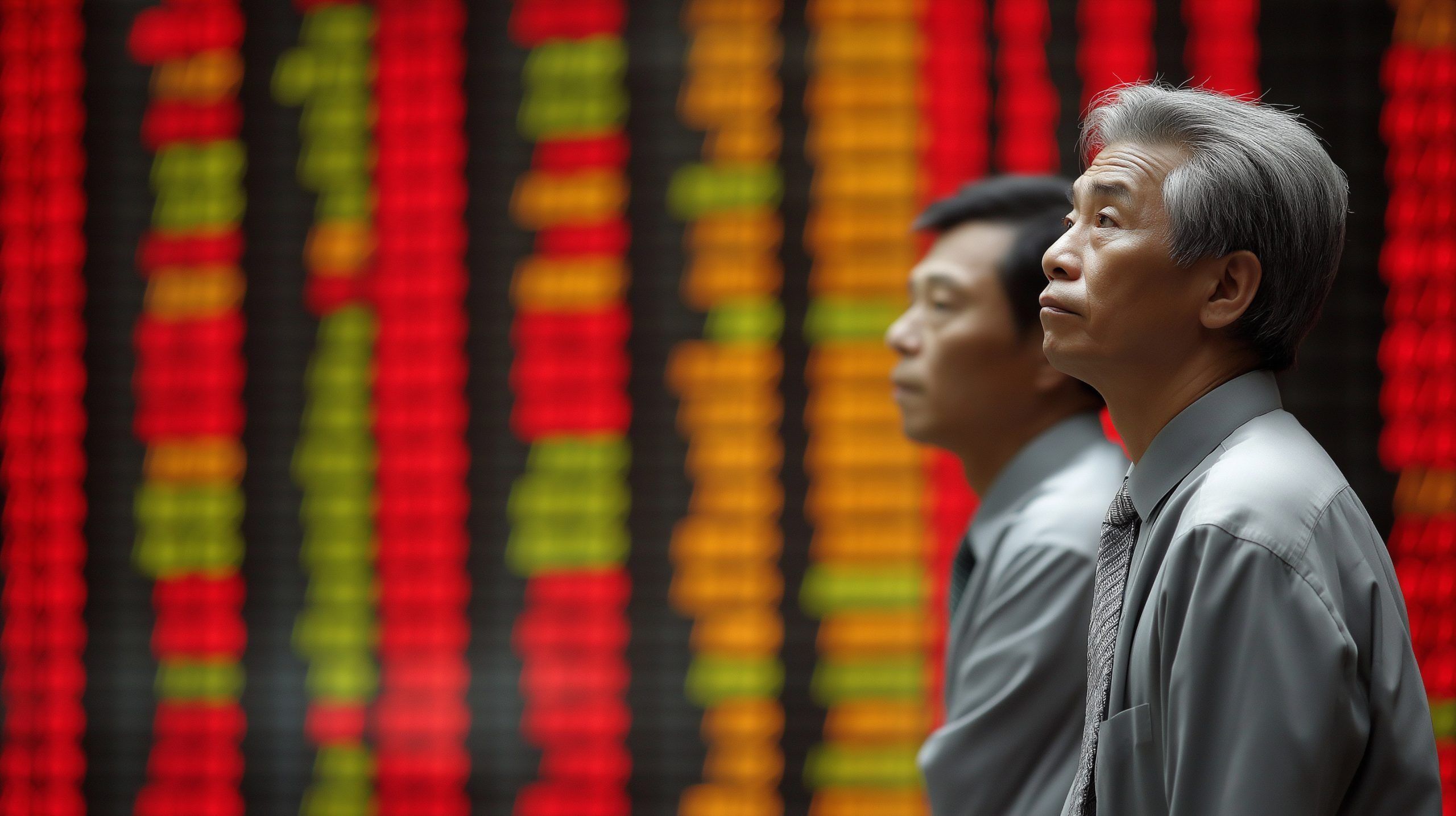

Asian stock markets ended mixed but broadly firmer on Wednesday, Dec. 17, 2025, with North Asia leading gains as chip and AI-linked stocks rebounded, while Australia and parts of Southeast Asia showed more caution amid banking-sector pressure and rate-path uncertainty.
A tech-led bounce across Japan, South Korea, mainland China and Hong Kong followed mixed cues from the U.S. (Nasdaq higher, broader indices softer), while investors continued to weigh what a “noisy” U.S. jobs report means for the Federal Reserve’s next moves. TradingView+2TradingView+2
At the same time, markets faced a cluster of policy catalysts: traders were positioning for a Bank of Japan decision later this week, Thailand delivered another rate cut, and Indonesia held rates while emphasizing currency stability.
Asia market snapshot (closing moves on Dec. 17, 2025)
Here’s how key Asia-Pacific benchmarks finished, based on local closes and official exchange summaries:
- Japan: Nikkei 225 +0.26% to 49,512.28; Topix -0.03% to 3,369.39.
- Mainland China: Shanghai Composite +1.19%; CSI 300 +1.83% (AI sub-index +3.62%).
- Hong Kong: Hang Seng +0.92%; Hang Seng Tech +1.03%.
- South Korea: KOSPI +1.43% to 4,056.41 (chipmakers surged).
- Taiwan: Taiex -0.04% to 27,525.17 (late selling tied to futures settlement).
- Australia: S&P/ASX 200 -0.2% to 8,585.20 (banks weighed; miners helped limit losses).
- Singapore: Straits Times Index -0.1% to 4,575.48 despite brighter growth expectations.
- India: Nifty 50 -0.16% to 25,818.55; Sensex -0.14% to 84,559.65 (third straight decline).
- Malaysia: FBM KLCI -0.42% to 1,641.44 on profit-taking after a multi-day rally.
- Philippines: PSEi +0.38% to 6,079.02 (official market summary).
- Indonesia: JCI roughly -0.08% to around 8,679.
Regionally, Reuters also noted MSCI’s Asia-Pacific shares ex-Japan index was up about 0.35%.
Tech and chips set the tone in North Asia
Japan: Nikkei rebounds, but BOJ uncertainty caps conviction
Tokyo stocks ended higher, helped by technology names tracking Nasdaq’s overnight strength, even as investors kept one eye on the Bank of Japan meeting later in the week.
A key theme in Japan was not whether the BOJ moves—investors have “fully priced” a hike—but what the pace of tightening in 2026 might look like, according to commentary carried by Reuters. TradingView
Beyond stocks, Japan’s policy debate is also influencing bonds and sentiment: Prime Minister Sanae Takaichi reiterated support for proactive fiscal spending, while a top adviser cautioned the BOJ against tightening too early.
South Korea: Chipmakers roar back
Seoul’s market outperformed as heavyweight chip names rallied—Samsung Electronics jumped nearly 5% and SK Hynix rose about 4%, lifting the KOSPI to a 1.43% gain.
Currency and inflation dynamics stayed in focus too: Reuters reported the won weakened and the central bank flagged that 2026 inflation could run above earlier forecasts if the won stays at current levels.
China and Hong Kong: AI stocks lead a sharp rebound
Mainland China and Hong Kong stocks rebounded after a two-day slide, with AI-related names taking center stage.
A headline-grabbing catalyst was the explosive debut of Chinese AI chipmaker MetaX Integrated Circuits, whose shares surged dramatically on day one—an emblem of Beijing’s drive to cut reliance on U.S. chip leaders and a reminder that speculative energy is still alive in select corners of the market.
Reuters also highlighted ongoing credit stress in pockets of the property sector, noting China Vanke sought more time on a bond payment—an issue that continues to hang over risk sentiment even on green days.
Hong Kong’s IPO pipeline adds a crypto twist
Hong Kong also hosted a closely watched listing: HashKey Holdings, a crypto exchange operator, ended its first session near-flat after swinging between gains and losses.
The debut mattered for more than just one stock. Reuters described it as Hong Kong’s first crypto-company IPO, arriving amid recent turbulence in digital assets (including a steep pullback in bitcoin from earlier highs).
For equity investors, the bigger takeaway may be that Hong Kong’s fundraising engine is running hot again: Reuters cited LSEG data showing more than $34 billion raised from new listings so far this year, putting the exchange on track for its best year since 2021.
Australia and New Zealand: banks drag, miners cushion
Australia’s market fell for a third straight session, with heavyweight bank stocks pulling the index lower amid concerns about earnings momentum and the risk that policy stays restrictive into next year.
- The S&P/ASX 200 closed down 0.2% at 8,585.20.
- Financials slid, and Commonwealth Bank of Australia declined as investors continued to digest margin and competitive pressure signals.
- Miners and select metals-linked names provided some offset, reflecting a broader bid in commodities.
Across the Tasman, New Zealand’s NZ50 dropped about 1%, with Reuters noting comments from the central bank chief suggesting the cash rate was likely to remain low through next year, ahead of key growth data due Thursday.
Southeast Asia: rate decisions and domestic demand concerns
Thailand: another rate cut as growth outlook softens
Thailand’s central bank cut rates 25 basis points to 1.25%, kept the door open to further easing, and trimmed its 2026 growth forecast to 1.5%—a policy mix reflecting political uncertainty, debt burdens, currency strength, and trade/tariff headwinds.
For Thai assets, the balancing act remains clear: lower rates can support equities and credit, but the central bank also warned it has limited policy space and continues to watch baht moves closely.
Indonesia: hold rates, defend rupiah, keep easing optional
Bank Indonesia left its benchmark rate unchanged at 4.75%, emphasizing rupiah stability amid global uncertainty. It also reiterated that it still sees room to ease—timing will depend on inflation, growth, and the exchange rate.
BI’s 2026 growth forecast was cited at 4.9%–5.7%, underscoring the “support growth, but don’t lose the currency” constraint that many emerging Asian central banks are navigating. Reuters
Singapore: exports jump, economists upgrade growth, but stocks slip
Singapore delivered a strong macro datapoint: non-oil domestic exports rose 11.6% year-on-year in November, beating the Reuters-polled expectation and led by pharmaceuticals and electronics.
Separately, the Monetary Authority of Singapore’s survey showed economists lifting the median 2025 growth forecast to 4.1% and seeing 2026 growth at 2.3%, while expecting no change at upcoming policy reviews.
Even so, the STI edged down 0.1%, reflecting the day’s mixed regional tape and the reality that upgraded forecasts don’t always translate into same-day price gains.
India: equities drift lower as outflows and rupee pressure linger
Indian benchmarks slipped for a third day, with Reuters citing investor caution amid foreign outflows, currency depreciation concerns, and uncertainty around an India–U.S. trade deal narrative.
The currency story was especially active: Reuters reported the Reserve Bank of India intervened aggressively, helping the rupee rebound sharply intraday before settling off its highs.
For equity traders, that matters because sustained FX volatility can tighten domestic financial conditions—especially when paired with global rate uncertainty and the risk of renewed dollar strength.
Commodities and macro: oil rebounds, Fed expectations hold steady
Asia’s equity session also digested a sudden shift in energy pricing. Oil rallied more than 2% after Reuters reported U.S. President Donald Trump ordered a blockade of sanctioned oil tankers entering and leaving Venezuela, injecting fresh geopolitical uncertainty into a market already debating demand softness.
Meanwhile, investors continued to look through the latest U.S. jobs figures—which Reuters noted were complicated by data-collection issues during a recent government shutdown—leaving the rate path “uncertain” rather than decisively hawkish or dovish. Reuters+1
Crucially for risk assets (including Asia stocks), Reuters reported:
- Fed funds futures still implied roughly two U.S. rate cuts next year, and
- a note cited by Reuters (Wells Fargo) projected two 25-bp cuts in the first half of next year (March and June).
What investors are watching next in Asia
With much of Asia’s Dec. 17 move driven by positioning and cross-asset signals, the next catalysts are tightly stacked:
- U.S. November inflation report (Thursday): flagged by Reuters as the next key macro datapoint.
- Bank of Japan decision (meeting ends Friday): markets want clarity on the path after a widely anticipated hike.
- European Central Bank and Bank of England meetings (Thursday): global policy signals feeding into FX and risk sentiment.
- Asia’s currency management: from RBI intervention in India to BI’s rupiah defense and Thailand’s baht monitoring, FX remains a key variable for equity flows.
Bottom line
Asia stock markets on Dec. 17, 2025 delivered a familiar late-year pattern: selective risk-on in tech and AI, especially across North Asia, while policy uncertainty and financial-sector pressures kept other markets more restrained.
The region’s next directional cue is likely to come less from today’s price action and more from the policy signals and inflation data arriving over the next 24–48 hours.