
MIDLAND, Texas, April 28, 2026, 17:08 CDT
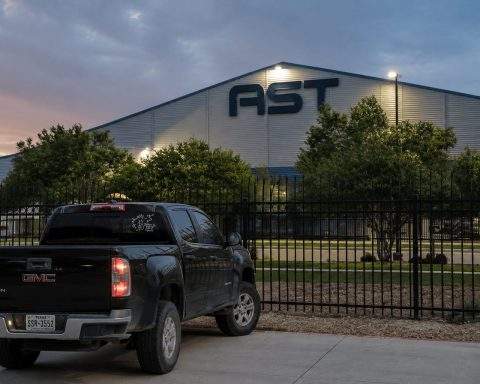
AST SpaceMobile Inc plans to host its first-quarter business update call on May 11, just after securing a major regulatory win in the U.S. and losing its most recent BlueBird satellite. Management will go over the latest business and financial results, and also field questions from both retail and institutional shareholders, according to the company.
The timing isn’t trivial. Shares of AST SpaceMobile ended the session at $71.88, down 6.8%. Market data showed the stock moving in a $71.03 to $76.99 range on Tuesday.
Investors are juggling a pair of realities here. The company picked up broader approval to roll out a U.S. satellite-to-phone network. Still, without launching a sufficient number of large satellites—on time—the nod from regulators doesn’t translate to real coverage or revenue. That’s the bigger hurdle.
Last week, the Federal Communications Commission gave AST the green light for a 248-satellite constellation geared toward direct-to-device service. That setup lets a standard phone tap satellites directly, not just cell towers. According to the FCC, AST is allowed to partner with AT&T, Verizon, and FirstNet in the U.S.
AST plans to roll out the service on 700 MHz and 800 MHz low-band spectrum, in collaboration with its mobile network partners. CEO Abel Avellan called the move a step “closer to commercial service.” The company said its priority is still integrating with mobile operators and ramping up its satellite constellation. Business Wire
There was a jolt before optimism resurfaced. AST reported that BlueBird 7 did separate from Blue Origin’s New Glenn and powered up, but the upper stage failed to deliver it to a viable orbit for long-term use. The company expects insurance to cover the satellite’s loss and is still aiming for about 45 satellites in orbit by the end of 2026.
BofA Securities analyst Michael Funk described the failed placement as a “negative shock” but emphasized to Investing.com that AST’s business fundamentals remain intact. Still, BofA flagged concerns over AST’s ability to meet its new goal of roughly 45 satellites by the end of 2026, according to the same report. Investing.com
The May 11 call now carries heavier weight than a typical quarterly update. Expect investors to zero in on launch cadence, satellite production, insurance recovery, cash usage, and whether the BlueBird 7 setback alters the commercial service timeline. One tidy answer won’t clear things up.
Rivalry in the sector is picking up. T-Mobile rolled out a new business broadband offering on Tuesday, pairing its 5G network with Starlink satellite backup—this takes its partnership with SpaceX a step further, building on the T-Satellite project. Amazon announced this month that it plans to buy Globalstar, a move that would let Amazon Leo integrate direct-to-device capabilities into its future low-Earth-orbit satellites.
AST’s main hurdle is clear enough: just having regulatory approval won’t get its satellites into space. Delays on the launchpad, sluggish carrier partners, or a network rollout that drags out—any of these can keep shares tied to execution updates rather than hopes pinned on future market size.
Right now, AST holds the regulatory edge, though it’s dealing with a new operational setback. Management gets another shot to prove which carries more weight on May 11.
Related articles: NASDAQ:ASTS


![Australia Stock Market Today 26/08/2026 [UPDATE: 11:43 AEST] [Headline CPI Cools as Sticky Core Tests ASX Gains]](https://ts2.tech/wp-content/uploads/2026/08/AU-market-dashboard-2026-08-26-1143-480x384.jpg "Australia Stock Market Today 26/08/2026 [UPDATE: 11:43 AEST] [Headline CPI Cools as Sticky Core Tests ASX Gains]")