On 10 December 2025, Scotland’s Rosyth dockyard cemented its position at the heart of allied naval shipbuilding, as new details emerged of a major US submarine contract just one day after the keel was laid for the Royal Navy’s third Type 31 frigate, HMS Formidable.
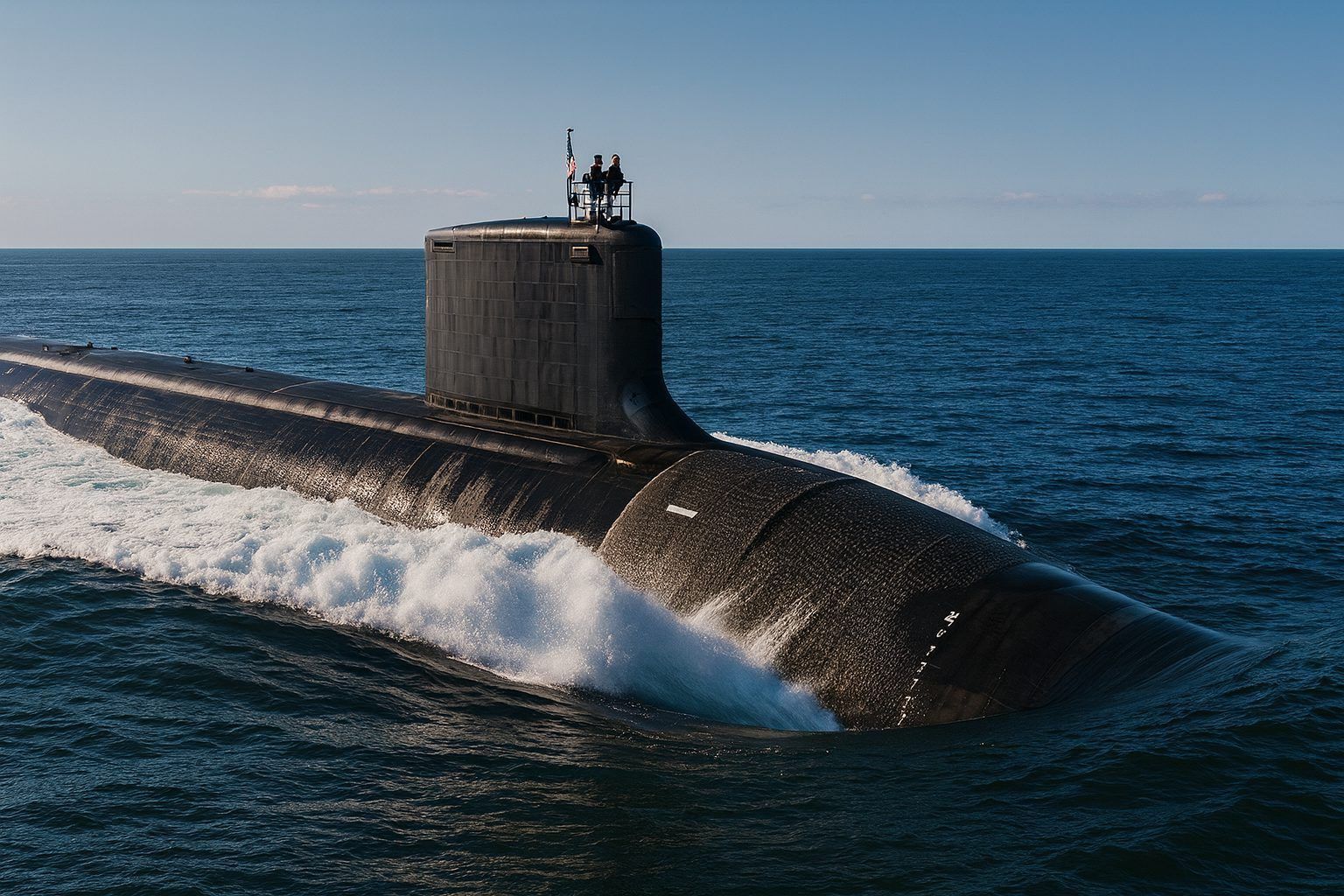
US shipbuilding giant HII (Huntington Ingalls Industries) has expanded its partnership with Babcock International, authorising the British company to build complex assemblies for Virginia‑class nuclear‑powered attack submarines at Rosyth in Fife.Naval News+1
The move effectively turns the Scottish yard into a key industrial node in the trilateral AUKUS submarine enterprise, linking US, UK and Australian undersea capabilities—and bringing a fresh wave of high‑value work and skilled jobs to Scotland.
HII–Babcock deal sends Virginia‑class submarine work to Scotland
According to a statement reported by Naval News and the UK Defence Journal, HII and Babcock have signed a contract that deepens their strategic partnership and aims to increase throughput at HII’s Newport News Shipbuilding yard in Virginia, where Virginia‑class submarines are assembled.Naval News+1
Key elements of the agreement include:
- Complex submarine assemblies built at Rosyth – Babcock is authorised to manufacture large, high‑tolerance structures and other complex assemblies for Block VI Virginia‑class submarines at its Rosyth facility.Naval News+1
- First NNS‑specific Virginia-class subcontract to Babcock – This is described as the first Virginia‑class contract outsourced to Babcock in direct support of Newport News Shipbuilding work, widening the pool of trusted suppliers able to deliver major submarine structures.Naval News+1
- Supply‑chain resilience and capacity – Both firms frame the move as a way to relieve bottlenecks in the US submarine industrial base and build resilience into the wider AUKUS supply chain at a time when demand for attack submarines is rising.Maritime Executive+1
HII chief executive Chris Kastner has highlighted that tapping Babcock’s manufacturing base in the UK is intended to reinforce the US supplier network, improve submarine production rates and directly support the AUKUS partnership.Naval News+1
For Babcock, the deal builds on its existing work producing missile tube assemblies for US and UK strategic submarine programmes, and leverages investments already made at Rosyth.Maritime Executive+1
Rosyth’s growing role in the AUKUS submarine ecosystem
The HII–Babcock deal does more than shift fabrication work across the Atlantic: it further embeds Rosyth in the industrial backbone of AUKUS.
Recent reporting notes that:
- Babcock already manufactures missile tube assemblies for US and UK ballistic missile submarines, and Rosyth is undergoing a major upgrade—worth hundreds of millions of dollars—to handle future drydocking and maintenance of the UK’s nuclear deterrent.Maritime Executive
- The new contract adds advanced assemblies for US Virginia‑class attack submarines to that portfolio, strengthening both production capacity and technical collaboration between US and UK yards.UK Defence Journal+1
At the same time, the UK Ministry of Defence has been pouring investment into its wider Defence Nuclear Enterprise. In the last 18 months alone, around £6 billion has been committed to modernising key facilities at Barrow‑in‑Furness and Derby, with the goal of enabling continuous construction of the next‑generation SSN‑AUKUS class at roughly one new attack submarine every 18 months.UK Defence Journal
The MoD projects that the broader UK nuclear enterprise will support around 65,000 jobs by 2030, with more than 7,000 new posts and tens of thousands of roles sustained at peak production.UK Defence Journal
Rosyth’s new Virginia‑class work will sit within that larger ecosystem, positioning the Scottish yard as a crucial partner in delivering both US and UK submarine programmes that underpin AUKUS.
Keel laid for HMS Formidable, third Type 31 frigate
The deepened US–UK industrial link comes on the heels of another major milestone at Rosyth. On 9 December 2025, Babcock laid the keel for HMS Formidable, the third of five new Type 31 “Inspiration‑class” general‑purpose frigates being built for the Royal Navy.Navy Lookout+1
At a ceremony attended by Babcock employees, Royal Navy representatives and domestic and international guests, the first modular block of Formidable was lowered into place over a ceremonial coin—continuing a long‑standing maritime tradition believed to bring good fortune to the ship and her future crew.Navy Lookout+1
Key points on the Type 31 programme:
- Five‑ship class – Babcock is contracted to deliver five Type 31 frigates within ten years of the contract award in November 2019.European Security Defence
- Building in Scotland – All Type 31s are being constructed at Rosyth, alongside other warship work, giving Scotland a central role in the Royal Navy’s surface fleet renewal.Navy Lookout+1
- Frigate gap context – While seven new frigates (Type 26 and Type 31) are now at various build stages in Scottish yards, the active frigate force has shrunk following the recent decommissioning of HMS Lancaster, raising concern about a “frigate gap” until the new ships enter service.Navy Lookout
Royal Navy officers have described the keel‑laying as a key step in delivering the Inspiration‑class to the fleet, noting that Formidable will help modernise the frigate force and provide a more modern working environment for sailors.European Security Defence
Scottish dockyard hailed as “world‑class” by ministers and MPs
The submarine deal and frigate milestone have prompted a wave of political and local reaction, especially in Scotland.
UK Defence Secretary John Healey has framed the HII–Babcock agreement as a strong signal of confidence in Scotland’s defence industrial base, praising the skills of its workforce and characterising the UK as a global leader in advanced marine and submarine engineering.Naval News+1
At the keel‑laying event for HMS Formidable, Dunfermline and Dollar MP Graeme Downie told shipyard workers that the expanded partnership with HII was “fantastic news” for Rosyth and evidence that the yard is now at the forefront of global shipbuilding and advanced manufacturing.UK Defence Journal
Downie linked the Virginia‑class work to a broader pattern of recent contract wins for Rosyth, arguing that:
- The yard has secured a series of major defence programmes over the last 18 months.
- International partners, including the United States, increasingly see Babcock’s workforce as a trusted provider of sophisticated naval systems.UK Defence Journal+1
Local commentary also underscores the economic impact: long‑term, highly specialised submarine assembly work is expected to support skilled jobs in Fife for years to come, complementing the Type 31 build and future sustainment tasks.UK Defence Journal+1
AUKUS pressures: capacity, timelines and political debate
The Rosyth announcements land at a moment when the broader AUKUS submarine pathway is under intense scrutiny.
- Industrial and workforce challenges – Australia’s Defence Minister Richard Marles has acknowledged that meeting AUKUS timelines will require a major uplift in workforce skills, infrastructure and supply‑chain capacity, particularly around building and maintaining nuclear‑powered submarines.Reuters
- US production bottlenecks – A recent Pentagon review highlighted concerns about whether US yards can build enough Virginia‑class submarines to meet both domestic needs and AUKUS export commitments. That review fed directly into discussions about sourcing additional components and modules from allies such as the UK.Reuters+1
- UK investment and job creation – For London, AUKUS is both a strategic and industrial project. The MoD stresses that nuclear‑related work is creating thousands of high‑skill jobs and positioning shipyards like Barrow and Rosyth as long‑term beneficiaries of the submarine build and sustainment pipeline.UK Defence Journal+1
AUKUS is also politically contested. In Australia, Senate hearings have revealed that visiting US Virginia‑class submarines could, in principle, carry nuclear weapons, despite domestic bans on nuclear armament. Defence officials argue such visits do not breach treaties because the weapons are not “stationed” in the country, but anti‑nuclear campaigners say the ambiguity undermines non‑proliferation commitments.The Guardian
Against that backdrop, the decision to allocate more Virginia‑class work to a UK yard can be seen as part of a wider effort to demonstrate that AUKUS is deliverable in practice, not just on paper.
Why the Rosyth developments matter
Taken together, the keel‑laying of HMS Formidable and the expanded HII–Babcock partnership highlight several broader trends:
- Deepening industrial integration among AUKUS partners
US and UK shipyards are moving beyond technology sharing to genuine co‑production, with complex submarine structures now being built in Scotland for incorporation into American attack boats.Naval News+1 - Scotland as a strategic manufacturing hub
Rosyth’s portfolio now spans British frigates, missile tube assemblies for strategic submarines and advanced modules for US Virginia‑class boats—anchoring high‑end naval manufacturing, engineering and nuclear‑adjacent skills in Fife.European Security Defence+2Maritime Exec… - Mitigating capacity gaps on both sides of the Atlantic
With US yards under pressure and the Royal Navy managing a tight frigate and submarine fleet, distributing work across allied yards is one of the few ways to accelerate delivery without lowering standards.Maritime Executive+2Navy Lookout+2 - Long‑term jobs and skills, not just short‑term headlines
The MoD’s job projections, combined with multi‑decade submarine build and maintenance cycles, suggest that the Virginia‑class contract could support a generation of highly skilled employment at Rosyth, from welders and fabricators to nuclear systems engineers.UK Defence Journal+2Maritime Executive+2
What happens next at Rosyth?
In the near term, several milestones are in view:
- Type 31 build rhythm – With Formidable’s keel laid, three of the five Type 31 frigates are now at advanced stages of construction at Rosyth, and further updates on programme progress are expected in early 2026.Navy Lookout+1
- Virginia‑class assemblies ramp‑up – Babcock and HII will move from contract signature into detailed design, tooling and serial production of complex assemblies for Block VI Virginia‑class boats, integrating Scottish‑made structures into the US build line at Newport News.Naval News+1
- Broader AUKUS delivery phase – As defence ministers from Australia, the UK and the US meet in Washington, the focus is shifting from concept and review to delivery: building submarines at scale, training crews and technicians, and aligning regulations across three countries.Reuters+1
For now, the message from Rosyth is clear: a Scottish dockyard once best known for refitting and carrier work is steadily becoming one of the most important submarine and frigate manufacturing centres in the AUKUS alliance.