
NEW YORK, May 28, 2026, 15:04 (EDT)
- Aurora shares were up roughly 5.8% in afternoon trading, beating gains in the QQQ and SPY ETFs.
- The action came after commercial freight news from Volvo, DSV and McLane, along with new focus on Morgan Stanley’s higher price target.
- Aurora posted a net loss of $223 million for the first quarter as revenue came in at $1 million. The company is still loss-making.
Aurora Innovation shares rose Thursday, building on gains from this month as investors ignored a standard shareholder meeting and kept their attention on Aurora’s effort to move self-driving trucks from pilot runs to hauling real freight. The stock added 5.8% to $7.21 in afternoon trading, putting the company’s market cap at around $14.0 billion.
Aurora’s jump is notable since the company’s still trading more on the promise of scaling autonomous freight this year than on its actual revenue now. Invesco QQQ Trust, seen as a stand-in for bigger Nasdaq tech names, was up 0.8%. SPDR S&P 500 ETF Trust added 0.5%. Aurora outperformed the benchmarks.
Aurora’s latest filing didn’t detail any new operating event. In an 8-K dated May 26, the company said shareholders okayed all three annual-meeting items. That included votes on electing Gloria Boyland, Michelangelo Volpi, and Lara Caimi as Class II directors, an advisory say on pay, and keeping PwC as auditor through 2026.
The market didn’t pay much attention. But TipRanks said Thursday that Aurora had some new commercial deals and Morgan Stanley raised its price target to $14. The stock stayed in focus for traders interested in autonomous trucking. Market data listed Ravi Shanker at Morgan Stanley as the analyst on the move, with an Overweight call, up from $12 to $14.
Aurora (AUR) is in the business of selling self-driving tech for freight trucks. Its setup is called Driver as a Service, or DaaS. Customers run their own trucks but pay Aurora for the software and service to run them autonomously.
Aurora is pushing to show the model really works. On May 6, Aurora and Berkshire Hathaway’s McLane Company said they will start driverless hauls in Texas. That comes after a supervised test period that logged more than 280,000 autonomous miles and moved 1,400 loads for McLane. “Aurora’s exceptional safety performance” impressed the company, McLane Restaurant President Susan Adzick said. Aurora Innovation, Inc.
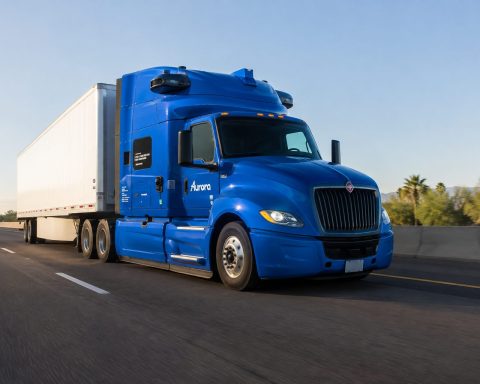
Aurora is still working closely with Volvo. On May 13, Volvo Autonomous Solutions and DSV announced they’ve begun running autonomous freight hauls in Texas. The trucks involved use the Volvo VNL Autonomous rig, which has the Aurora Driver on board. These trips start out with a safety driver present. DSV Road CEO Helmut Schweighofer said autonomous driving is shifting into “real-world operations.” Aurora Innovation, Inc.
Volvo and Aurora in May launched a 200-mile Dallas-to-Oklahoma City route using the Volvo VNL Autonomous trucks, running loads to customer sites in supervised autonomous mode five days a week. Aurora President Ossa Fisher called rapid route launches “a core part of our strategy.” Aurora Innovation, Inc.
Aurora’s finances remain tight. The company posted $1 million in first-quarter revenue, and logged an operating loss of $244 million. Net loss was $223 million for the period, according to its 10-Q for the quarter ended March 31. It reported $273 million in cash and cash equivalents, plus $952 million in short-term investments.
Aurora CEO Chris Urmson told investors this month that 2026 would be a scaling year, saying the company is “on track to put hundreds of driverless trucks on the road.” Aurora expects to deploy over 200 driverless trucks by year-end. It also plans to launch second-generation hardware on the International LT Series in the second quarter. Business Wire
Kodiak AI shares fell about 1.1% on Thursday. The autonomous-trucking group, which went public last year in a deal valued near $2.5 billion, is up against rivals like Waabi that are chasing the same long-haul freight market with their own self-driving truck models.
Aurora’s shares may be getting ahead of what the company has delivered so far. In its latest quarterly report, the company flagged risks tied to hitting its goals, including how fast it can commercialize safely, keep up with competition, get financing, deal with regulation, and lock in vehicles and supplies from partners. Delays in launching driverless tech, slow customer adoption, or burning more cash could all leave Aurora with big losses and limited sales.



![Asia Stock Market Today 28/08/2026 [UPDATE: 00:51 SGT] [Salesforce Leads KASE Global Into Final Minutes After Asia’s Split Close]](https://ts2.tech/wp-content/uploads/2026/08/Asia-market-dashboard-2026-08-28-0051-480x384.jpg "Asia Stock Market Today 28/08/2026 [UPDATE: 00:51 SGT] [Salesforce Leads KASE Global Into Final Minutes After Asia’s Split Close]")