
SYDNEY, April 23, 2026, 17:38 AEST.
- The S&P/ASX 200 slipped 0.6% to end at 8,793.40, marking its weakest close since April 7.
- Financials slipped 0.7%, chalking up their ninth straight loss. Miners lost 1%. Santos surged 3.6%, with Woodside up 3.2%.
- Odds of a 25 basis-point RBA move in early May have climbed, with traders now putting the probability just shy of 75%.
Australian shares slid to a two-week low on Thursday, pressured by a fresh jump in oil prices and stalled U.S.-Iran negotiations—sentiment that outweighed another round of record finishes on Wall Street. The S&P/ASX 200 shed 0.6% to close at 8,793.40. Energy names stood out as the lone bright spot.
Sydney missed out on Wall Street’s tech-driven gains, with Brent crude climbing past $103 a barrel and lingering disruptions in Strait of Hormuz shipping adding to jitters. Fresh inflation fears, fueled by energy, cropped up just as investors were hoping to move past the recent Gulf ceasefire headlines.
It’s not great timing. Australia’s March CPI is up next week, and IG points out this will be the first inflation print to fully reflect the most recent energy spike. Right now, swaps are pricing in almost a 75% chance of a 25 basis-point hike—so, a quarter-point move—when the Reserve Bank of Australia meets in early May. “An extension is far from a resolution,” IG market analyst Tony Sycamore said Wednesday. IG
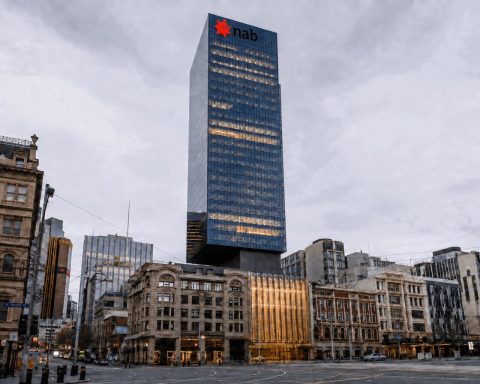
The financials index slipped 0.7%, notching its ninth consecutive drop, as shares in the big four banks lost anywhere from 0.2% to 1%. Pressure on the sector deepened after National Australia Bank warned this week that first-half credit impairment charges are set to double. Westpac, for its part, pointed to a separate blow stemming from turbulence linked to the Middle East and an uptick in provisioning.
Miners slipped 1%, marking their steepest loss since April 2. Rio Tinto shed 0.6%, while Fortescue gave up 1.1%. Earlier in the week, Rio posted a 2.4% uptick in first-quarter iron ore sales, but flagged potential supply chain issues from the Middle East conflict later this year.
Energy names headed higher. Santos popped 3.6%—its strongest day since March 2—after sticking to its 2026 output and sales targets, even with the Barossa shutdown and cyclone-hit ports. Woodside, the bigger player, picked up 3.2%, sending the energy sub-index up 3.1%. Kevin Gallagher, Santos’ chief executive, said the firm had partnered with Viva Energy and Ampol to help maintain domestic refining capacity.
Healthcare couldn’t catch a break, slipping 0.4% to touch its lowest point in eight years. CSL hovered close to levels last seen in 2017, following the Pentagon’s decision to drop the U.S. military flu-vaccine requirement. Cochlear, after its steep downgrade and a 40.7% plunge the previous day, stayed under heavy selling. “The straw that finally breaks the camel’s back” for CSL, said Marc Jocum, senior product and investment strategist at GlobalXETFs, referring to the Pentagon news. Indo Premier
“Difficult to get bullish” on the broader ASX 200, said Luke Winchester, portfolio manager at Merewether Capital. With valuations still looking stretched and growth worries unresolved, he added, investors are holding extra cash on the sidelines, waiting for clearer signals on annual earnings. Indo Premier
Losses deepened across Asia, with Japan’s Nikkei dropping 0.9% after briefly hitting another record, while Hong Kong’s Hang Seng shed 1.1%. MSCI’s Asia-Pacific ex-Japan index was also down, off 0.5%. This, even though the S&P 500 and Nasdaq notched fresh records overnight in the U.S. “Markets were very on edge,” said Charu Chanana, chief investment strategist at Saxo, describing the mood as a “no-war, no-peace zone.” Reuters
The risk ahead is pretty clear. If a more solid ceasefire takes hold and shipping lanes through Hormuz open up, oil prices, inflation, and interest rate bets could all cool. But more ship seizures or any fresh collapse in talks would keep fuel costs and earnings projections under pressure—a market now leaning on energy gains to balance wider declines.