
PITTSBURGH, April 22, 2026, 09:15 EDT.
- Axe Compute locked in a 36-month enterprise agreement worth about $260 million, supplying 2,304 Nvidia B300 GPUs and fast storage to an unnamed client.
- Slated for launch in the third quarter of 2026, the plan calls for a U.S. Tier 3 data center. The terms? Deposit up front, prepayment, then monthly advances, according to the agreement.
- Axe signed the deal just weeks after revealing 2025 revenue of $125,284, with the company also confirming that so far, none of its new AI infrastructure business has produced compute revenue.
Axe Compute (AGPU) landed what it described Wednesday as its largest deal so far: a $260 million enterprise contract spanning 36 months. Per the filing, the agreement will see Axe supply 2,304 Nvidia B300 GPUs along with high-speed storage to an undisclosed enterprise client.
This marks a crucial win for Axe. The Pittsburgh outfit—once Predictive Oncology—is still scrambling to turn its strategy pivot into something tangible on the top line. Revenue for 2025 came in at just $125,284, entirely from its legacy drug-discovery business. Not a dollar from compute yet.
The crunch comes while AI players chase compute wherever they can find it. CoreWeave and Nebius, as Reuters pointed out this week, are now tied to multibillion-dollar infrastructure deals. Morgan Stanley, in a recent note, called attention to a new trend: “As AI transitions from generation to autonomous action, the computing bottleneck is shifting towards CPU and memory,” the firm wrote. Still, appetite for GPUs hasn’t faded. Reuters
Axe aims to start rolling out its plan in the third quarter of 2026, with a focus on a single U.S. Tier 3 data center. These sites are classified in the industry for their fully redundant design—systems stay up even during maintenance. The build will feature 4.8 megawatts of dedicated power and backup redundancy as standard.
First, there’s an upfront deposit, followed by prepayment, with monthly advance fees after that. The structure is take-or-pay—buyers owe for all reserved capacity whether they use it or not. The contract runs for three years and gives the buyer renewal rights.
“This agreement is a signal,” said Chief Executive Christopher Miglino. He insisted companies have moved past shaping AI strategies around the boundaries set by big cloud providers. To Miglino, the contract shows that buyers are willing to spend for U.S.-based dedicated infrastructure instead of waiting their turn for shared cloud resources. GlobeNewswire
This update builds on Axe’s previous, smaller disclosures. On April 1, the company said it had secured roughly $12 million in signed agreements with more than 20 enterprise customers, putting projected monthly revenue at around $835,000 once those deployments go live. At that point, Miglino stressed the book was “not a marketing milestone.” GlobeNewswire
Axe flagged in its annual report that unlike the major AI-cloud names, it’s skipping data centers and GPU hardware altogether. The company’s leaning into an asset-light marketplace model instead. That keeps capital outlays low, but it also means Axe depends on third-party infrastructure for the nuts and bolts of its operations.
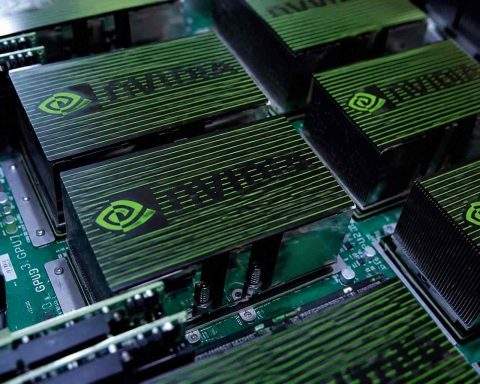
Nvidia’s B300, part of the Blackwell Ultra lineup, is designed for everything from model training to real-time inference—turning machine learning into output. Axe has deployed Nvidia’s newest, but it’s still behind a competitor that overhauled its brand only in December and is deep into a pivot toward AI infrastructure.
That $260 million figure isn’t a sure thing just yet. Axe pointed out a tangle of uncertainties: the final amount hinges on contract details, and there are plenty of risks—think execution hiccups, enforceability concerns, supply-chain snags, ramp-up speed for facilities, whether customers stick to their commitments, and competition—that could reduce the payout or drag out the timeline.
Last month, Miglino summed it up: “Our priorities for 2026 are driving revenue and growth.” Simple in theory, but the real challenge is ahead—deploying 2,304 B300 GPUs as scheduled and making sure that newly inked contract actually hits the revenue line. SEC
Related articles: NVIDIA