
SEATTLE, April 22, 2026, 06:13 AM PT
Boeing turned in a first-quarter loss that came in well below what Wall Street had braced for on Wednesday, helped by a 14% revenue jump to $22.2 billion as jet deliveries improved. Core (adjusted) loss per share dropped to 20 cents, down from 49 cents last year. Net loss narrowed as well, falling to $7 million from $31 million. LSEG data put analyst forecasts at an 83-cent loss per share.
Why does this matter right now? Deliveries mean cash on hand. Planemakers like Boeing usually get paid once the customer takes the jet, and after years of bruising crises—damaged reputation, big debt—the company is pushing hard to convert its record order backlog into actual money.
Cash remains the sticking point. Boeing burned through $1.5 billion in free cash flow—still negative, but less severe than the $2.3 billion outflow posted a year ago. The company wrapped up the quarter with $20.9 billion in cash and marketable securities, set against $47.2 billion in debt, according to Boeing.
Commercial airplanes continued to weigh on results. The division reported revenue up 13% to $9.2 billion, with 143 jets delivered—Boeing’s best first-quarter total since 2019. Still, it recorded an operating loss of $563 million.
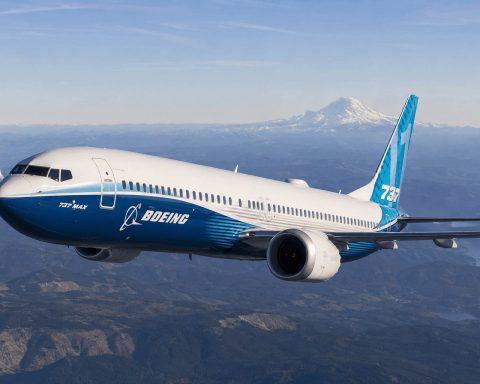
Boeing’s production of the 737 sits at roughly 42 jets monthly, with the company targeting certification for both the 737-7 and 737-10—the two ends of the MAX lineup—sometime this year. First deliveries are now pegged for 2027. Output on the 787 program remains unchanged at eight per month. As for the 777X, it’s still tied up in certification flight tests, putting additional strain on Boeing’s cash flow.
After the results, Chief Executive Kelly Ortberg told employees in a memo, “We’re off to a good start.” In Boeing’s official statement, he pointed to the company “building on our momentum” with the backlog nearing $700 billion. Reuters
Defense, Space & Security pulled in $7.6 billion, up 21%, with earnings jumping 50% to $233 million. On the services side, revenue managed a 6% gain, reaching $5.4 billion. Those segments offset jet losses, driving Boeing’s total backlog to an all-time high of $695 billion — business yet to be delivered.
Boeing pulled ahead of Airbus in quarterly deliveries, handing over 143 commercial jets to customers. Airbus, for its part, delivered 114 planes, with March tipping in its favor for that specific month.
Still, there’s room for things to go sideways. Boeing continues to burn through cash, and its main division hasn’t turned a profit yet. Timing for certifying the MAX 7, MAX 10, and 777X could shift the outlook. Back in March, CFO Jay Malave pointed out that higher-than-expected costs tied to the Spirit AeroSystems deal had already delayed the commercial-airplanes unit’s path back to profit, now not expected until 2027.
During the quarter, Commercial Airplanes logged 140 net orders, pulling in deals like 50 737-family jets for Aviation Capital Group, 30 787-10s for Delta Air Lines, and 20 737-8s for Air India. That pushed the unit’s backlog to an all-time high of $576 billion.
Related articles: NYSE:BA