Published: 19 November 2025
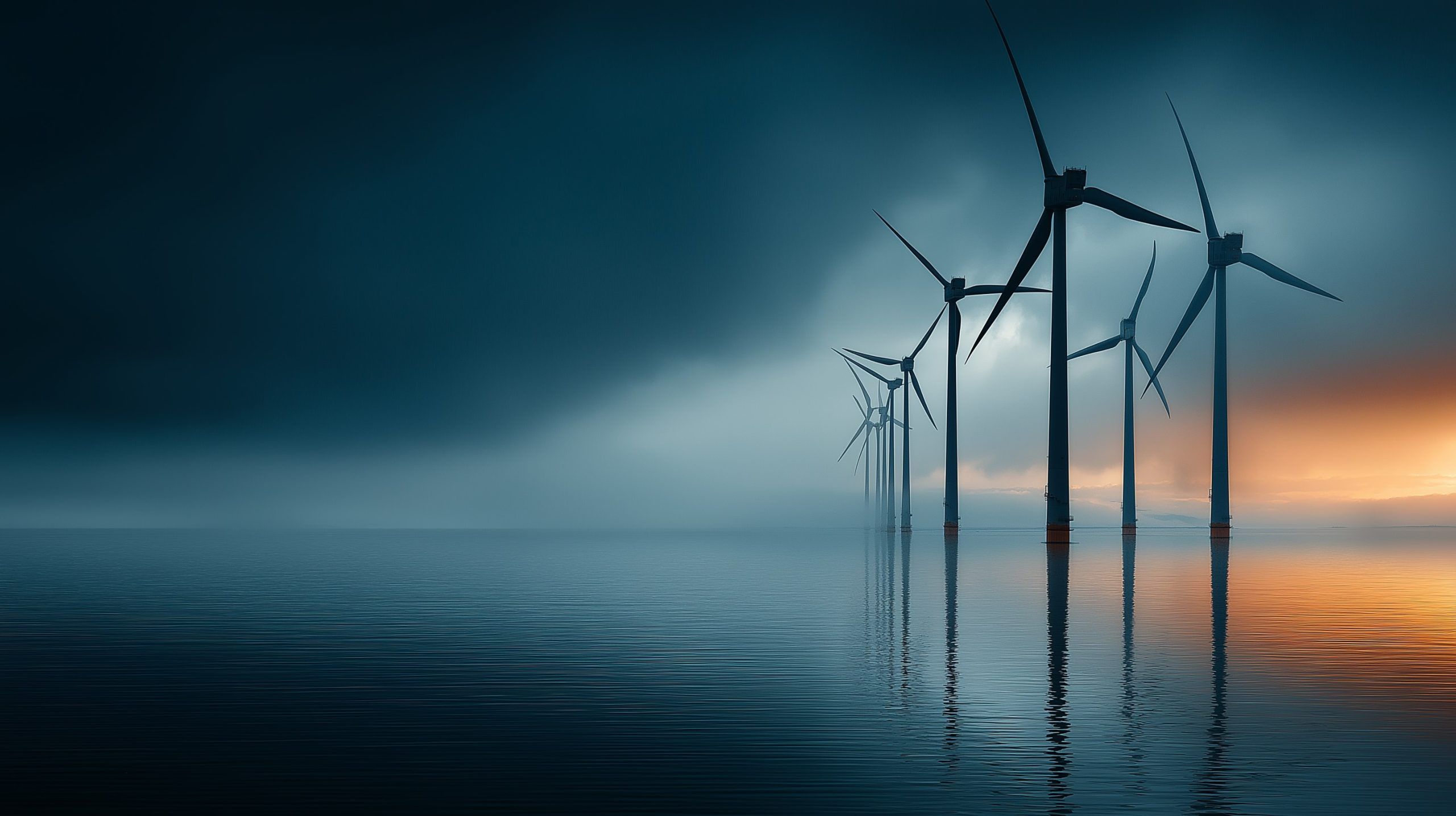
Poland has reached a major milestone in its energy transition as the first offshore wind turbines equipped with Polish‑built nacelles are now standing at the Baltic Power offshore wind farm in the Baltic Sea. The project, developed by ORLEN Group and Canada’s Northland Power, is the country’s first commercial offshore wind farm and one of the most advanced projects in the Polish sector of the Baltic.
Over the past week, a series of announcements from ORLEN, Baltic Power and international industry media have confirmed that the first three Vestas V236‑15 MW turbines at the site are now operating with nacelles manufactured at Vestas’ new factory in Szczecin, rather than imported from abroad.
First Polish‑Made Offshore Nacelles Now Installed at Baltic Power
ORLEN’s 13 November press release was the first to publicly confirm that next 15 MW turbines had been installed at Baltic Power, including three equipped with nacelles built in Poland. Baltic Power and Baltic-focused news outlets quickly followed with their own reports, highlighting that these nacelles are the first offshore wind nacelles manufactured in Poland to be installed at sea.
Specialist offshore media have since corroborated the milestone:
- OffshoreWind.biz reported on 17 November that the first nacelles from Vestas’ Polish production facility in Szczecin have been installed and are being prepared for commissioning at the 1.2 GW Baltic Power offshore wind farm, located about 23 km off the coast of Choczewo.
- Marine Insight on 18 November described the achievement as a “major milestone” for Poland’s offshore wind industry, confirming that three 15 MW nacelles built in Szczecin are now in place offshore. Marine Insight
- Offshore Energy / OE Digital likewise noted that three Vestas nacelles from the Szczecin plant have been installed, calling out the step as a turning point for Poland’s emerging offshore wind supply chain.
Together, these reports confirm that turbine installation at Baltic Power has moved into a new phase: the project is no longer just importing advanced components, but is exporting Polish‑made technology to the Baltic Sea itself.
Inside the Baltic Power Offshore Wind Farm
Baltic Power is designed as a 1.2 GW offshore wind farm consisting of 76 Vestas V236‑15 MW turbines. Once fully operational, the project is expected to produce up to 4 TWh of electricity per year, equivalent to around 3% of Poland’s current electricity demand and enough to power more than 1.5 million households.
Key technical and project facts include:
- Turbine size: Each turbine, including its monopile foundation, will stand over 250 metres tall, with 115.5‑metre blades sweeping an area larger than six football fields.
- Location: The wind farm covers about 130 km², situated roughly 23 km off the coast between Choczewo and Łeba, in the Polish part of the Baltic Sea.
- Construction timeline: Offshore installation of turbines began in July 2025, using an O‑class jack‑up vessel from Cadeler supported by multiple crew transfer and service operation vessels.
- Commissioning schedule: The first megawatt‑hours of electricity from Baltic Power are expected to be delivered next year, with full construction scheduled to finish in 2026.
ORLEN describes Baltic Power as Poland’s most advanced offshore wind project and the first in the country to begin offshore installation work, underscoring its role as a pathfinder for subsequent Polish projects in the Baltic.
Vestas’ Szczecin Factory: From Investment Decision to First Offshore Nacelles
At the heart of this week’s news is Vestas’ nacelle factory in Szczecin, located in Poland’s Western Pomeranian region.
- The plant was built specifically to manufacture nacelles for V236‑15 MW offshore turbines and now employs more than 600 people, with Vestas signalling its intention to scale further.
- Baltic Power is the first commercial offshore wind project to install nacelles from this Polish facility, turning it from a strategic investment on paper into a fully operational node in Vestas’ global supply chain.
Industry reports note that additional nacelles for Baltic Power will still be supplied from Vestas’ Lindø facility in Denmark, but the Szczecin plant is expected to take on an increasing share of nacelle production as it ramps up.
This first offshore deployment proves that Poland can manufacture some of the most powerful offshore wind turbine nacelles currently offered in Europe, a critical step for a country aiming to become a regional hub for offshore wind manufacturing and logistics.
Local Content: Polish Companies Capture a Growing Share of the Value
One of the most important aspects of the Baltic Power story is how much of the project is now being delivered by Polish companies.
According to ORLEN and Baltic Power:
- More than 20% of the project’s total value over its 30‑year lifetime is expected to go to Polish entities, with local content over the lifetime forecast above 21%.
- In addition to the nacelles, Polish factories are supplying:
- Offshore substation topsides via Grupa Przemysłowa Baltic and ARP
- Onshore power cables from Tele‑Fonika Kable
- Elements of transition pieces produced by Smulders Polska
- On the infrastructure side, Enprom is co‑leading construction of the onshore substation, while Erbud has built the operations and maintenance base in Łeba.
- Polish firms have also conducted environmental surveys, provided logistics and transport services and worked on seabed investigations and port infrastructure for the project.
ORLEN has repeatedly framed Baltic Power as not only an energy project but also an industrial policy tool – a way to seed a new, export‑ready offshore wind sector around the Baltic, anchored by Polish shipyards, steel fabricators, cable producers and service providers.
Cleaner Steel and Giant Turbines: Baltic Power’s Sustainability Features
Beyond the headline about Polish-built nacelles, Baltic Power also showcases a number of sustainability innovations:
- The project is the first offshore wind farm to use recycled steel in the upper sections of some turbine towers, cutting those towers’ carbon footprint by about 10% compared with conventional steel production.
- The V236‑15 MW turbines installed at Baltic Power rank among the largest and most powerful offshore turbines currently being deployed, with each rotor spanning an area larger than six football pitches.
Together, these features mean that when Baltic Power enters full operation, it will not only deliver zero‑emission electricity but will also embody some of the lowest‑carbon hardware yet installed in the offshore wind sector.
ORLEN’s Offshore Ambitions: Baltic East Follows Baltic Power
The nacelle milestone at Baltic Power comes just as ORLEN clears a major regulatory hurdle for its second large offshore wind farm, Baltic East.
On 18 November, ORLEN announced that Baltic East has received a positive environmental decision from Poland’s Regional Directorate for Environmental Protection in Gdańsk. The project:
- Is planned with around 1 GW of installed capacity, enough to supply more than 1.25 million households with electricity.
- Will be located 22.5 km off the Baltic coast, in an area of roughly 110 km², close to the Baltic Power site.
- Is targeting commercial operation around 2032, contingent on success in Poland’s first offshore wind auction and on securing financing and final permits.
The environmental approval is a prerequisite for entering Poland’s first offshore wind auction, scheduled for December and expected to award up to 4 GW of capacity under contracts for difference (CfD).
Taken together, Baltic Power and Baltic East illustrate ORLEN’s strategy: build a multi‑gigawatt offshore portfolio in the Baltic Sea, with rising shares of Polish content and an increasingly localised supply chain.
What Happens Next at Baltic Power?
With the first Polish-made nacelles now offshore, the Baltic Power team is shifting into testing, commissioning and continued installation:
- Cadeler’s O‑class jack‑up vessel will keep installing turbines through late 2025 and into 2026, supported by crew transfer and service vessels for technicians and equipment.
- Further nacelles will be shipped from Szczecin and Lindø, blades and towers will continue to arrive at staging ports, and onshore substations and grid connection assets will be progressively energized.
- Once the first string of turbines is commissioned, Baltic Power is expected to begin feeding initial electricity into the Polish grid sometime in 2026, ramping up towards its full 4 TWh yearly output as more turbines come online.
For Poland’s offshore wind industry, every additional nacelle that leaves the Szczecin factory or every tower section that rolls out of a local fabrication hall will reinforce the same message: the country is no longer just a market for imported wind farms, but an industrial player building them.
Why This Milestone Matters for Poland and Europe
The first Polish‑built nacelles at Baltic Power mark more than a symbolic achievement:
- Energy security: Baltic Power alone could cover roughly 3% of Poland’s power demand, reducing reliance on fossil fuel imports.
- Industrial development: With local content above 20% and a growing cluster of Polish suppliers, offshore wind is becoming a long‑term industrial ecosystem, not a one‑off infrastructure project.
- European supply chain resilience: As wind projects across Europe face cost inflation and supply bottlenecks, new manufacturing capacity in Poland strengthens the regional supply chain for large‑scale offshore turbines.
As of 19 November 2025, Baltic Power’s first Polish‑built nacelles stand as tangible proof that Poland’s offshore wind ambitions are rapidly becoming reality – and that the country intends to be not only a buyer of green technology, but one of its leading manufacturers.