
Today: 23 June 2026
India F-35 Deal Hits Pause: Lockheed Martin Says No Direct Talks, U.S. Door Still Open
11 April 2026
2 mins read

India F-35 Deal Hits Pause: Lockheed Martin Says No Direct Talks, U.S. Door Still Open

NEW DELHI, April 12, 2026, 01:33 IST

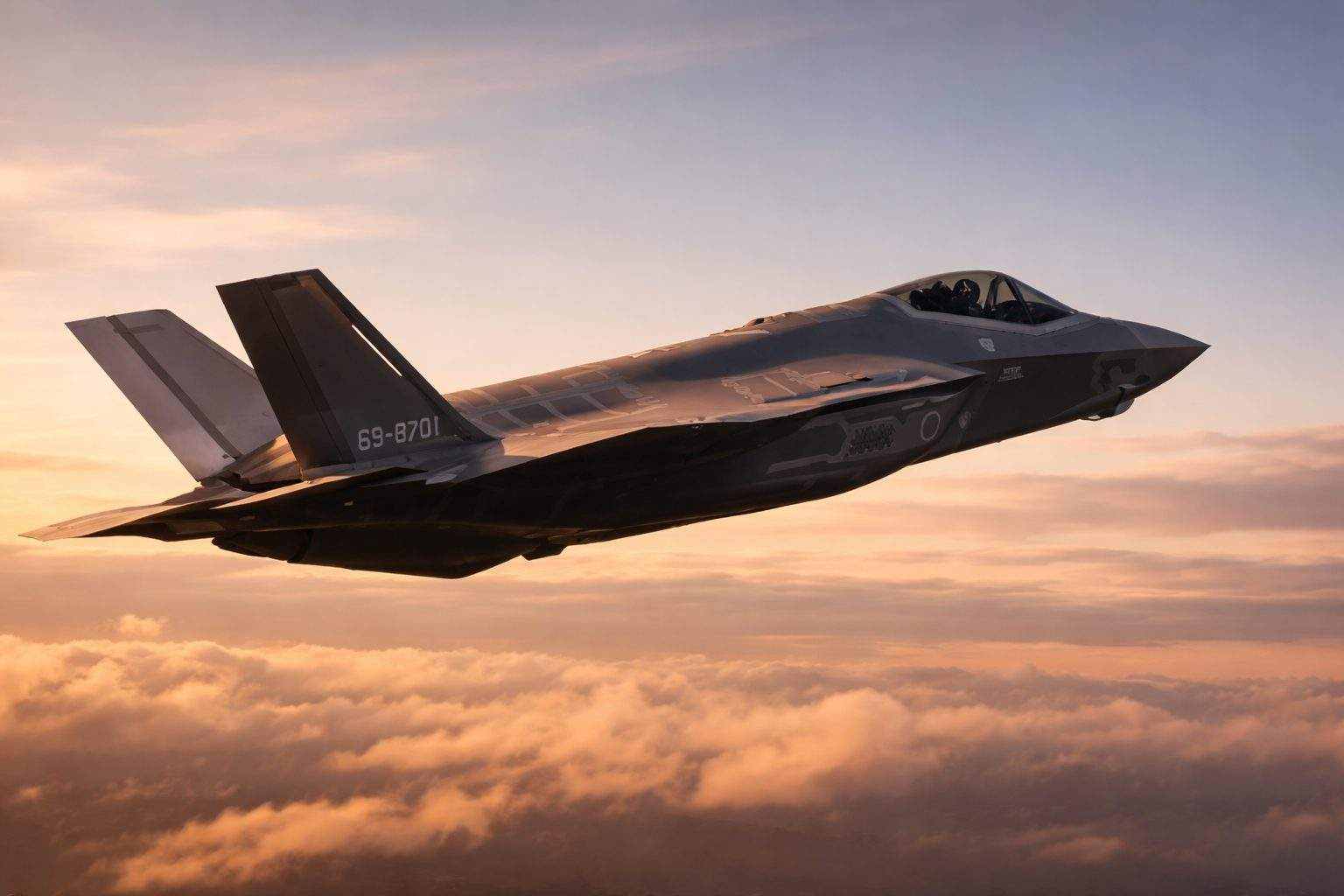
Lockheed Martin was quoted in reports published over the past day as saying it is not in direct talks with India over the F-35 and that any approach would have to run through Washington and New Delhi under the U.S. Foreign Military Sales process, the government-run route for sensitive arms exports. The clarification cools fresh speculation that recent Pentagon contacts had moved the stealth fighter closer to a deal.

That matters now because the buzz landed as India and the United States stepped up senior-level talks on defence, trade and technology. Indian Foreign Secretary Vikram Misri was in Washington from April 8 to 10, and official readouts from his meetings highlighted defence-industrial, technology and supply-chain ties and did not mention an F-35 sale.

The broader policy window remains open, at least on paper. In their February 2025 joint statement, President Donald Trump and Prime Minister Narendra Modi said Washington would review its policy on releasing fifth-generation fighters to India, and a March Pentagon readout on Under Secretary Elbridge Colby’s India visit said both sides were advancing a new defence framework signed last year.

New Delhi has been more cautious. India’s foreign ministry said in February 2025 that no formal acquisition process for a fifth-generation fighter had begun, and a parliamentary reply in August said no formal discussions had been held on an F-35 release.

For Lockheed, the distinction is not trivial. The F-35 is its biggest program and accounts for about a third of revenue. The company delivered a record 191 jets in 2025, and the White House’s fiscal 2027 defence wish list included 85 F-35s, underscoring how central the aircraft remains to Lockheed’s sales base and production planning.

India, meanwhile, is not short of options or spending plans. Reuters reported in February that New Delhi had cleared a 3.6 trillion-rupee ($40 billion) military upgrade that included more Dassault Rafales and Boeing P-8I aircraft, while a separate 114-fighter contest still has Lockheed, Boeing, Dassault, Saab, Eurofighter and Russia’s United Aircraft Corporation in the frame; Lockheed’s entry there is the F-21, not the F-35.

That fighter shortage is real. Laxman Behera, a defence expert at Jawaharlal Nehru University, told Reuters there was “no doubt” the Indian Air Force was deficient in combat squadrons as China fields more modern aircraft and Pakistan draws Chinese support. That helps explain why even a procedural update on the F-35 gets attention. Reuters

But the path is narrow. India’s fighter choices are shaped as much by technology transfer and strategic autonomy as by performance, and Amit Cowshish, a former financial adviser for acquisitions at India’s defence ministry, told Reuters that “Russia has never shied away from transferring technology,” a contrast that goes to the heart of why U.S.-controlled platforms can be a harder sell in New Delhi. Reuters

For now, the latest round of reports leaves the F-35 where it has sat for months: open in policy terms, distant in commercial terms. Until India files a formal request and the two governments move beyond broad defence-industrial talks, the jet stays outside Lockheed Martin’s near-term India pipeline.

Marcin Frąckiewicz is the founder and CEO of TS2 Space, a satellite communications company serving customers around the world. A graduate of the Warsaw School of Economics (SGH), he has more than two decades of experience in telecommunications, satellite services and technology ventures. He writes about satellite communications, space technology, artificial intelligence and the stock market, with a particular focus on technology companies, semiconductors, emerging industries and the trends shaping global innovation.

Stock Market Today

  • Amazon Shares Slip as Prime Day Launches Amid AI Concerns Impacting Tech Stocks
    June 23, 2026, 10:18 AM EDT. Amazon's stock dipped 0.7% in early premarket trading on June 23, 2026, as Prime Day began amid broader tech sector sell-offs driven by AI investment uncertainties. The e-commerce giant's Prime Day, running June 23-26, is forecasted by Bank of America to generate $21.6 billion in gross merchandise value, though consumer caution lingers due to tighter finances. Tech shares including Amazon and Alphabet fell, pushing Nasdaq 100 futures down over 2%, reflecting investor jitters over rising capital expenditures and expectations for AI-related returns. Amazon's first-quarter net sales rose 17% to $181.5 billion, with AWS cloud services up 28%, yet the company plans nearly $200 billion in capital spending this year. Enhanced AI features for Alexa aim to stimulate sales, but market focus remains on broader tech earnings and AI spending outcomes.

Latest articles

AMC Stock Drops After $200 Million Share Sale

AMC Stock Drops After $200 Million Share Sale

23 June 2026
AMC Entertainment plunged 26% after announcing a $200 million stock sale at $2.10 per share, sparking fresh dilution worries despite record weekend attendance driven by “Toy Story 5”; proceeds will mainly redeem $125.5 million in 2027 notes, but investors remain wary of repeated equity raises.
Primoris Slides 35% After Renewables Cost Hit, 2026 Outlook Cut

Primoris Slides 35% After Renewables Cost Hit, 2026 Outlook Cut

23 June 2026
Primoris plunged 35.5% premarket after slashing 2026 profit guidance due to renewed cost overruns in its renewables business and the COO’s exit, with adjusted EBITDA now seen at $275M-$325M vs. $480M-$500M prior; Mizuho and Wells Fargo cut price targets, KeyBanc downgraded shares, as investors brace for further risks if project losses continue.
Amazon Stock Just Got Hit Before Prime Day — AI Spending Fears Are Back

Amazon Faces Prime Day as AI Worries Hit Tech Stocks

23 June 2026
Amazon shares slipped 0.7% premarket to $231.20 as Prime Day began, with investors watching if U.S. shoppers will spend amid tight budgets and a broader tech selloff; despite projected $21.6B in Prime Day sales and AWS growth, concerns over $200B in capex and AI returns kept pressure on the stock.
Unilever Snaps Up Grüns to Deepen U.S. Wellness Push After McCormick Food Deal
Previous Story

Unilever Snaps Up Grüns to Deepen U.S. Wellness Push After McCormick Food Deal

Marvell Stock Hits Record High After Nvidia’s $2 Billion Move and Amazon AI Chip Push
Next Story

Marvell Stock Hits Record High After Nvidia’s $2 Billion Move and Amazon AI Chip Push

Go toTop