NEW YORK, January 19, 2026, 14:02 EST — The market has closed.
Basic materials stocks reopen Tuesday in the U.S. with a mixed picture, after gold and silver hit record highs on safe-haven buying sparked by President Donald Trump’s newest tariff threat related to Greenland. The Materials Select Sector SPDR Fund (XLB) ended last week down 0.57% at $48.68. U.S. cash equity markets were closed Monday for Martin Luther King Jr. Day.
Why it matters now: materials stocks are caught between growth hopes and inflation fears, making them sensitive to metal price shifts. Tariff discussions cut both ways — they might boost bullion and miners briefly, but also risk dampening trade and weakening industrial demand.
XLB is an ETF tracking the Materials Select Sector Index, part of the S&P 500 covering chemicals, metals and mining, paper and forest products, containers and packaging, plus construction materials. This blend means the fund is sensitive to safe-haven flows into precious metals as well as demand from China, the top consumer of many industrial metals.
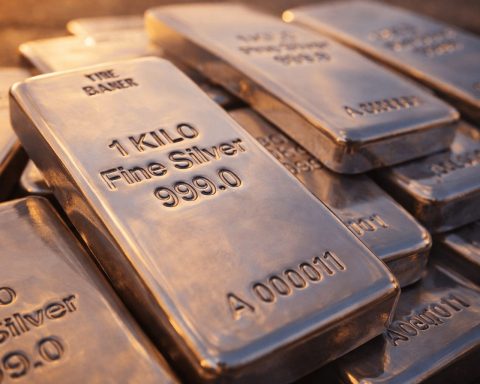
Spot gold surged 1.7% to $4,672.49 an ounce, briefly climbing as high as $4,689.39, according to Reuters. Silver followed suit, jumping 5% to $94.41 after reaching $94.61. Linh Tran, senior market analyst at XS.com, noted, “When institutional and policy risks resurface, markets tend to react swiftly by reallocating toward safe-haven assets.” Reuters
Copper, often seen as a barometer for global economic health, showed mixed signals. The most-active Shanghai copper contract dipped 0.37% to 101,490 yuan per metric ton. At the same time, the London Metal Exchange’s three-month benchmark copper climbed 1.16% to $12,951 a ton. Meanwhile, the Yangshan copper premium — an indicator of China’s appetite for imported copper — dropped to $32 a ton on Friday, according to the report.
China’s regulators have thrown a new challenge at metals traders. The country’s securities watchdog is now requiring brokers to pull client-dedicated servers out of exchange-run data centers. This move targets high-frequency trading — that rapid, algorithm-driven style that profits from tiny price shifts — and could dampen speculative volatility. “They do want to keep the markets focused on investment, as opposed to speculation,” said Shane Oliver, AMP’s chief economist. Reuters
During the final U.S. session, copper giant Freeport-McMoRan dropped 2.1%, and chemicals company Dow slipped 1.4%. Gold miner Newmont saw little movement. Industrial gases firm Linde declined 0.3%, while the SPDR S&P Metals & Mining ETF (XME) nudged up 0.4%. The SPDR S&P 500 ETF (SPY) fell 0.1%.
The trade-off isn’t clean. Should tariff threats ease or stall, safe-haven buying could evaporate fast, pulling down bullion-linked stocks while industrial metals remain vulnerable to sluggish end-user demand. Yet if growth concerns deepen, cyclical materials would probably suffer, even if gold holds firm.
All eyes now turn to the Federal Reserve’s policy meeting on January 27-28. Traders in materials will be tracking the dollar, real yields, and any changes to the rate trajectory that might ripple through to metals prices.