
MONTRÉAL, August 24, 2026, 14:28 EDT
- A fibre line outage disrupted 911 service for Bell customers in 18 communities across southern Labrador.
- The incident comes after a July outage in Manitoba prevented 84 emergency call attempts from being routed.
- BCE reported a 41.5% increase in capital spending for the second quarter, while free cash flow declined by 9.5%.
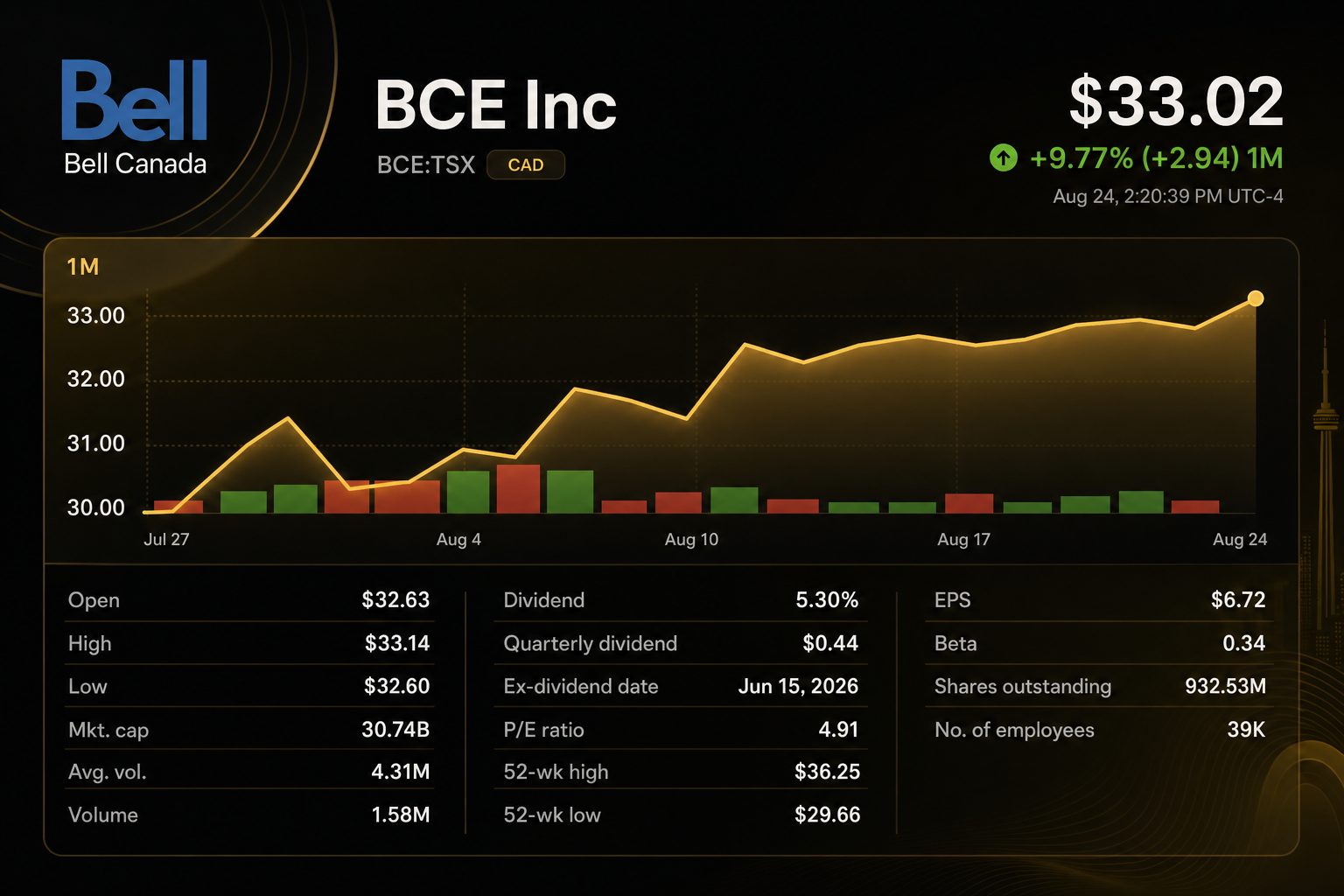
- BCE stock rose 1.3% to C$33.07 as of 13:28 EDT, prior to broader circulation of the Labrador report.
A fibre line damaged by a truck resulted in Bell customers across 18 communities in southern Labrador losing access to 911 on Monday, raising fresh concerns over network reliability for BCE Inc. TSE:BCE investors. Restoration crews anticipated service would be restored by 11 p.m. Atlantic time.
The outage is minor compared to BCE’s C$30-billion market capitalisation. The trend is more significant. Last month, another breakdown in Manitoba overrode automatic backup systems and prevented 84 attempted 911 calls from connecting.
The milestone prompts questions about capital allocation. Bell is currently investing significantly in fibre, AI infrastructure, and its U.S. growth. Additional investment in bolstering resilience could vie for funds, as management focuses on improving free-cash-flow conversion.
| Bell network incident | Verified impact | Failure or trigger | Investor relevance |
|---|---|---|---|
| Southern Labrador, Aug. 24 | Some Bell customers in 18 communities temporarily lost 911 access | Fibre line struck by a truck | Highlights challenges for route redundancy in remote regions |
| Manitoba, July 22 | 84 911 call attempts were unsuccessful for 3 hours and 45 minutes | Simultaneous infrastructure breakdowns; failover system failed to activate | Led Bell to submit a report to the CRTC |
| Winnipeg, Aug. 20 | Extended outage disrupted landline service, building entry buzzers and certain medical calling | Ducts and copper cables were damaged by external construction | Triggered additional pressure from provincial officials |
Bell advised customers to contact police, fire or ambulance services directly or go to emergency facilities in person. By early afternoon, the carrier had not revealed the cost of repairs or any broader impact on services.
The July Manitoba outage serves as the most direct comparison. Bell, in its CRTC submission, stated that two separate failures happened simultaneously. The emergency call failover system did not activate on its own, but the company indicated there were no major incidents or negative impacts on public safety.
“Bell takes its role in connecting Canadians to emergency services with the utmost seriousness,” the company stated in the filing. Manitoba Premier Wab Kinew subsequently described the repeated 911 disruptions as unacceptable. Winnipeg Free Press
The CRTC has set a deadline for telecom operators to make their networks ready for next-generation 911 voice service by March 31, 2027. The upgraded platform includes digital routing and aims to overcome certain restrictions of older networks.
| BCE Q2 2026 metric | Result | Year-on-year change | Read-through |
|---|---|---|---|
| Operating revenue | C$6.176 billion | +1.5% | Ziply gains offset softness at home |
| Adjusted EBITDA | C$2.702 billion | +1.0% | Limited improvement in growth |
| Capital expenditure | C$1.080 billion | +41.5% | Capital intensity increased to 17.5% |
| Free cash flow | C$1.042 billion | -9.5% | Decline leaves less buffer for unexpected costs |
| Bell CTS Canada revenue | C$5.122 billion | -4.0% | Ongoing domestic market pressures |
BCE’s recent results highlight the pressure. Capital expenditures in the second quarter rose to C$1.08 billion, increasing by 41.5%. Free cash flow declined by 9.5% to C$1.04 billion, even as operating cash flow grew 11%.
The majority of this spending is allocated to planned expansion initiatives, such as fibre and AI Fabric capabilities. Bell introduced Internet offerings featuring wireless connectivity and power backup earlier this year. However, the outage on Monday highlights that ensuring resilience requires not just customer-premise backup, but also diverse routing.
The domestic segment leaves little flexibility for inefficiency. Revenue at Bell Communication and Technology Services Canada dropped 4.0%. Adjusted EBITDA was down 3.1%, while the margin rose to 46.1%.
Bell CEO Mirko Bibic stated the company delivered “solid execution against the strategy we laid out at Investor Day” during the quarter. The strategy faces a new operational challenge: upgrading emergency routing while maintaining cash recovery pace. BCE
| Analyst measure | August 2026 forecast | Expectation at C$33.07 |
|---|---|---|
| Strong Buy | 6 out of 19 | 31.6% of analysts |
| Buy | 5 out of 19 | 26.3% of analysts |
| Hold | 7 out of 19 | 36.8% of analysts |
| Sell | 1 out of 19 | 5.3% of analysts |
| Average price target | C$37.44 | 13.2% potential gain |
| Target range | C$32 to C$45 | -3.2% to +36.1% range |
| Recent Buy calls | Bank of America NYSE:BAC, Royal Bank of Canada TSE:RY, Bank of Montreal TSE:BMO, Bank of Nova Scotia (TSE:BNS) | Price targets between C$36 and C$40 |
| Recent Hold | Barclays PLC LON:BARC | C$35 price target |
The stock had advanced 1.3% to C$33.07 by 13:28 EDT on Monday. This lagged price update was posted before the Labrador report became widely distributed, so the price change is not attributed to outage news. Since the close on August 17, BCE had risen 2.0%.
Analysts on the sell side maintain a positive view. The consensus price target from nineteen analysts averages C$37.44. Earlier this month, Bank of America raised BCE to Buy, with RBC, BMO, and Scotiabank also keeping their Buy recommendations.
Investors are advised to monitor updates on restoration timing, CRTC statements, and Bell’s clarification regarding route redundancy measures. Disclosure of repair costs would quantify the incident’s impact, as would a projected schedule for transitioning affected regions to next-generation routing.
Risks: The interruption could be short-lived and have little financial impact. The more significant concern is recurring disruptions that could lead to required investments, fines or a loss of customers. Accelerating next-generation 911 implementation might limit this risk, though it could also prompt earlier capital expenditure.
Related articles: Technology