
LOS GATOS, California, August 24, 2026, 06:35 PDT
- Netflix began trading on Monday at $79.23, marking a 0.45% decline from its closing price on Friday.
- Shares and market capitalisation declined following the August 20 premiere of Blood Sacrifice.
- The stock saw its largest increases prior to launch, calling into question the touted $6 billion connection.
- Netflix had not released the show’s global viewing figures for the first week.
Netflix, Inc. NASDAQ:NFLX began trading on Monday down 0.45%. The drop counters online speculation that Blood Sacrifice boosted the stock by roughly $6 billion following its debut. The opening price was $79.23 at 09:30 EDT, undercutting the closing price from August 20.
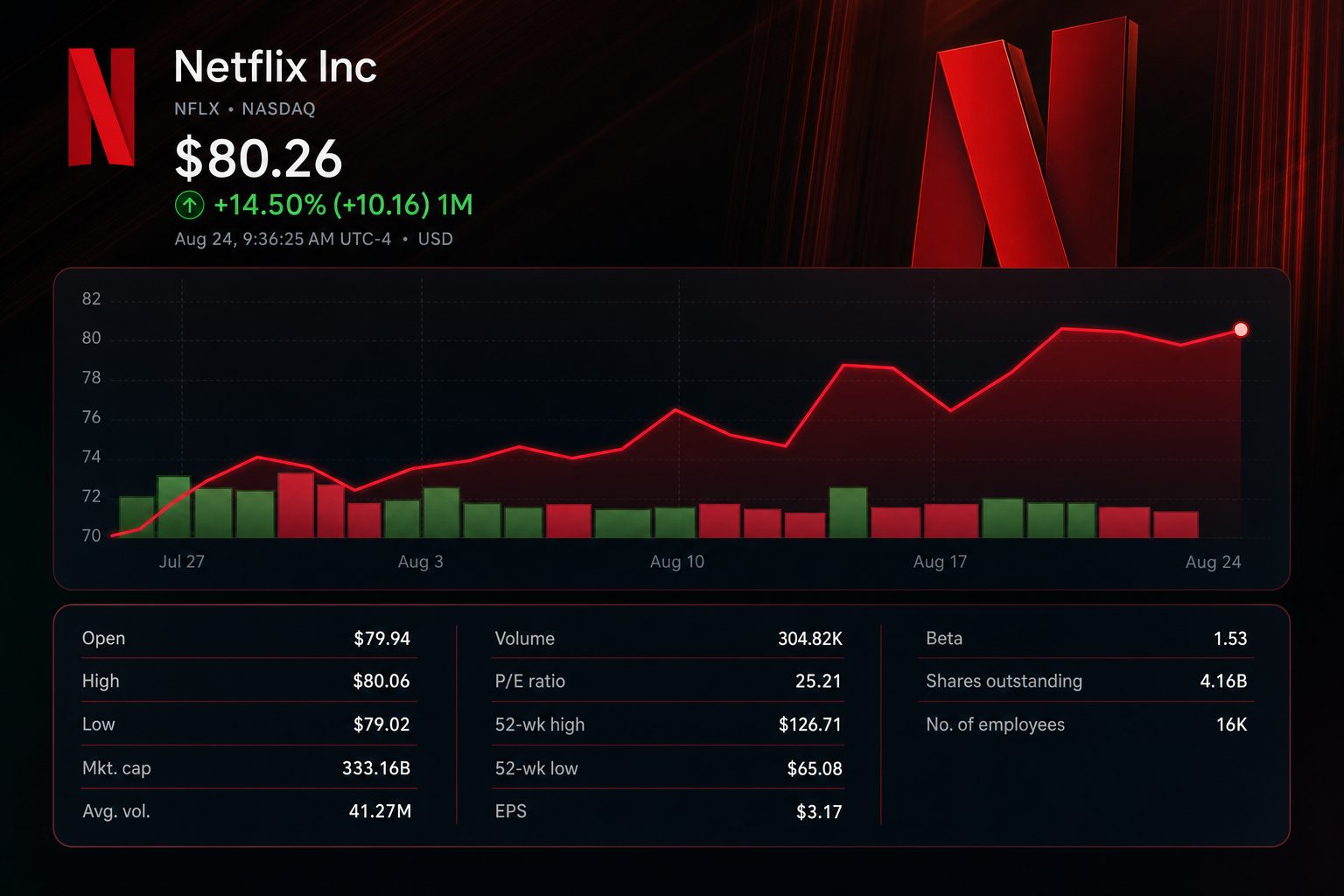
The difference is important for investors. Netflix shares rose significantly prior to the debut of the five-part Swedish thriller, but the stock declined across both full trading sessions following its release.
| Date | Event | Close / open | Daily move | Market cap |
|---|---|---|---|---|
| Aug. 17 | Three days ahead of launch | $76.02 close | -2.74% | $316.54B |
| Aug. 18 | Two days ahead of launch | $77.77 close | +2.30% | $323.83B |
| Aug. 19 | One day before launch | $80.22 close | +3.15% | $334.03B |
| Aug. 20 | Launch day worldwide | $80.14 close | -0.10% | $333.70B |
| Aug. 21 | First full day after launch | $79.59 close | -0.69% | $331.41B |
| Aug. 24 | Monday session open | $79.23 open | -0.45% compared to Friday | Not final |
Between August 17 and August 19, market value climbed by $17.49 billion. This gain happened before the premiere. Afterward, capitalization decreased by $2.62 billion through Friday, according to daily closing figures.
Netflix launched Blood Sacrifice worldwide on August 20. The police drama, set in Stockholm, features five episodes. Created by George Kay, the series stars Jakob Oftebro alongside Peter Andersson.
There was no official first-week result as of Monday morning. Netflix’s public Top 10 figures only included August 10–16, a timeframe that closed prior to the series premiere.
The absence of data highlights a broader concern for investors. A title may become popular on social media prior to its financial impact being determined. Netflix states that content contributes to acquisition, retention, and the overall value of its service in distinct ways.
| Netflix metric | Q2 2026 / outlook | Comparison |
|---|---|---|
| Revenue | $12.56B | 13.4% higher than last year |
| Operating margin | 33.4% | 34.1% in Q2 2025 |
| Diluted EPS | $0.80 | $0.72 in the same period last year |
| H1 viewing hours | Over 97B | 2% growth from a year ago |
| Q3 revenue forecast | $12.86B | 11.7% higher year over year |
| 2026 ad revenue | About $3B | Roughly two times more than 2025 |
J.P. Morgan’s Doug Anmuth said on Friday that engagement lacked a “single silver bullet.” He pointed to “strong content” as one of various efforts. In June, Netflix’s share of U.S. television was 7.9%, while Alphabet Inc.’s NASDAQ:GOOGL YouTube held 13.8%, according to his note. Benzinga report on J.P. Morgan note
| Analyst | Firm | Recommendation | Price target | Date |
|---|---|---|---|---|
| Doug Anmuth | J.P. Morgan | Buy rating unchanged | $85 | Aug. 21 |
| Brian Pitz | BMO Capital | Buy stance affirmed | $135 | Aug. 14 |
| Sachin Mittal | DBS | Buy rating kept | $94, reduced from $112 | July 27 |
| Vikram Kesavabhotla | Baird | Buy rating kept | $90, reduced from $120 | July 22 |
The wider analyst consensus is still Buy. The mean price target stands at $93.42, roughly 17.9% higher than Monday’s open. However, estimates range from $70 to $135, highlighting the uncertainty tied to projections for growth and engagement.
Investors will want to monitor the upcoming weekly Top 10 report. Metrics such as views, hours watched, and rankings by country can help indicate if search interest resulted in actual viewership. For now, the share price action does not confirm a rally driven by Blood Sacrifice.
Risks: Monday’s price reflected an initial snapshot and could fluctuate significantly. Subsequent viewing data might indicate a more robust start, and separate market events may have contributed to the pre-release movement.
Related articles: NASDAQ:NFLX