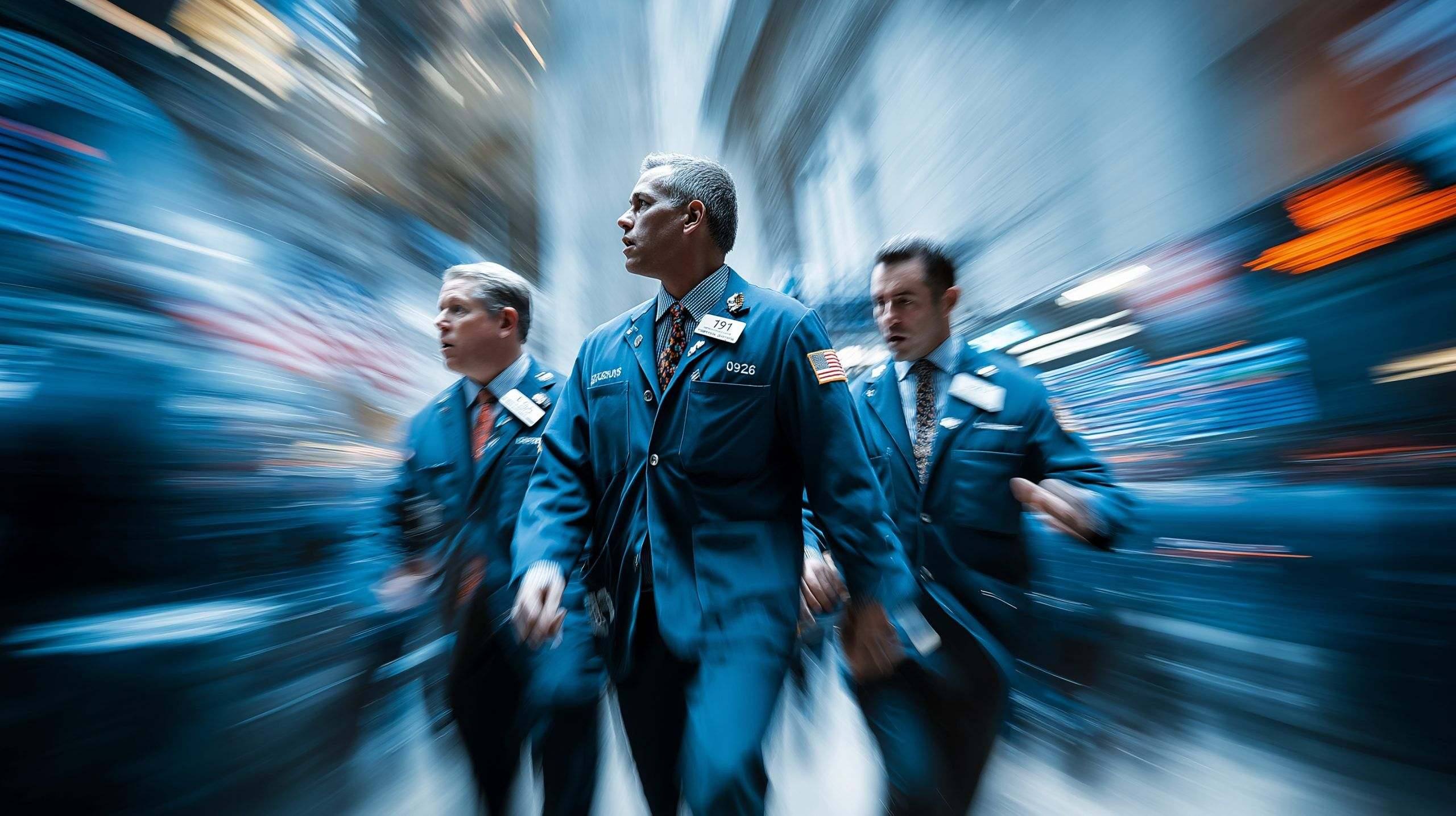
NEW YORK — December 10, 2025. Big Tech stocks delivered a mixed message in after‑hours trading on Wednesday as investors waited for the Federal Reserve’s final rate decision of 2025 and weighed fresh AI‑driven forecasts for the “Magnificent Seven.”
During the regular session, U.S. indexes were broadly cautious: the S&P 500 hovered around flat, the Nasdaq 100 dipped roughly 0.2%, and the Dow eked out modest gains, according to real‑time readings compiled by 24/7 Wall St.
Yet beneath the calm surface, after‑hours trading in mega‑cap tech told a more dynamic story.
After‑hours scoreboard: How the biggest tech stocks moved
As of 8:00 p.m. ET on December 10, 2025, extended‑hours data from Public.com show the following moves in key Big Tech names:
- Microsoft (MSFT):
→ $491.68, up $12.66 (+2.64%) from the regular close of $479.02. - Nvidia (NVDA):
→ $184.32, up $1.04 (+0.57%) from a $183.28 close. - Meta Platforms (META):
→ $654.84, up $4.96 (+0.76%) vs. $649.88 at the bell. - Tesla (TSLA):
→ $445.40, up $0.69 (+0.16%) from $444.71. - Apple (AAPL):
→ $276.78, down $0.29 (-0.10%) from a $277.07 regular‑session close. - Amazon (AMZN):
→ $227.92, down $3.30 (-1.43%) from $231.22.
In short: Microsoft, Nvidia and Meta led the upside in AI‑heavy names, Tesla was essentially flat, while Apple and especially Amazon traded softer after the bell.
Macro backdrop: Fed decision, AI “show‑me” moment and Big Tech’s dominance
Markets head into Wednesday night focused on two intertwined themes:
- The Fed’s final policy meeting of 2025.
A market note from Gotrade describes U.S. stocks as “traded cautiously” while investors wait for the Federal Reserve’s decision and, crucially, the new rate projections for 2026. Analysts widely expect a 25‑basis‑point rate cut, but the tone of the statement, the dot plot, and Chair Jerome Powell’s press conference are seen as the real drivers of risk assets from here.Gotrade - Whether AI leaders can justify their valuations.
Investors Business Daily characterizes this week as a “show me” moment for AI stocks, with upcoming earnings from Oracle and Broadcom expected to test whether AI‑related spending is translating into sustainable revenue and profit growth.Investors
Layered on top of that is extreme market concentration. A recent Motley Fool breakdown of the world’s largest companies by market cap shows Nvidia now sits at No. 1 globally, with Apple and Alphabet close behind. That means a handful of Big Tech names are exerting outsized influence on the S&P 500 and Nasdaq — and on investor psychology.
Against this backdrop, Wednesday’s after‑hours moves look less like noise and more like a real‑time referendum on the AI and cloud leaders.
Microsoft (MSFT): After‑hours leader on AI and seasonal optimism
Microsoft was the standout gainer after the bell. At $491.68, the stock’s 2.64% after‑hours jump extended its leadership among mega‑cap tech names.
A fresh analysis from Finbold released earlier in the day argues that investors may want to own Microsoft before January 2026 for both technical and fundamental reasons. Using 38 years of data, the piece highlights that MSFT has historically returned an average of 4.3% in January, finishing positive about two‑thirds of the time. The stock is already up nearly 14% year to date, and was trading around $484 at the prior close before tonight’s pop.
On fundamentals, the same report notes that in its most recent quarter Microsoft delivered:
- $76.4 billion in revenue, up 18% year‑on‑year,
- $27.2 billion in net income,
- and $3.65 in diluted EPS, a 24% annual increase,
driven predominantly by cloud and AI, including Azure and the rapidly expanding Copilot product family.
Finbold also points to new Copilot “agent” tools unveiled at Ignite 2025 and multi‑billion‑dollar data center build‑outs in regions such as India and Canada as key drivers of future AI and cloud workloads through 2026.Finbold
Takeaway: Wednesday night’s outsized after‑hours gain suggests traders are leaning into that bullish AI‑and‑seasonality narrative. Among Big Tech, Microsoft continues to look like one of the purest, most diversified AI plays — and the price action is reflecting that.
Apple (AAPL): Slight dip as its “AI‑neutral” stance divides opinion
Apple’s move was modest but notable given the broader AI enthusiasm. The stock slipped 0.10% after hours to $276.78, with trades spanning $276.50–$277.47 in the extended session.
A detailed research note on Seeking Alpha, published Wednesday morning, frames Apple as “playing Switzerland in the AI battle” — avoiding the massive capital expenditure arms race pursued by cloud hyperscalers, which helps protect margins, but potentially at the cost of long‑run ecosystem dominance. The author highlights that:Seeking Alpha
- Management is guiding for 10–12% revenue growth and 47–48% gross margins, underlining still‑impressive fundamentals.
- However, more aggressive AI pushes from rivals like Alphabet’s Gemini 3 could erode Apple’s grip on the smartphone and services ecosystem over time.
- The stock’s premium valuation could be vulnerable if Apple Intelligence doesn’t deliver a clear, monetizable edge.
In other words, the market increasingly seems to see Apple as a high‑quality but relatively defensive Big Tech name — more of a cash‑generating consumer ecosystem than a pure AI infrastructure play. Tonight’s small after‑hours dip fits that narrative: investors are paying up for safety, but they’re clearly more excited about companies seen as building the AI rails.
Amazon (AMZN): Biggest loser after hours despite bullish long‑term forecasts
Amazon stood out on the downside. Extended‑hours trades at $227.92 left the stock down 1.43% versus its $231.22regular close; the after‑hours range ran from $227.62 to $228.33.
A same‑day 24/7 Wall St. piece notes that Amazon shares have:
- Fallen 2.33% over the past five trading sessions,
- Gained just 3.5% year to date,
- And are up only 0.81% over the past year, following a sell‑off from an all‑time high set on November 3, 2025.
Fundamentally, however, the numbers remain powerful:
- Net income hit $59.2 billion in 2024, a 94.6% jump from 2023.
- In Q3 2025, Amazon beat expectations with $180.17 billion in revenue, including $33 billion from AWS and $17.7 billion from advertising.
The same analysis lays out an aggressive long‑term roadmap:
- A Wall Street median one‑year price target of $295.63 (~30% upside),
- 24/7 Wall St.’s own 2025 target of $250.85 (~10% upside),
- And a 2030 target of $524.67, implying around 130% potential upside if AWS, e‑commerce automation and advertising all scale as projected.
One of the most eye‑catching details is Amazon’s plan to launch “Nova,” a proprietary AI model with advanced reasoning, in June 2026. Nova is designed to compete directly with OpenAI’s ChatGPT, Anthropic’s Claude 3.7 Sonnet and Google’s Gemini 2.0 Flash Thinking, while offering more price‑efficient options for enterprise customers.24/7 Wall St.
Why the disconnect?
Tonight’s after‑hours weakness suggests investors are still nervous about enormous AI and infrastructure CapEx and about AWS potentially losing ground to Microsoft Azure and Google Cloud — even though 44 analysts collectively rate Amazon a Strong Buy with substantial upside over the next year.
Meta (META): Grinding higher on AI, FCF and a new dividend
Meta Platforms logged another steady gain, rising 0.76% in after‑hours trading to $654.84, after closing at $649.88; prints in the extended session ranged from $654.62 to $657.00.
According to a new 24/7 Wall St. forecast for Meta:
- The stock previously corrected more than 21% on concerns over soaring AI CapEx.
- Since bottoming on November 19, it has rebounded 11.29%, leaving shares up 9.63% year to date.
- Q3 2025 revenue hit $51.24 billion, up 26% year over year and ahead of expectations, making it the company’s fastest top‑line growth since early 2024.
- Meta has initiated a dividend (currently yielding about 0.33%) alongside a $50 billion buyback, underscoring management’s confidence in cash generation.
24/7 Wall St. pegs:
- The Street’s median one‑year target at $832.06 (about 26.7% upside),
- Its own 2025 target at $875.46,
- And a 2030 target of $1,216.82, implying roughly 85% upside from current levels.
CEO Mark Zuckerberg has said “Meta AI is on track to be the most used AI assistant in the world by the end of the year,” highlighting why analysts continue to treat Meta as a core AI infrastructure and consumer‑app play combined.24/7 Wall St.
Given that backdrop, tonight’s incremental after‑hours gain reinforces the idea that Meta remains one of Wall Street’s preferred AI winners, even as it spends heavily on data centers and model development.
Nvidia (NVDA): AI titan edges higher, valuation debate continues
Nvidia added 0.57% after hours, trading at $184.32 compared with a $183.28 close; the stock’s extended range was $184.20–$185.11.
A comprehensive 24/7 Wall St. analysis, also dated December 10, emphasizes how Nvidia has reclaimed its momentum:
- Shares are up 3% in the past week and 29.7% over the last six months,
- Earlier losses tied to U.S. restrictions on its H20 AI chip — which forced a $5.5 billion charge — have been largely erased,
- Recent policy changes now allow Nvidia to ship advanced H200 AI chips to China, easing some geopolitical headwinds.
On the fundamentals side:
- Latest quarterly revenue reached a record $57.01 billion,
- Of that, $51.2 billion came from data centers, up 66% year‑on‑year,
- Management is targeting $170 billion in fiscal 2026 revenue, banking on explosive demand for AI accelerators.
24/7 Wall St.’s year‑end price target of $233.16 implies roughly 26% upside from current levels, though the article flags ongoing U.S.–China trade tensions, potential tariff impacts and new AI competitors as meaningful risks.
Meanwhile, Motley Fool’s ranking of the world’s largest companies places Nvidia as the single biggest by market cap, ahead of Apple and Alphabet — a striking symbol of how the AI trade has reshaped global equity leadership in just a few years.
Bottom line: Nvidia’s modest after‑hours rise fits a broader pattern: the market is still willing to pay up for AI infrastructure dominance, but each new macro headline or regulatory twist has the potential to spark volatility.
Tesla (TSLA): Flat trade as Wall Street remains cautious
Tesla’s after‑hours move was small but telling. At $445.40, the stock was up just 0.16% versus its $444.71 close.
Analyst data aggregated by Public.com show 26 analysts rating Tesla a Hold, with a 2025 price prediction around $379.08, notably below the current share price, underscoring skepticism after a roller‑coaster year for margins and EV demand.
That skepticism has roots in earlier earnings. A July report from Business Insider described Tesla’s second‑quarter results as “slightly worse than expected” and noted that CEO Elon Musk warned there could be more “pain” ahead, as the company pours cash into robotaxis and more affordable vehicle platforms.Business Insider
Tonight’s subdued after‑hours action suggests positions are already crowded and expectations finely balanced: bulls see long‑term optionality in autonomy and AI, while bears worry about intensifying EV competition, pricing pressure and capital needs.
Alphabet (GOOGL/GOOG): Quiet after hours, central in the AI stack
Alphabet didn’t generate the same headline‑grabbing after‑hours swing as Microsoft or Amazon, but it remains a pivotal Big Tech and AI player.
Public.com’s forecast page indicates that analysts currently give Alphabet a consensus Buy rating with an average price target around $279.80, signaling confidence in its ability to leverage AI across search, YouTube and Google Cloud.
Motley Fool’s December 2025 market‑cap rankings place Alphabet just behind Nvidia and Apple globally, underscoring how much of world equity performance is now anchored in a few U.S. AI‑heavy platforms.
How analysts stack the major AI leaders right now
Based on recent forecast and rating data from Public.com:
- Nvidia (NVDA):
→ Consensus rating: Buy (36 analysts)
→ Average 2025 target price: $252.14 - Tesla (TSLA):
→ Consensus rating: Hold (26 analysts)
→ 2025 price prediction: $379.08 - Alphabet (GOOG):
→ Consensus rating: Buy (10 analysts)
→ Average target: $279.80
Combine those with Wednesday’s after‑hours moves and a clear hierarchy emerges: Nvidia, Microsoft, Meta and Alphabet remain the market’s favored AI compounders, while Amazon and Tesla face more intense debate about whether their AI spending and strategic pivots will translate into outsized shareholder returns.
Key themes emerging from December 10’s after‑hours action
- AI infrastructure vs. AI “takers”
- Microsoft and Nvidia — the companies building much of the AI stack — saw the strongest positive after‑hours reactions.
- Apple and, to a lesser extent, Amazon were weaker, as analysts question whether their AI strategies are aggressive enough (Apple) or too expensive (Amazon).
- CapEx fear vs. growth greed
- Meta and Amazon are both spending heavily on AI infrastructure, but Meta’s sharper rebound and positive after‑hours move show how quickly sentiment can shift once investors are convinced the spending will scale free cash flow.
- Fed uncertainty still matters
- The S&P 500’s near‑flat day and a slightly softer Nasdaq 100 underscore how sensitive Big Tech remains to interest‑rate expectations, with 24/7 Wall St.’s live market feed repeatedly framing Wednesday as a “wait and see” day for rate guidance.24/7 Wall St.+224/7 Wall St.+2
- Market concentration risk
- With Nvidia, Apple and Alphabet now ranking as the three largest companies by market cap, Big Tech’s after‑hours moves increasingly dictate global index performance, amplifying both upside and downside swings.
What to watch next for Big Tech investors
Looking beyond tonight’s tape, here are the main catalysts and risks to monitor:
- Federal Reserve decision and dot plot
Any surprise in Wednesday night’s rate move or 2026 dot plot could quickly reprice growth stocks, including Big Tech, via changes in discount rates and risk appetite. - AI earnings: Oracle, Broadcom and others
Investors Business Daily stresses that upcoming results from Oracle and Broadcom will test whether AI‑related orders are matching the hype, potentially influencing sentiment toward Microsoft, Nvidia and other AI leaders. - Company‑specific AI roll‑outs
- Microsoft: New Copilot agent features and global data‑center openings in 2025–26 could reinforce Azure’s AI leadership.
- Amazon: The launch of its Nova AI model and continued AWS and ads growth will be critical to validating long‑term forecasts.
- Meta: The adoption curve for Meta AI and Ray‑Ban smart glasses, plus sustainability of its huge free‑cash‑flow gains, will shape the path toward those aggressive 2030 targets.
- Nvidia: Execution on H200 shipments to China, Blackwell GPU ramp‑up and any new export‑control twists remain swing factors.
- Tesla: Progress on robotaxis, affordable models and margin stabilization will determine whether the stock can outrun its Hold‑heavy rating.
Bottom line
After the bell on December 10, 2025, Big Tech once again set the tone for global markets:
- Microsoft, Nvidia and Meta attracted fresh AI‑driven buying,
- Tesla stayed in a holding pattern,
- Apple and Amazon reminded investors that even giants can fall in and out of favor as AI strategies and spending plans evolve.
With the Fed decision and key AI earnings still ahead, tonight’s after‑hours moves feel less like the end of a story and more like chapter one in a crucial week for Big Tech and the broader market.
This article is for informational purposes only and does not constitute investment advice, a recommendation, or a solicitation to buy or sell any security. All prices and performance figures are as of the close and after‑hours session on December 10, 2025, and may change without notice.