
New York, February 8, 2026, 13:23 EST — The market is closed.
Big Tech walks into Monday divided: Friday’s bounce revived chip stocks, but Amazon sank as new concerns flared over AI infrastructure costs. The Dow topped 50,000 for the first time, with the S&P 500 rising 2% and the Nasdaq up a shade over 2%, thanks mostly to Nvidia and other semiconductors.
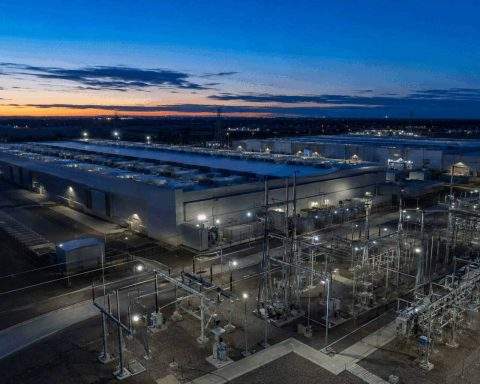
Capital spending—capex—is where things get interesting. That’s the cash that flows into long-lived assets: data centers, racks of servers, chips. Amazon is talking about putting $200 billion on the table for 2026. Analysts say the big U.S. tech players are racking up capex bills much faster than investors bargained for. “The magnitude of the spend is materially greater than consensus expected,” according to MoffettNathanson. Reuters
The AI trade isn’t lifting everything anymore; it’s more of a scramble for the few standouts, and software stocks are catching most of the heat. Tech has dropped 9% since its late-October high, but it’s still nearly a third of the S&P 500, which leaves the main indexes on edge whenever the megacaps slip, Reuters noted. This week, investors are staring down a backlog of U.S. data, with a postponed jobs release coming Wednesday and CPI on Friday, both of which could shake up rate bets.
Nvidia jumped 7.9% to $185.41 by Friday’s close. Amazon dropped 5.6% to $210.32. Alphabet finished down 2.5% at $322.86, Meta edged 1.3% lower to $661.46. Apple picked up 0.8% to $278.12, Microsoft moved 1.8% higher to $401.14, and Tesla increased 3.5% to $411.11. The Invesco QQQ Trust, tracking the Nasdaq 100, settled 2.2% higher at $609.65.
Capital spending is now front and center, with hefty totals pushing investor mood. This year, according to Reuters, Alphabet, Microsoft, Amazon and Meta together are on track to pour over $630 billion—driven mainly by AI bets—into capex. Amazon alone has $200 billion set aside, Meta could hit $135 billion. Morgan Stanley analysts note a tough crowd: investors want a clearer payoff from these massive outlays, even though cloud revenues keep climbing.
Investors have started drawing a sharper line between hardware suppliers fueling data centers and software firms at risk of being squeezed as AI grows. This week, Reuters highlighted a widening split: software stocks like ServiceNow and Salesforce lagged, dropping more than chip and data-center beneficiaries. “Investors are differentiating between who enables AI and who may be disrupted,” said Charu Chanana, chief investment strategist at Saxo. Reuters
It’s not just tech feeling the shake-up. The Russell 2000 jumped 3.5% on Friday, Reuters said, outstripping gains in both the Nasdaq 100 and S&P 500 as money poured into smaller, less expensive stocks—leaving the usual megacap names behind. “Now, they’re all chasing to buy cheaper companies, perhaps indiscriminately,” said Tim Murray, capital markets strategist at T. Rowe Price. Reuters
Still, the surge in spending isn’t all upside—investors are drawing their own lines on how much cash burn they’ll accept before pushing harder for returns. Reuters, sizing up the $600 billion wave of AI outlays, summed up the tension: “the AI build-out trade … got too pricey,” according to Andrew Wells, chief investment officer at SanJac Alpha, who framed it as a de-risking step. On CNBC, Nvidia CEO Jensen Huang argued demand is “sky-high” and defended the pace of spending as both reasonable and lasting. The market continues to weigh his optimism against the ballooning costs. Reuters
Rates are still very much in play for Big Tech’s valuations. On Friday, Fed Vice Chair Philip Jefferson described himself as “cautiously optimistic” about the outlook, calling current policy “well positioned” while officials wait for more employment and inflation signals. But Jefferson also flagged a potential inflation bump from surging AI investment, with capital flooding into data center buildouts—a signal that if inflation heats up, long-duration growth stocks could be back under pressure. Reuters
When U.S. markets get back to business on Monday, investors won’t get much breathing room before fresh data starts rolling in. Tuesday brings U.S. retail sales, then the January jobs report lands Wednesday, February 11, delayed from the usual schedule. Friday, February 13, January CPI figures drop, also pushed back by the recent shutdown, according to Investopedia. Traders will also be watching midweek earnings from Cisco, McDonald’s, AppLovin, and Shopify—more clues into demand and just how long consumers will keep spending.
Related articles: NASDAQ:META